Premium Grade Stainless Steel (SUS 304 / 316L) Filter Solutions Designed for Continuous High-Pressure polymer melt processing lines in South America.
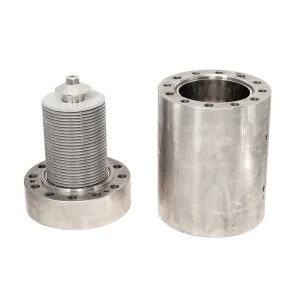
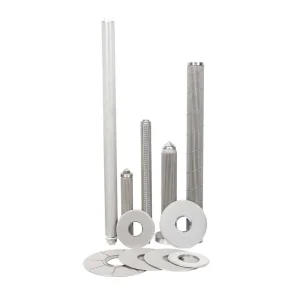
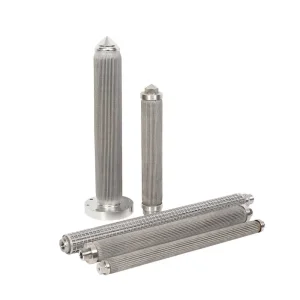
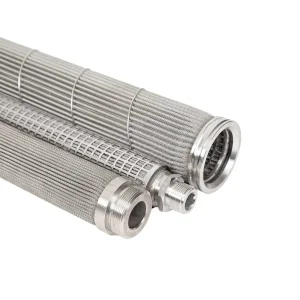
An exhaustive technical report on polymer rheology, screen changer optimization, lithium processing, and circular plastics mandates across Santiago, Antofagasta, & Concepción.
The Republic of Chile presents one of the most dynamic and specialized industrial landscapes in Latin America. As a global titan in copper and lithium extraction, alongside a rapidly modernizing agricultural, aquaculture, and plastics manufacturing ecosystem, Chile’s demand for high-end filtration solutions—specifically Screen Mesh Filters and Polymer Candle Filter Cartridges—has seen an unprecedented surge. Modern Chilean industrial operations demand zero-downtime performance, exceptional resistance to high temperature and aggressive corrosion, and rigorous micron-level precision to survive harsh operational environments.
The implementation of Chile's landmark extended producer responsibility law, Ley REP (Ley 20.920 - Ley de Responsabilidad Extendida del Productor), has dramatically altered the local plastic manufacturing landscape. Chilean extruders and converters in Santiago, Valparaíso, and Biobío are now legally mandated to incorporate elevated percentages of Post-Consumer Recycled (PCR) and Post-Industrial Recycled (PIR) resin into their production lines. Processing recycled PET, HDPE, and PP introduces massive contamination challenges—ranging from cross-polymer gels, paper fibers, aluminum trace particles, to degraded polymer carbonizations.
To prevent continuous nozzle blockages, die-face defects, and premature degradation of melt pumps, Chilean extruders rely heavily on multi-layer stainless steel Screen Mesh Filters and high surface area Continuous Polymer Candle Filters (CPF). In addition, the northern regions of Chile—most notably the Atacama Desert brine processing fields around Antofagasta—utilize high-grade SUS 316L and Hastelloy wire mesh filters for aggressive solid-liquid separation, acid leaching filtration, and chemical fluid purifications essential to the lithium battery value chain.
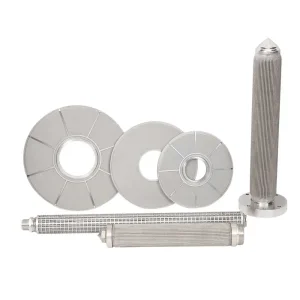
Globally, the polymer melt filtration industry is undergoing a paradigm shift from traditional single-layer woven wire mesh discs to multi-layered, vacuum-sintered wire mesh and non-woven metal fiber felts (Sintered SS Felt). Sintering bonds wire crossover points at a molecular level without changing the geometry of the apertures, resulting in superior pressure differential resistance ($\Delta P$) up to 250 bar without media migration or pore deformation.
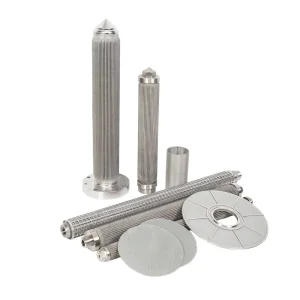
For high-viscosity polymer melts such as PET (Polyethylene Terephthalate), PA66 (Nylon), and high-density PE, specialized Polymer Candle Filter Cartridges maximize the filtration area within a compact housing footprint. By pleating the sintered metal fiber web around a heavy-duty perforated inner support core, the filtration surface area is increased by up to 500% compared to smooth cylindrical elements. This directly translates to lower shear stress on polymer chains, minimal thermal degradation, extended on-stream lifetime, and significantly reduced operational expenditure (OpEx) for industrial plants.
From northern mining operations to southern aquaculture hubs, our screen mesh and polymer filter elements are optimized for Chile’s unique economic sectors.
Chile’s vast agricultural sector relies on multi-layer greenhouse films, mulch films, and drip irrigation piping. Our SUS 304 screen mesh packs filter out gel inclusions and carbonized specks, preserving film clarity and puncture strength.
In the high-altitude, highly corrosive lithium salt brine ponds, our heavy-duty SUS 316L and Hastelloy wire mesh filters perform fine solid-liquid separation under severe chemical stress and fluctuating temperatures.
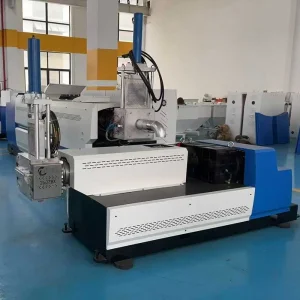
To comply with Ley REP, local recyclers use automated continuous screen changers with high-dirt-capacity screen mesh belts to filter post-consumer PE/PP melts without stopping production lines.
Biaxially-oriented film manufacturing requires sub-10 micron precision polymer candle filters to prevent microscopic pinholes and web breaks during high-speed transverse stretching.
Salmon farming in Southern Chile uses ultra-high molecular weight HDPE nets. Heavy-duty cylindrical melt screen mesh elements ensure homogenous melt elasticity and tensile strength.
High-porosity candle filter cartridges remove micro-gels in polypropylene melt spinning, preserving spinneret die holes from clogging and maintaining web uniformity.
Selection guide for Chilean plant managers, procurement engineers, and maintenance specialists.
| Filter Media Type | Material Grade | Micron Rating Range | Dirt Holding Capacity | Pressure Drop ($\Delta P$) | Primary Chilean Application |
|---|---|---|---|---|---|
| Woven Wire Mesh Pack | SUS 304 / SUS 316 | 20µm – 250µm | Moderate ($g/m^2$) | Low to Medium | Standard Extrusion & Recycled PE/PP Discs |
| Sintered Wire Mesh (Multi-Layer) | SUS 316L / Hastelloy | 5µm – 100µm | High ($g/m^2$) | Low & Stable | Continuous Screen Changers, PCR Polymer Recycling |
| Pleated Sintered Metal Fiber Felt | 316L Stainless Steel | 3µm – 60µm | Very High (3x Woven) | Ultra-Low Shear | BOPP/BOPET Film & PET Polymer Candle Filters |
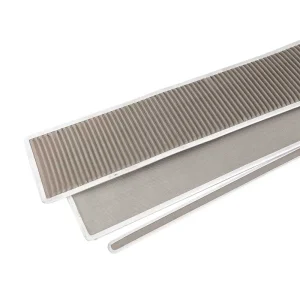
| Square / Dutch Weave Screen Belt | SUS 304 / 316 | 40µm – 200µm | High Continuous | Medium | Automated Auto-Belt Screen Changers (Ley REP) |
Maximizing ROI through standardized thermal degradation, solvent bath, and ultrasonic cleaning protocols for Chilean extruders.
One of the key economic advantages of metal polymer candle filters and heavy-duty screen mesh elements compared to disposable synthetic media is their capability to undergo multiple cleaning and regeneration cycles without compromising structural integrity or nominal micron retention efficiency. For Chilean extrusion plants operating far from primary OEM equipment hubs, establishing a localized filter regeneration protocol yields significant cost savings.
Spent candle filter cartridges laden with degraded PET, PP, or Nylon are placed inside a controlled vacuum pyrolysis furnace at temperatures ranging from 420°C to 480°C. Polymer chains thermally decompose into volatile gases, leaving behind minimal carbonaceous ash residue within the inner pore voids.
For polyester (PET) and polyamide (PA) processing, elements undergo a secondary boiling TEG bath treatment at 285°C. TEG acts as a powerful depolymerization solvent, dissolving microscopic organic compounds that survived thermal pyrolysis.
Submerged in an ultrasonic bath driven at 28kHz to 40kHz frequencies, cavitation micro-bubbles implode within the mesh interstices, dislodging inert metal oxide particles and calcined ash. Reverse high-pressure water flushing completes the physical purge.
Prior to re-installation, regenerated elements undergo ISO 4003 bubble-point testing to verify structural pore uniformity and ensure zero wire fatigue, wire displacement, or localized burn-through spots.
Detailed technical answers to common queries regarding mesh selection, shipping logistics to Chile, OEM compatibility, and Ley REP compliance.
Explore our full line of OEM/ODM custom candle filter cartridges, screen mesh belts, and plastic recycling filter solutions.
Our senior engineering team provides full OEM/ODM consultation, sample evaluation, and direct door-to-door shipping solutions to Santiago, Antofagasta, Valparaíso, and across South America.