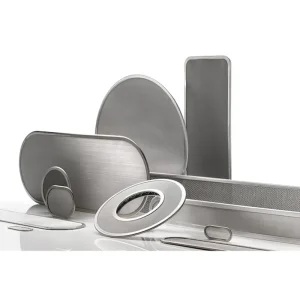
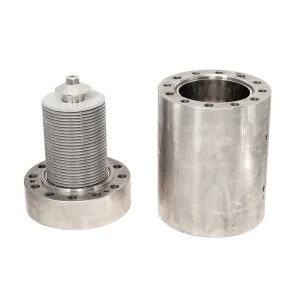
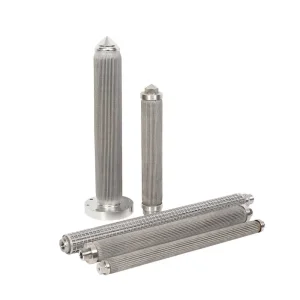
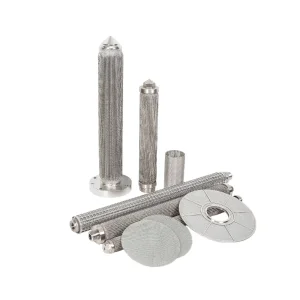
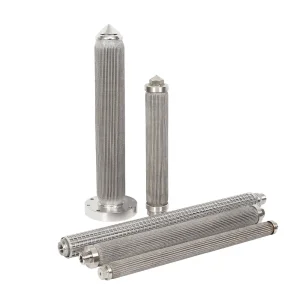
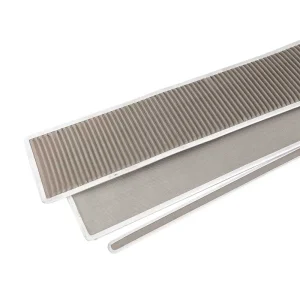
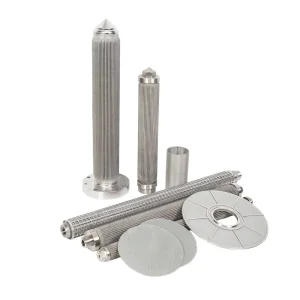
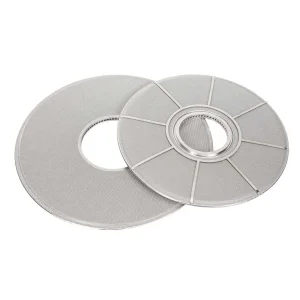
Precision-engineered mesh filter belts, leaf discs, and candle filters manufactured directly from our Zhejiang production facility for global exporters and OEM integrators.
Understanding the transition from static screen packs to continuous automatic ribbon mesh belts in high-throughput extrusion lines.
In modern thermoplastic processing, post-consumer plastic recycling, blown film extrusion, and spunbond non-woven manufacturing, maintaining uninterrupted melt flow under high mechanical pressure is the single most critical factor for operational profitability. Traditional static screen changers mandate periodic machine shutdowns to manual replace clogged mesh discs, causing severe thermal degradation, melt pressure drops, and substantial material waste.
China has established itself as the undisputed world center for high-tensile wire weaving and automated mesh filter belt production. Chinese exporters have mastered the production of high-density Reverse Dutch Weave (RDW) and Reverse Dutch Twilled Weave (RDTW) stainless steel mesh belts. Utilizing high-tensile warp wires engineered to withstand thousands of Newtons of traction force without elongation, Chinese factories export precision mesh belts to over 80 countries, delivering superior ROI for global plastics machinery OEMs and processing facilities.
A rigorous engineering breakdown of reverse Dutch weave geometry, alloy selections, and mechanical performance parameters.
Unlike standard square mesh where warp and weft wires are identical, RDW features thick, high-tensile warp wires driven longitudinally, and thinner, densely packed weft wires driven transversely. This construction creates a rigid ribbon capable of pulling through automatic screen changers against extreme hydraulic pressure without tearing or edge curling.
For ultra-fine filtration ratings ranging from 10 microns to 40 microns, RDTW passes each weft wire over and under two warp wires. This double-layer weave geometry produces triangular pore openings with high dirt-holding capacity, optimal for processing virgin resin and high-viscosity BOPET/BOPP polymer melts.
Edge fraying is the primary cause of melt leakage in ribbon screen changers. Premier Chinese manufacturers apply ultrasonic cutting or automated plasma arc edge welding to seal the belt edges cleanly. This creates a smooth, burr-free border that slides effortlessly past rubber gasket seals.
| Mesh Count (Warp x Weft) | Filtration Rating (μm) | Standard Width Range (mm) | Warp Wire Dia. (mm) | Weft Wire Dia. (mm) | Tensile Strength (N/mm²) | Primary Industrial Application |
|---|---|---|---|---|---|---|
| 72 / 15 | 250 – 300 μm | 50mm – 250mm | 0.35 mm | 0.40 mm | > 1800 N | Heavy Recycling Granulation (PE/PP Flakes) |
| 132 / 14 | 150 – 180 μm | 60mm – 300mm | 0.30 mm | 0.28 mm | > 1750 N | Post-Consumer Plastic Pelletizing Lines |
| 152 / 24 | 100 – 120 μm | 90mm – 400mm | 0.28 mm | 0.20 mm | > 1650 N | Blow Molding & Sheet Extrusion |
| 260 / 40 | 45 – 55 μm | 100mm – 500mm | 0.15 mm | 0.12 mm | > 1550 N | Blown Film & Cast Film Packaging Lines |
| 325 / 230 (RDTW) | 20 – 28 μm | 120mm – 600mm | 0.10 mm | 0.065 mm | > 1400 N | BOPP / BOPET Optical Film & Medical Textiles |
| 400 / 120 (RDTW) | 10 – 15 μm | 120mm – 600mm | 0.07 mm | 0.050 mm | > 1300 N | Spunbond Non-Woven & Ultra-Fine Filaments |
Analyzing the industrial cluster economics, CNC loom automation, and Quality Assurance infrastructure in Chinese manufacturing hubs.
China's filtration manufacturing hubs in Zhejiang and Hebei integrate wire drawing, annealing, CNC shuttleless heavy-duty weaving, edge sealing, and ultrasonic degreasing within a 50-kilometer radius. This extreme industrial density eliminates logistics latency, reducing sample delivery times to under 5 business days worldwide.
Leading Chinese exporters utilize imported Jäger wire weaving looms and custom-built CNC rapier looms engineered specifically for dense reverse Dutch weaving. These looms achieve high warp tensions (exceeding 2000 N/cm), guaranteeing that the finished mesh belt displays zero longitudinal stretch during hydraulic indexing.
Every roll of mesh belt produced by top-tier Chinese suppliers undergoes 100% automated optical inspection (AOI) to detect wire breakage, pitch variance, or weave defects. Subsequent ultrasonic cleaning baths remove draw oil, ensuring food-contact compliance (FDA / EU 10/2011) for PET and PE packaging applications.
How specialized mesh filter belts optimize throughput and output purity across diverse manufacturing environments.
Challenge: Recycled HDPE, LDPE, and PP film waste contains high concentrations of paper fibers, aluminum foils, sand, and cross-linked polymers. Standard screen changers clog within minutes.
Solution: Chinese 72/15 or 132/14 AISI 304 Reverse Dutch Mesh Belts operating inside continuous auto-belt screen changers. The belt advances 2mm to 10mm per cycle based on differential pressure ($\Delta P$), keeping head pressure stabilized under 180 Bar while continuously extruding clean pellets.
Challenge: Biaxially oriented film lines run at speeds exceeding 500 m/min. Microscopic gel inclusions cause film breaks (bubble pops), resulting in tens of thousands of dollars in lost production per hour.
Solution: RDTW (Twilled Reverse Dutch) belts in AISI 316L grade with 20μm absolute filtration. Plasma-welded edge ribbons ensure zero edge shear, maintaining uniform flow geometry across multi-manifold dies.
Challenge: Spinnerets contain thousands of micro-holes (0.1mm - 0.3mm diameter). Any solid contaminant entering the spin pack plugs capillary holes, creating thin spots in the non-woven web.
Solution: Multi-layer sintered or mesh belt filtration systems providing high dirt-holding capacity, preventing spin pack pressure spikes and maintaining threadline integrity during 30-day continuous non-stop production runs.
A step-by-step technical compliance checklist for purchasing directors evaluating Chinese mesh filter belt suppliers.
Verify warp wire tensile strength specs via Spectrometer & Tensile Testing equipment. Warp wire must exceed 1600 N/mm² to prevent belt necking during high-pressure pull cycles.
Insist on Positive Material Identification (PMI) certificates proving authentic SUS 304 or SUS 316L composition. 316L must contain >2.0% Molybdenum to resist acidic gas corrosion in PVC processing.
Inspect belt edges under 50x magnification. Edges must be ultrasonically cut or plasma-welded without loose wire ends, jagged teeth, or melted beads exceeding belt thickness.
Belts must undergo multi-stage ultrasonic degreasing. Zero residual drawing lubricants allowed. Must comply with FDA food-contact standards for food packaging lines.
\Delta P = \frac{8 \cdot \mu \cdot v \cdot L}{k_p} \quad \text{where } \mu = \text{melt viscosity}, v = \text{face velocity}, L = \text{filter thickness}, k_p = \text{weave permeability coefficient}
High-density Chinese RDW mesh belts optimize the permeability coefficient ($k_p$), allowing up to 22% higher melt throughput at equivalent pressure drop limits compared to traditional square mesh packs.
Direct technical answers to common queries regarding mesh filter belt selection, installation, troubleshooting, and Chinese exporter procurement.
In Standard Dutch Weave, warp wires are thin and closely spaced while weft wires are thick. In Reverse Dutch Weave (RDW), warp wires are thick, strong, and closely spaced, while weft wires are thinner. RDW provides immense longitudinal tensile strength, making it ideal for continuous belt screen changers that drag the belt through pressurized polymer melt.
Edge fraying occurs when raw-cut woven wire edges catch on hydraulic seals. Melt leakage occurs if edge wire ends separate under shear stress. Opting for Chinese mesh filter belts with ultrasonically cut edges or plasma-welded border seals eliminates fraying and maintains complete seal integrity.
SUS 304 is suitable for standard polyolefin extrusion (LDPE, HDPE, PP) operating under non-corrosive conditions up to 300°C. SUS 316L contains Molybdenum, offering superior corrosion resistance against degraded additives, halogenated flame retardants, and PVC processing gases. For high-temperature fluoropolymers, Hastelloy C-276 belts are recommended.
Chinese factories manufacture custom ribbon widths (from 50mm up to 1000mm) and custom roll lengths (typically 10m, 20m, 50m, or 100m spools). Belts can be calibrated to exact mesh density, warp wire count, and custom edge treatments to fit major screen changer brands like Maag, Nordson, Kreyenborg, Gneuss, and EREMA.
Belt breakage is usually caused by low warp wire tensile strength, incorrect indexing frequency leading to excessive pressure buildup ($\Delta P > 250 \text{ Bar}$), or burrs inside the screen changer channel. Ensuring warp tensile strength exceeds 1600 N/mm² prevents tensile failure under high loads.
Request mill test certificates (MTC) according to EN 10204 3.1, PMI chemical composition reports, tensile test curves, and bubble-point pore size test data. Top Chinese exporters also provide live video pre-shipment inspections and free sample rolls for client lab testing.
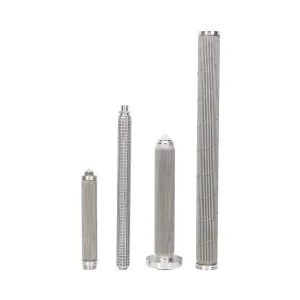
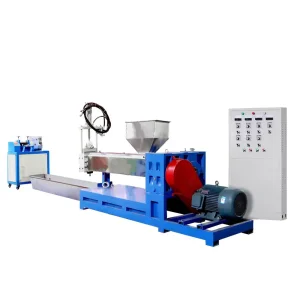
Explore our complete catalog of screen mesh filters, plastic pelletizing machines, and customized candle filter elements.