Explore our high-performance metal filter elements, designed to withstand extreme thermal, chemical, and pressure conditions in polymer extrusion and spinning.
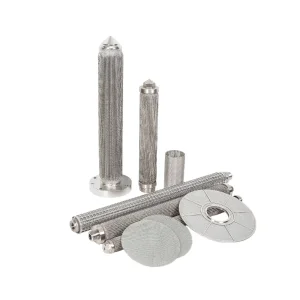
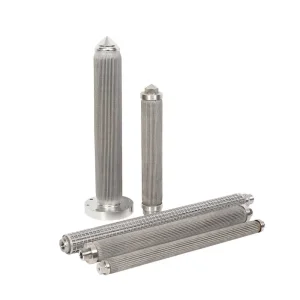
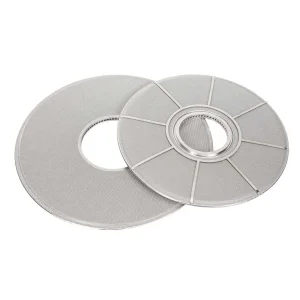
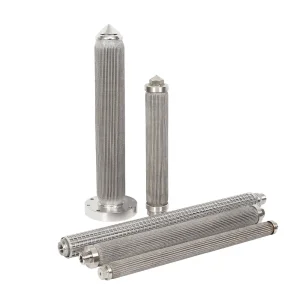
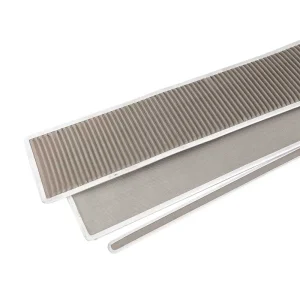
In high-temperature, continuous polymer extrusion, film blowing, and synthetic fiber spinning, the selection of custom candle filter materials directly governs process continuity, yield rates, and final product purity. Modern extrusion systems operate under extreme conditions—temperatures exceeding 330°C, melt viscosities reaching thousands of Pa·s, and differential pressures ($\Delta P$) up to 300 bar. Under these harsh regimes, conventional filter media suffer from media deformation, rapid gel blinding, pore migration, and premature structural failure.
As global market demands pivot toward sustainable polymer loops—incorporating higher ratios of Post-Consumer Recycled (PCR) resin and bio-based polymers—filtration systems face unprecedented contaminant burdens. Leading custom candle filter material exporters play a pivotal role in engineering multi-layered, gradient-density filter media capable of trapping micro-gels, degraded black specks, catalyst residues, and inorganic fillers without causing unacceptable pressure drops.
The performance of custom polymer candle filter elements is primarily dictated by the material substrate, pore geometry, and mechanical bonding techniques utilized during manufacturing. Specialized exporters offer three primary media categories:
Fabricated from non-woven stainless steel micro-fibers (AISI 316L) ranging from 2 to 25 microns in diameter, vacuum-sintered into a 3D labyrinth structure. Offers high porosity (up to 85%), exceptional permeability, and deep gel retention capability. Ideal for PET/PA spin packs and optical BOPP lines.
Composed of precision Dutch woven or square woven wire cloth layers bonded together via high-temperature diffusion sintering. Provides precise absolute pore ratings, structural rigidity against pressure surges, and uniform surface filtration properties.
Combines a protective outer mesh, a high-capacity sintered felt core, and a heavy-duty inner support core. Pleating increases active filtration area by 200%–400% within the same dimensional envelope, minimizing overall filter vessel footprints.
| Filter Media Parameter | Sintered Metal Fiber Felt | Multi-Layer Sintered Mesh | Plain Dutch Woven Mesh | Porous Powder Sintered Metal |
|---|---|---|---|---|
| Porosity Range (%) | 75% – 85% | 35% – 50% | 30% – 42% | 40% – 55% |
| Absolute Filtration Rating | 3 μm – 60 μm | 5 μm – 150 μm | 10 μm – 250 μm | 0.5 μm – 20 μm |
| Dirt Holding Capacity ($g/m^2$) | High (250 – 450 g) | Medium (100 – 180 g) | Low-Medium (60 – 100 g) | Very High (Depth trap) |
| Backwash & Cleanability | Excellent (Pyrolysis/Ultrasonic) | Superior (Surface flow) | Excellent (Direct stream) | Moderate (Chemical soaking) |
| Pressure Resistance ($\Delta P$) | Up to 210 bar | Up to 300 bar | Up to 150 bar | Up to 250 bar |
| Primary Application | PET Melt Spinning, BOPET Film | Polymer Extrusion, Recycling | Coarse Screen Changers | Monomer & Gas Filtration |
China has established itself as the world’s leading hub for advanced metallic filtration manufacturing. Companies like Pujiang HG Plastic Machinery Co., Ltd. integrate complete raw material processing, automated pleating, high-vacuum sintering, and robotic TIG welding into a seamless production framework.
Sourcing directly from top-tier stainless steel mills (SUS 304, 316L, 904L, Hastelloy C-276, and Inconel 657). Every batch undergoes spectral chemical composition analysis and EN 10204 3.1 material certification.
Utilizing automated corrugated pleating machinery, micro-laser longitudinal seam welding, and robotic end-cap fusion. This ensures zero weld-seam bypass and guarantees absolute concentricity across elements up to 1500 mm in length.
Chinese direct-factory models eliminate middleman markups, yielding 30% to 50% cost savings compared to European replacements—allowing plants to maintain ample buffer inventory without tying up working capital.
Every candle element undergoes bubble point testing per ISO 4003 to verify pore size distribution and integrity. Hydraulic collapse tests validate resistance against severe differential pressure spikes.
Spectral chemical & tensile validation of SS 304/316L wire & felt.
Automated mechanical corrugated pleating to expand active surface area.
High-vacuum diffusion sintering at 1100°C for permanent molecular bonds.
Automated longitudinal and end-cap joining without filler metals.
ISO 4003 pore verification, ultrasonic degreasing & cleanroom seal packaging.
Global enterprise buyers—including plant operations managers, procurement officers, and OEM machinery engineers—evaluate candle filter material suppliers through a multifaceted risk and TCO lens. Purchasing decisions extend far beyond initial unit price:
In continuous PET filament or BOPP film production, an unscheduled line shutdown can incur losses exceeding $15,000 per hour. Custom candle filters must maintain low initial differential pressure ($\Delta P_0$) and offer gradual pressure accumulation curves to extend continuous runs up to 60–90 days.
High-quality stainless steel candle cartridges (SUS 316L) are designed to withstand 10 to 15 off-line cleaning cycles utilizing TEG (triethylene glycol) hydrolysis, vacuum pyrolysis burn-off, and ultrasonic solvent baths, restoring permeability to over 95% of original values.
Bypass of contaminants due to seal failure or element collapse damages downstream gear pumps, die heads, and spinnerets. Custom candle elements utilize precision-machined threaded connections (e.g., M18x1.5, M24x1.5, NPT) or hex fittings with high-temperature metallic O-rings.
Polymer candle filter elements are deployed across specialized industrial niches worldwide. Below are key operational environments where custom media configurations deliver optimal yield:
Ultra-thin biaxially oriented films demand micro-gel filtration down to 3–5 microns. Sintered metal fiber felt candle elements remove soft gels and degraded carbon specks, eliminating film tear-offs during transverse orientation stretching.
In PP/PET filament spinning, spinneret orifice clogging directly impacts fiber uniformity and tensile strength. Candle filter cartridges maintain consistent melt distribution across high-throughput beam lines.
Recycling lines handle heavy particulate contamination (paper residues, aluminum micro-particles, PVC cross-links). High-capacity pleated mesh candle elements provide robust depth filtration, supporting sustainable rPET pelletizing.
The polymer filtration landscape is evolving rapidly driven by circular economy mandates, advanced polymer chemistries, and Industry 4.0 automation. Leading exporters are pioneering several key innovations:
Transitioning from single-density media to asymmetrical multi-layer metal fleeces. Coarse upstream layers capture macro-particulates, while fine downstream layers trap sub-micron gels, doubling total dirt-holding volume.
Applying advanced atomic layer deposition (ALD) and nano-silica passivation coatings to stainless steel media to prevent melt degradation, thermal sticking, and catalytic polymer decomposition during prolonged heat exposure.
Equipping continuous candle filter housings with IoT differential pressure sensors and predictive AI analytics. Real-time viscosity and $\Delta P$ tracking alert operators to optimal backwash windows before clogging occurs.
Navigating global trade and technical compliance requires stringent adherence to international quality regimes. Chinese exporters provide complete documentation suites to ensure seamless plant integration and customs clearance:
Dedicated technical teams assist international clients with custom 2D/3D CAD drawing design, reverse engineering of obsolete OEM elements, flow rate dynamic calculation, and emergency technical dispatches.
Elements are ultrasonically cleaned, vacuum-sealed in cleanroom plastic bags, and packaged in heavy-duty wooden crates to prevent thread damage or atmospheric moisture oxidation during ocean transit.
Answer: The choice depends on your contaminant profile and melt viscosity. Pleated Wire Mesh Candle Elements offer maximum filtration surface area, low initial pressure drop, and easy surface cleaning—making them ideal for high-throughput extrusion and post-consumer plastic recycling. Sintered Metal Fiber Felt Elements provide a 3D depth matrix that excels at capturing soft micro-gels, carbon specks, and fine particles in high-precision applications like BOPET optical films and synthetic fiber spinning.
Answer: High-grade SUS 316L candle filter elements typically remain on-stream for 30 to 90 consecutive days before reaching maximum terminal differential pressure ($\Delta P \approx 150 - 200 \text{ bar}$). Because stainless steel elements are fully reusable, they can be subjected to 10 to 15 off-line cleaning cycles (TEG hydrolysis, pyrolysis, ultrasonic solvent bath), resulting in a total operational lifespan of 3 to 5 years.
Answer: Leading exporters utilize precision CNC threads (e.g., M18x1.5, M24x1.5, NPT, or NORDSON standards) paired with high-temperature metallic crushed copper or soft nickel gaskets. Additionally, end-caps are joined to the filter mesh using 100% automated robotic TIG fusion welding without filler metals, guaranteeing structural integrity up to 300 bar differential collapse pressures.
Answer: To ensure exact fitment and performance, provide: (1) Target polymer type & operating temperature/viscosity; (2) Required micron rating (absolute or nominal); (3) Physical dimensions (Outer Diameter, Inner Diameter, Overall Length); (4) Connection fitting specification (threaded size, hex dimensions, or plug-in style); (5) Maximum expected differential pressure ($\Delta P$). Original CAD drawings or sample elements can also be reverse-engineered.
Answer: Yes. Manufacturers like Pujiang HG Plastic Machinery produce drop-in replacement candle filter elements fully dimensionalized and metallurgically matched to major Western machinery standards. These elements meet or exceed OEM performance specifications while delivering up to 50% savings in replacement procurement costs.
Answer: The gold standard multi-stage cleaning protocol includes: (1) Thermal Pyrolysis or TEG (triethylene glycol) bath at 400°C–450°C to decompose organic polymer residues; (2) High-pressure fluid flushing to remove carbonized ash; (3) Ultrasonic bath immersion with mild acidic/alkaline cleaning agent; (4) Deionized water rinse; (5) High-pressure air drying followed by ISO 4003 bubble point integrity testing.
Browse our extended line of screen mesh filters, leaf disc assemblies, polymer melt elements, and plastic granulating recycling machinery.
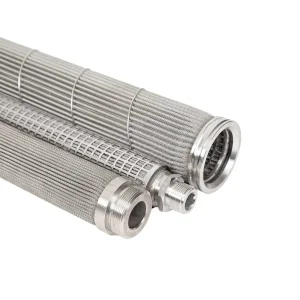
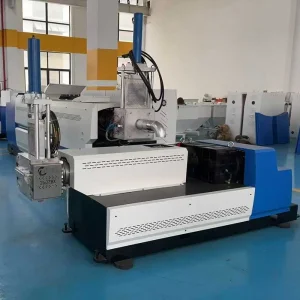
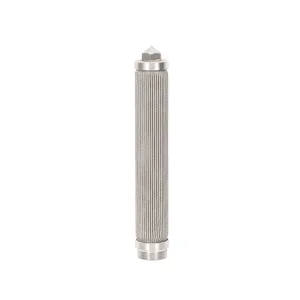
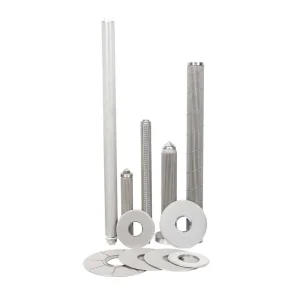
With over 20 years of technical innovation and direct export experience, Pujiang HG Plastic Machinery Co., Ltd. stands as a benchmark manufacturer of high-precision polymer candle filter elements, leaf disc filters, extruder screen mesh, and complete plastic recycling systems. Our products serve global enterprise clients across 80+ countries, powering world-class production lines in plastic extrusion, chemical fiber spinning, and sustainable resin recycling.