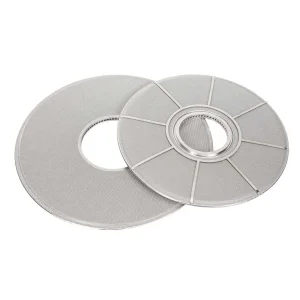
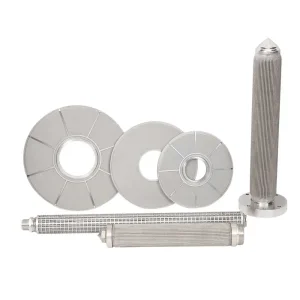
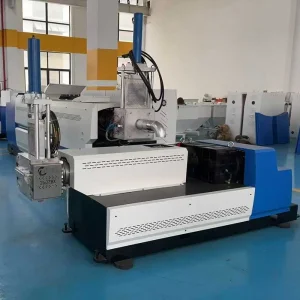
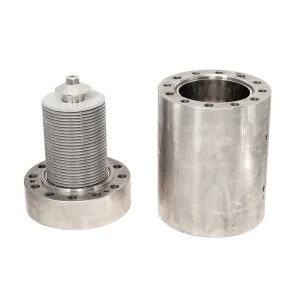
Precision-engineered filtration cartridges, leaf discs, screen meshes, and pelletizing systems optimized for zero-defect film extrusion.
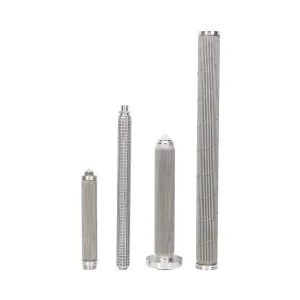
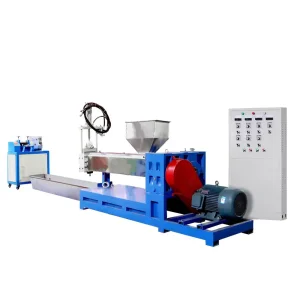
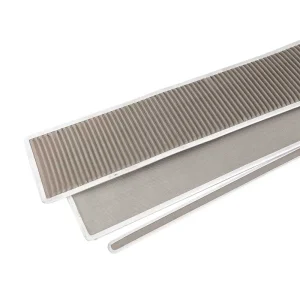
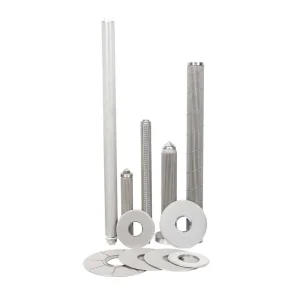
In modern high-speed plastic film manufacturing—spanning biaxially-oriented polyethylene terephthalate (BOPET), biaxially-oriented polypropylene (BOPP), cast polypropylene (CPP), polyimide (PI), and lithium-ion battery separator films—the melt filtration stage represents the absolute technical heart of the production line. Polymer melts, subjected to processing temperatures up to 350°C and dynamic head pressures exceeding 300 bar (30 MPa), behave as non-Newtonian, high-viscosity viscoelastic fluids. Under these extreme conditions, un-melted gel clusters, carbonized degrading specks, and sub-micron metallic debris threaten to breach downstream die lips, causing film blow-outs, gauge variations, or optical hazing.
As global demand shifts toward ultra-thin barrier films (under 2 microns) and high-clarity optical displays, standard wire mesh screens are no longer sufficient. Enterprise procurement leaders and plant engineering directors are increasingly turning to Famous Film Filter Candle Factories & Exporters to source multi-layered, stainless steel sintered metal fiber candle elements. Unlike conventional flat disk filters, filter candles offer up to 400% greater active filtration surface area within identical pressure vessel footprints, drastically reducing pressure drops ($\Delta P$) and maintaining laminar polymer melt flow.
The international supply chain for polymer melt filtration is currently experiencing a structural evolution. Tier-1 film producers across Europe, North America, and East Asia are transitioning from high-cost regional original equipment manufacturers (OEMs) to specialized Chinese direct manufacturers. Chinese factories have mastered advanced vacuum sintering metallurgy, automated robotic welding, and automated bubble point testing, delivering international-standard filtration precision at optimized cost structures.
A polymer film filter candle element is a highly sophisticated structural assembly designed to endure continuous mechanical shear, thermal shock, and aggressive chemical solvent flushing. Understanding its anatomical breakdown is critical for evaluating supplier quality.
Constructed from heavy-duty AISI 316L stainless steel or exotic alloys. Precision spiral-welded or CNC-drilled to withstand collapse pressures exceeding 210 bar without dynamic flexing.
Non-woven stainless steel micro-fibers (1 to 25 micron diameter) vacuum sintered into a 3D labyrinth structure. Delivers up to 85% volumetric porosity, drastically reducing melt shear stress.
Engineered with NPT, BSP, or custom bayonet thread geometries. CNC-machined to sub-micron tolerances for leak-proof metal-to-metal sealing inside filter vessel manifolds.
Selection of the correct alloy grade directly dictates the operational lifespan and chemical cleaning cycle durability of the filter candles.
| Material Grade | Composition Highlights | Thermal Limits | Corrosion Resistance | Primary Industrial Applications |
|---|---|---|---|---|
| AISI 304 / 304L | 18% Cr / 8% Ni | Up to 300°C | Standard Industrial Grade | General PP, PE recycling, sheet extrusion, pelletizing lines. |
| AISI 316 / 316L | 16% Cr / 10% Ni / 2% Mo | Up to 400°C | High (Acid & Solvent Resistant) | BOPET, BOPP, CPP film production, chemical fiber spinning. |
| AISI 904L | 20% Cr / 25% Ni / 4.5% Mo / 1.5% Cu | Up to 450°C | Exceptional Pitting Resistance | Corrosive fluoropolymer (PVDF/PTFE) & optical polycarbonate melts. |
| Hastelloy C-276 | 57% Ni / 16% Cr / 16% Mo / 4% W | Up to 550°C | Ultra-High Chemical Immunity | Specialty engineering resins, CPI polyimide, acidic reaction media. |
China has transformed into the premier global hub for polymer filtration manufacturing, driven by advanced industrial clusters in regions such as Zhejiang Province. Leading exporters like Pujiang HG Plastic Machinery Co., Ltd. combine vertical manufacturing integration with rigorous international quality standards.
Chinese tier-1 factories maintain complete in-house control over raw wire drawing, multi-layer weave weaving, vacuum high-temperature sintering, orbital plasma welding, and precision CNC end-cap machining. By eliminating external sub-contracting delays, production cycles are reduced by 50% compared to Western counterparts.
Leading Chinese exporters adhere strictly to international testing benchmarks. Every single candle element undergoes Bubble Point Testing (per ISO 2942) to verify zero pore defect enlarged channels, along with Pressure Drop Validation (ISO 3968) and Metallurgical Traceability Certification (EN 10204 3.1).
Equipped with 3D CAD/CAM engineering suites and automated laser welding stations, Chinese exporters can translate client drawings or legacy OEM part numbers into custom physical prototypes within 5 to 7 working days, accommodating non-standard mounting flanges, length extensions, and hybrid micron layers.
By leveraging streamlined local stainless steel material supply chains and highly skilled metallurgical workforces, Chinese candle filter factories offer procurement price advantages of 40% to 65% compared to European or American legacy brands, dramatically lowering capital expenditure (CAPEX) for plant expansions.
In ultra-clear PET film extrusion for OLED displays, solar backsheets, and touch panels, any gel particle larger than 3 microns will cause optical refraction defects (fish eyes). Sintered metal fiber felt candle filter elements with a 3μm absolute rating remove micro-gels under high shear, ensuring crystal-clear film optics and preventing continuous film web breakage.
Lithium battery separator production (both wet and dry stretching processes) demands flawless porous film structures. Candle filter elements manufactured from SUS 316L micro-mesh remove ultra-fine paraffin oil residues and degraded polymer specks, preventing thermal runaway defects in electric vehicle (EV) battery cells.
In nonwoven hygiene and medical fabric lines, polymer melt flows through spinneret micro-holes (0.1mm - 0.3mm diameter). Candle filter cartridges placed in the spinning pack filter out particulate impurities prior to extrusion, eliminating hole blockage, filament snapping, and machine downtime.
Recycling rigid PP/PE plastics and agricultural film scrap introduces heavy organic and inorganic dirt loads. Heavy-duty filter mesh elements and continuous screen changers capture paper fibers, sand, and cross-linked polymers, turning low-grade waste into pristine recycled pellets.
When evaluating global exporters and factories for long-term contract procurement of film filter candles, procurement managers and lead process engineers must execute rigorous quality verification. Below is the standardized B2B audit matrix used by Fortune 500 chemical companies:
Verify that the collapse pressure rating of the inner core exceeds 210 bar (21 MPa). Demand hydrostatic burst test reports to prevent catastrophic element crushing inside high-pressure filter housings.
Examine clean initial pressure drop ($\Delta P_0$) specifications. Sintered fiber felt media must offer >75% void volume to ensure low shear stress and extended operational runtime between cleaning cycles.
Confirm that the filter candles can withstand repeated chemical cleaning cycles—including Triethylene Glycol (TEG) boiling, vacuum calcination furnaces (450°C), and ultrasonic bath solvent flushing—without structural degradation.
Industry 4.0 integration is converting filter vessels into smart node networks. High-precision piezoresistive pressure sensors monitor real-time $\Delta P$ accumulation curves across candle arrays. Machine learning algorithms analyze melt viscosity, temperature fluctuations, and flow rate to predict exact filter saturation points, scheduling automated back-flushing or switch-overs before film quality degrades.
With the global acceleration of biodegradable polymers such as Polylactic Acid (PLA), Polybutylene Adipate Terephthalate (PBAT), and Polyhydroxyalkanoates (PHA), traditional stainless steels can cause thermal degradation due to trace catalytic activity. Exporters are developing nano-passivated electropolished surfaces and DLC (Diamond-Like Carbon) coatings on filter candles to prevent sticky bio-melt thermal degradation.
Discover our full line of leaf disc filters, candle cartridges, and plastic recycling equipment built for industrial performance.