Precision-engineered continuous melt filtration products designed for zero-defect extrusion, spunbond nonwovens, and high-purity resin recycling.
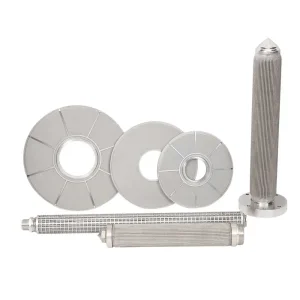
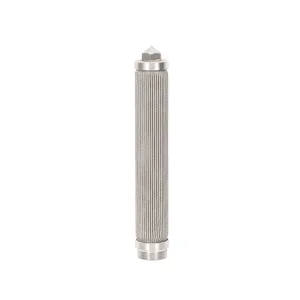
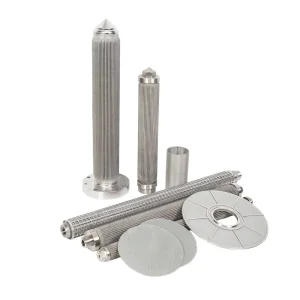
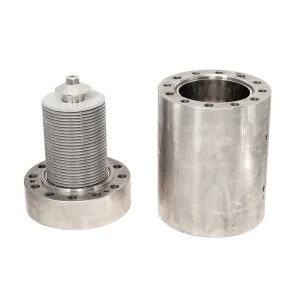
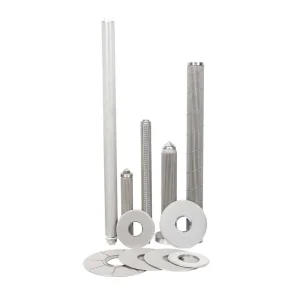
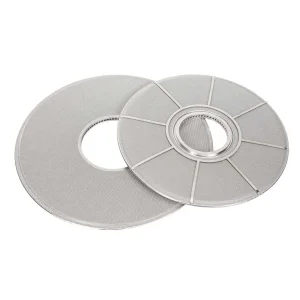
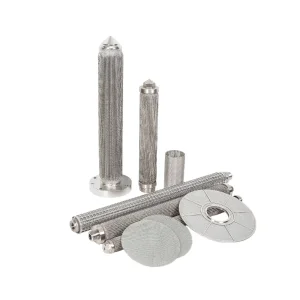
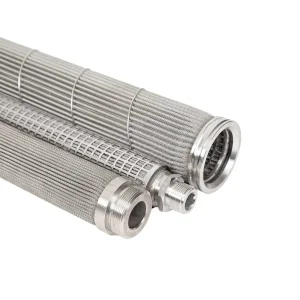
In modern industrial polymer processing, the continuous push toward ultra-thin packaging films (BOPET, BOPP, BOPA), micro-denier synthetic fibers, and high-purity recycled resins has elevated melt filtration from a routine process step to a critical engineering core. A polymer disc filter—often referred to as a leaf disc filter—serves as the ultimate barrier against gels, unmelted resin specs, degradation black spots, and inorganic micro-contaminants.
The global polymer filtration market has witnessed unprecedented expansion, propelled by stringent quality parameters in flexible packaging, automotive engineering thermoplastics, and medical-grade nonwovens. Leading manufacturers across North America, Europe, and Asia-Pacific are constantly competing to optimize hydraulic flow geometry, maximize effective filtration area per vessel volume, and withstand thermal operation regimes exceeding 300°C under continuous operating pressures of up to 30 MPa (300 bar).
Driven by circular economy mandates and rising demand for post-consumer recycled (PCR) plastics, the continuous melt filter sector is expanding at a CAGR of >6.8% globally, with specialized disc media seeing even higher growth due to its superior surface-to-volume ratio.
Processing ultra-high molecular weight polymers (UHMWPE), high-IV PET melt, and complex engineering masterbatches demands zero-bypass hub seals and pressure-differential control to prevent polymer shear degradation during extended production runs.
Modern film lines routinely require absolute retention ratings between 3 μm and 20 μm. Premium disc filter manufacturers leverage multi-layer sintered metal fiber felt to achieve high dirt-holding capacity while minimizing differential pressure buildup ($\Delta P$).
Quantitative benchmarks derived from leading global polymer processing plants, comparing standard wire mesh elements with advanced stainless steel sintered leaf disc systems.
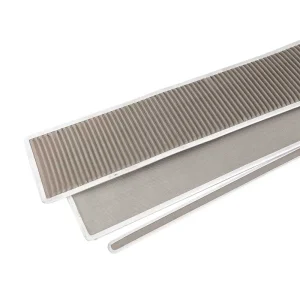
The construction of a premium leaf disc filter relies on precise metallurgical layering. Unlike standard woven wire cloth, high-performance polymer disc filter elements utilize sintered metal fiber felt (random nonwoven web structure) sandwiched between support mesh, protective drainage screens, and rigid inner hub cores.
| Filter Media Type | Filtration Structure | Porosity Rate (%) | Dirt-Holding Capacity | Primary Industrial Application |
|---|---|---|---|---|
| Sintered Metal Fiber Felt | 3D nonwoven matrix of 316L micro-fibers | 75% – 85% | Exceptional (High gel absorption) | BOPET/BOPP film, high-speed polyester spinning, optical-grade PC |
| Multi-Layer Sintered Wire Mesh | Diffusion-bonded woven mesh layers | 50% – 60% | Moderate (High burst strength) | Polyolefin extrusion, masterbatch granulating, continuous screen changers |
| Standard Woven Wire Cloth | Square/Dutch weave single or multi-layer | 30% – 45% | Standard | Recycling pelletizers, pipe extrusion, low-viscosity resin compounding |
| Powder Metal Sintered Discs | Porous sintered stainless steel powder | 40% – 50% | High depth filtration | Melt blowing, specialized chemical fluid filtration, high-temp gas purification |
One of the primary causes of melt streak contamination and film web rupture is leakage across disc hub assembly gaskets. Leading polymer disc filter manufacturers employ precision CNC-machined **hard-face metal-to-metal seal hubs** or hyper-elastic metallic O-rings. When stacked onto a central tie-rod inside a filter vessel (CPF candle or leaf disc housing), hydraulic clamping force compresses the hubs into a hermetic seal capable of resisting thermal expansion mismatches up to 350°C.
Tailored filtration configurations engineered to meet localized plant environments, resin variations, and processing throughputs across key global manufacturing hubs.
Region Target: East Asia, Europe, North America
Biaxial orientation demands continuous, uninterrupted melt delivery. Even a 10 μm gel particle can cause a line break (web rupture) at line speeds exceeding 500 m/min. Custom polymer leaf disc filter stacks with multi-stage sintered metal felt provide an ultra-clean melt stream, extending filter pack change intervals from 14 days to over 90 days.
Region Target: Global / Circular Economy Focus
Recycled Polyolefins (PP/PE) contain highly variable contamination including paper fibers, aluminum flakes, and degraded rubber. High-area screen mesh filters and robust leaf disc packs handle heavy dirt loading without catastrophic collapse, protecting downstream melt pumps and pelletizing die heads.
Region Target: Global Hygiene & Medical Textile Hubs
For medical face masks, surgical gowns, and hygiene products, spinneret orifice clogging results in nonwoven filament defects. OEM pleated candle cartridges and fine leaf discs remove micro-gel fractions, ensuring uniform fiber diameter down to sub-micron scales.
As polymer chemistry evolves toward bio-based polymers (PLA, PHA) and hyper-filled recycled materials, continuous filtration hardware must innovate rapidly. Below is the strategic development trajectory for industrial leaf disc and candle filter technology.
Selective Laser Melting (SLM) 3D printing enables optimized internal flow channels within disc drainage cores, reducing fluid pressure drop by up to 25% and eliminating stagnant melt zones.
Embedded high-temperature micro-sensors within the filter stack continuously track $\Delta P$ accumulation across individual disc layers, providing AI predictive analytics for scheduled TEG cleaning cycles.
Atomic Layer Deposition (ALD) of ceramic titanium nitride (TiN) or diamond-like carbon (DLC) coatings on 316L disc surfaces reduces polymer melt adhesion, preventing thermal degradation during prolonged exposure.
Next-gen pyrolysis and Triethylene Glycol (TEG) cleaning systems integrated with automated ultrasonic monitoring will restore spent leaf discs to 99.8% original permeability with zero manual intervention.
Explore our expanded equipment directory, including heavy-duty plastic granulators, pelletizing systems, and custom stainless steel filter elements.
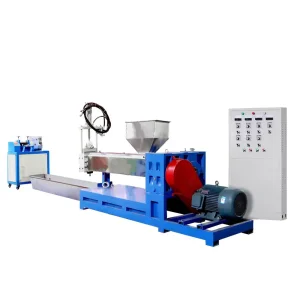
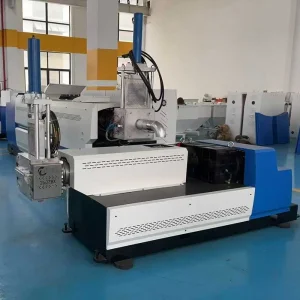
Expert answers to critical questions regarding polymer disc filter selection, cleaning protocols, hydraulic pressure optimization, and manufacturing standards.
Polymer leaf disc filters provide significantly higher filtration surface area within a compact vessel footprint. By stacking multiple flat discs along a central tie-rod, operators can achieve up to 3 to 4 times the effective filtration area compared to cylindrical candle filters of equivalent shell size. This dramatically reduces polymer flux rate ($m^3/m^2 \cdot hr$), lowers differential pressure ($\Delta P$), and extends overall on-stream campaign life.
Leading manufacturers engineer precision-ground metal-to-metal hard face seals or metallic seal rings directly onto the disc hubs. When subjected to axial hydraulic torque loading during assembly, these precision seals form a gas-tight, high-pressure seal capable of containing molten polymer at pressures up to 30 MPa (300 bar) and temperatures reaching 350°C without elastomer degradation.
Yes. Stainless steel leaf discs (316L/904L) are engineered for multiple cleaning cycles. The standard cleaning protocol involves TEG (Triethylene Glycol) boiling or vacuum pyrolysis to burn off organic polymer melt, followed by controlled ultrasonic baths and high-pressure solvent flushing. Properly maintained sintered metal felt leaf discs can be regenerated 10 to 20 times before replacement.
Choose Sintered Metal Felt when processing high-purity applications (such as BOPET optical film or fine denier synthetic fibers) requiring high dirt-holding capacity and gel retention at micron ratings between 3 μm and 25 μm. Choose Sintered Wire Mesh for heavy-duty applications requiring maximum mechanical strength, burst resistance, and repeated backflushing (such as heavy polyolefin recycling or masterbatch extrusion).
We provide full custom engineering including disc outer diameter (OD), inner hub geometry (hard face vs. soft gasket), alloy selection (SUS 304, 316L, 904L, Alloy 20), micron rating range (1 μm to 200 μm), layer count, drainage core thickness, and specialized surface passivations.