Explore our ISO-certified factory-direct stainless steel wire mesh screen packs, polymer candle filter cartridges, and high-viscosity filtration components.
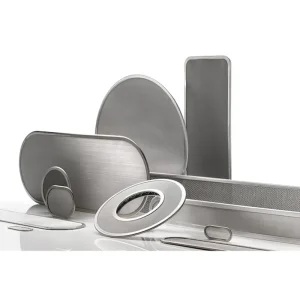
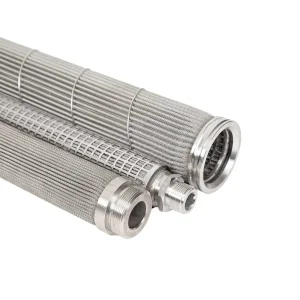
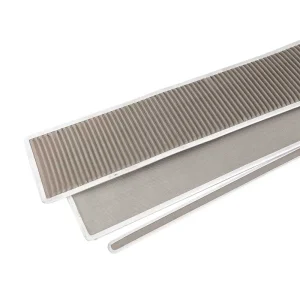
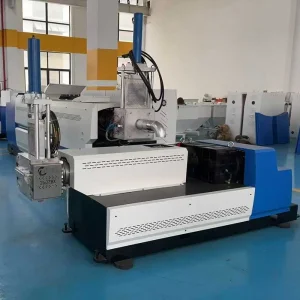
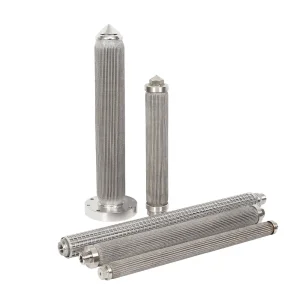
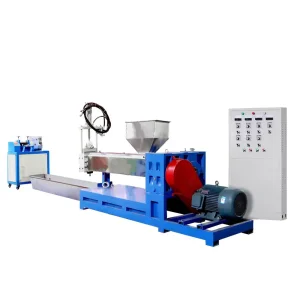
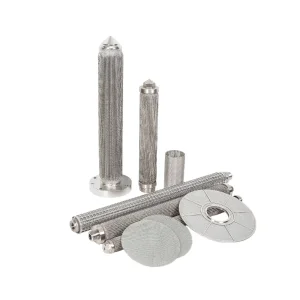
Understanding the exact quantitative relationship between mesh count, wire diameter, open area percentage, and absolute micron ratings is fundamental to optimizing polymer extrusion and industrial liquid-solid separation processes.
In industrial filtration manufacturing, "Wire Mesh Size" refers to the number of openings per linear inch (25.4 mm) of woven wire cloth. However, specifying wire mesh based solely on mesh count without accounting for wire diameter ($d$) and aperture size ($w$) leads to severe discrepancies in pressure drop ($\Delta P$), flow velocity, and particle capture efficiency.
As leading suppliers and factories specializing in stainless steel wire mesh filters and polymer melt candle elements, Pujiang HG Plastic Machinery Co., Ltd. utilizes precision-engineered wire cloth adhering to international standards including ASTM E11-22, ISO 9044, and DIN 17740. Below is the primary mathematical formula used by our engineering team to calculate the Open Area Percentage ($A_o$), which dictates flow resistance in polymer extruders and high-pressure fluid filtration lines:
| Mesh Count (per Linear Inch) | Wire Diameter ($d$) mm / Inches | Aperture Width ($w$) mm | Nominal Micron Rating ($\mu\text{m}$) | Open Area Percentage ($A_o$) | Primary Industrial Application |
|---|---|---|---|---|---|
| 10 Mesh | 0.630 mm (0.025") | 1.910 mm | 1910 $\mu\text{m}$ | 56.5% | Coarse Pre-filtration, Coarse Granulation Support Grid |
| 20 Mesh | 0.400 mm (0.016") | 0.870 mm | 870 $\mu\text{m}$ | 46.9% | Heavy Plastic Recycling, Coarse Extruder Breaker Plate Screen |
| 40 Mesh | 0.250 mm (0.010") | 0.385 mm | 385 $\mu\text{m}$ | 36.8% | PP/PE Pelletizing, Primary Slurry Separation |
| 60 Mesh | 0.190 mm (0.0075") | 0.233 mm | 233 $\mu\text{m}$ | 30.3% | Blow Molding Extrusion, Masterbatch Production |
| 80 Mesh | 0.140 mm (0.0055") | 0.178 mm | 178 $\mu\text{m}$ | 31.3% | Film Extrusion (BOPP), Fine Polymer Filtration |
| 100 Mesh | 0.110 mm (0.0043") | 0.144 mm | 144 $\mu\text{m}$ | 32.1% | Sheet Extrusion, Multi-layer Sintered Mesh Core |
| 200 Mesh | 0.050 mm (0.0020") | 0.077 mm | 77 $\mu\text{m}$ | 36.8% | Spunbond Nonwoven Fabric, Fine Melt Spinning |
| 325 Mesh (Dutch Weave) | 0.035 / 0.025 mm | 0.044 mm | 44 $\mu\text{m}$ | 28.5% | High-Viscosity Polymer Candle Filters, BOPET Film |
| 500 Mesh (Twilled Dutch) | 0.025 / 0.018 mm | 0.025 mm | 25 $\mu\text{m}$ | 22.0% | Micro-denier Fiber Spinning, Ultra-fine Melt Refinement |
Selecting the appropriate alloy composition and weave geometry directly governs thermal tolerance, chemical compatibility, structural burst strength under high differential pressure ($\Delta P$), and continuous operational lifespan.
Plain weave (1:1 pattern) provides maximum open area and predictable flow characteristics for standard extruder screens (20 to 200 mesh). Twilled weave (2:2 pattern) allows thicker wires for a given mesh count, yielding significantly higher tensile strength and fatigue resistance in heavy-duty extrusion applications.
Utilizing smaller warp wires and larger shute wires (or vice versa in Reverse Plain Dutch), Dutch weaves deliver ultra-dense aperture spacing. Essential for continuous automatic ribbon screen changers and high-pressure polymer candle filters, offering absolute micron ratings from 5 $\mu\text{m}$ to 80 $\mu\text{m}$.
We manufacture wire mesh using premium SUS 304, AISI 316L, 904L, and Hastelloy C-276. Stainless Steel 316L offers superior molybdenum-enhanced resistance to intergranular corrosion and pitting from acidic additives, organic polymers, and high-temperature oxidation up to 650°C.
From high-speed BOP film production lines to post-consumer plastic recycling plants, engineered wire mesh sizes determine operational efficiency, downtime frequency, and final product purity.
Multi-layer spot welded screen packs (typically 20/60/100/20 mesh combinations) are deployed in single and twin-screw extruders. The outer coarse mesh protects the fine inner 100-mesh filter layer from mechanical shear while retaining un-melted gel particles and inorganic contaminants.
Melt spinning lines require pleated candle filter cartridges and leaf disc filter elements capable of continuous operation at pressures up to 30 MPa and temperatures of 300°C. Precise mesh sizing down to 10 $\mu\text{m}$ prevents spinneret orifice clogging and fiber breakage.
Post-consumer recycling equipment utilizes auto-belt continuous screen changers equipped with high-tensile Reverse Plain Dutch weave mesh belts. These systems handle heavily contaminated input materials (PE, PP, ABS) without interrupting extruder production.
| Filter Architecture | Typical Wire Mesh Sizes | Effective Surface Area Ratio | Max Differential Pressure ($\Delta P$) | Cleanability & Reusability |
|---|---|---|---|---|
| Flat Screen Mesh Packs | 20 Mesh to 200 Mesh Plain/Twill | 1x (Standard Area) | 5.0 to 10.0 MPa | Disposable / Single-Use |
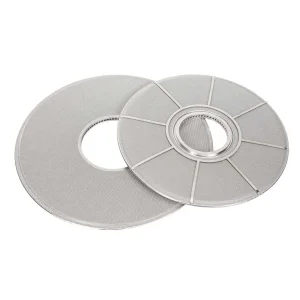
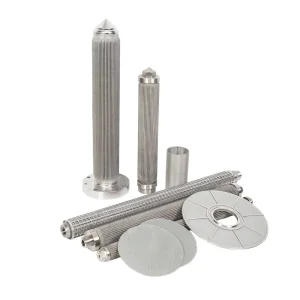
| Polymer Leaf Disc Filters | 12 $\mu\text{m}$ to 60 $\mu\text{m}$ Dutch / Sintered Felt | 4x to 8x Surface Area Expansion | 15.0 to 25.0 MPa | TEG Cleaning / Calcination Reusable |
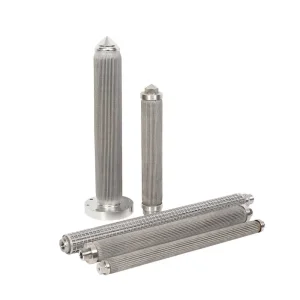
| Pleated Candle Filter Cartridges | 5 $\mu\text{m}$ to 100 $\mu\text{m}$ Pleated Wire Mesh | 6x to 12x Surface Area Expansion | 21.0 to 35.0 MPa | Ultrasonic & Solvent Washable (10+ cycles) |
| Continuous Mesh Filter Belts | 48/10 to 132/16 Reverse Dutch Weave | Continuous Dynamic Feed | 12.0 to 20.0 MPa | Automated Self-Advancing System |
Ensuring complete material traceability, rigorous ISO compliance, and seamless technical support for international industrial operations.
Every batch of raw stainless steel wire (SUS 304, 316L, 904L) undergoes Positive Material Identification (PMI) chemical spectrum analysis. We supply EN 10204 3.1 Mill Test Certificates detailing exact Chromium, Nickel, and Molybdenum weight percentages.
Our factory conducts Bubble Point Testing according to ISO 4003 to verify maximum pore size and absolute micron rating integrity. Structural burst resistance tests ensure elements withstand up to 21 MPa differential pressure without seam rupture.
With clients in over 80 countries across Europe, the Americas, and Southeast Asia, Pujiang HG Plastic Machinery provides custom technical drawings (CAD/STEP), rapid sample turnaround within 48 hours, and cleanroom vacuum packaging.
As polymer processing speeds increase and post-consumer recycled plastic purity standards tighten, wire mesh manufacturing is evolving toward advanced surface coatings and multi-layer sintered metal fiber media.
Integrating chemical vapor deposition (CVD) nano-coatings on stainless steel wire meshes lowers surface energy, drastically reducing polymer melt shear degradation, cross-linking gel adhesion, and pressure drop across sub-20 $\mu\text{m}$ filtration media.
Combining woven wire mesh support layers with three-dimensional nonwoven sintered stainless steel fiber felt provides up to 85% void volume, resulting in a 3x higher dirt-holding capacity and extended stream life compared to standard woven wire cloth.
Real-time pressure drop sensors and automated continuous belt advancement systems dynamic-track impurity loading rates, minimizing melt thermal degradation and optimizing wire mesh consumption in high-capacity granulators.
Browse our complete range of custom leaf disc filters, pleated candle cartridges, and high-efficiency plastic pelletizing equipment.
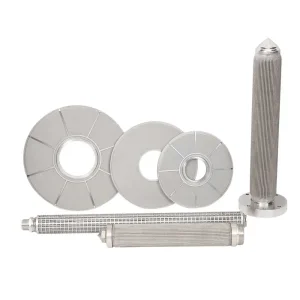
Detailed engineering answers covering mesh conversions, cleaning protocols, alloy selection, and extruder screen pack optimization.