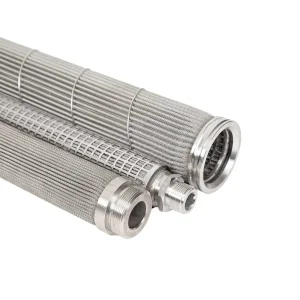
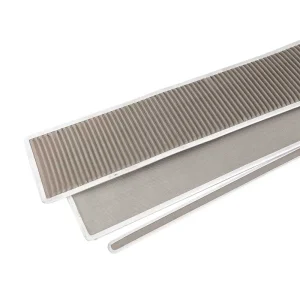
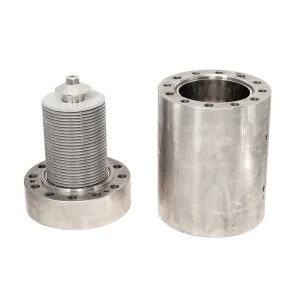
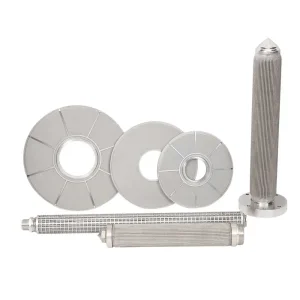
Explore our core industrial polymer melt candle filters, screen mesh elements, and plastic pelletizing filtration components designed for high-temperature and extreme-pressure environments.
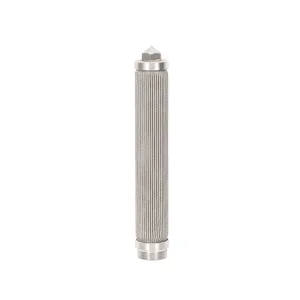
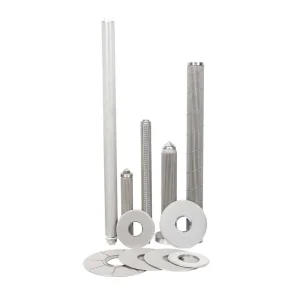
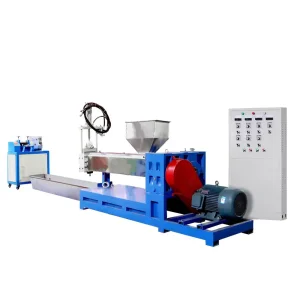
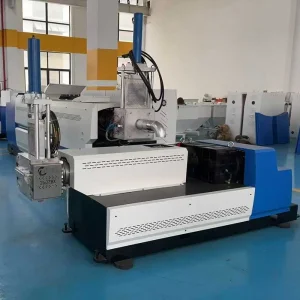
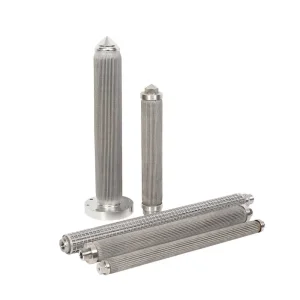
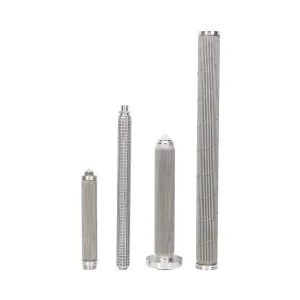
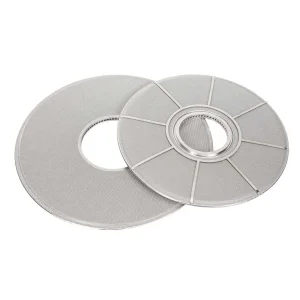
As global industrial manufacturing advances toward extreme operating parameters, ultra-clean polymer processing, and circular plastic recovery, metal filter media have transitioned from basic consumables to critical process-enabling components.
Modern industrial processing demands continuous, uninterrupted fluid and melt purification under extreme thermal and mechanical loads. Across North America, Europe, and Asia-Pacific, manufacturing sectors such as BOPET/BOPP thin-film extrusion, synthetic fiber melt spinning (Polyester, Nylon, Polypropylene), petro-chemical synthesis, and micro-electronics manufacturing require zero-defect melt streams.
Standard disposable polymer depth filters or organic membranes collapse under high-viscosity conditions, elevated temperatures (>300°C), and corrosive chemical feeds. Premium stainless steel metal filters—utilizing advanced sintered metal felt, multi-layer sintered wire mesh, and precision Dutch woven wire cloth—provide structural integrity, mechanical endurance, and complete chemical inertness necessary to maintain zero-defect production runs.
The global industrial shift toward circular plastics and recycled post-consumer resins (PCR/PIR) has dramatically escalated mechanical stresses on extrusion filtration hardware. Recycled feedstocks contain unpredictable contamination profiles, ranging from degraded gel fractions and residual carbon particles to metallic micro-inclusions.
Engineered metal candle filters and multi-stage leaf discs act as primary defenders against premature spinneret clog, line outages, and yarn breakages. Leading global engineering procurement managers now view metallic filter elements not as commoditized consumable items, but as high-yield capital assets that directly dictate plant overall equipment effectiveness (OEE) and operational profitability.
Understanding the micro-structural differences between sintered metal fiber felt, sintered mesh, and woven wire cloth is critical to selecting the optimal metal filter element for high-viscosity media.
Manufactured by non-woven laying of microscopic stainless steel fibers (down to 2 microns in diameter) followed by high-temperature vacuum sintering. Provides an ultra-high porosity network (up to 85%), extremely low initial differential pressure ($\Delta P$), and exceptionally high Dirt Holding Capacity (DHC).
Best For: High-viscosity polymer melt filtration (PET, PA66, PP), gel retention in yarn spinning, and optical film processing.
Composed of multiple layers of woven wire mesh (drainage layer, fine filtration layer, protective layer) diffusion-bonded together under heat and vacuum. Creates a rigid, dimensionally stable structure with fixed pore geometries that will not deform under pulsating hydraulic pressures.
Best For: High-pressure candle filter elements, backwashable systems, extreme hydraulic environments, and pharmaceutical fluids.
Fabricated using automated precision weaving looms in Plain Weave, Twilled Weave, or Dutch Weave configurations (e.g., Reverse Plain Dutch). Features exact surface pore distributions and linear flow channels, allowing predictable surface-level dirt collection.
Best For: Extruder screen mesh packs, continuous belt screen changers, coarse pre-filtration, and fast surface cleaning applications.
| Performance Parameter | Sintered Metal Fiber Felt | Multi-Layer Sintered Wire Mesh | Dutch Woven Wire Cloth |
|---|---|---|---|
| Porosity Range (%) | 70% – 85% (Ultra-High) | 35% – 50% (Medium) | 25% – 40% (Standard) |
| Dirt Holding Capacity (DHC) | Exceptional (Depth Filtration) | Moderate to High | Surface Level (Low) |
| Micron Rating Precision | 3μm to 100μm Absolute | 1μm to 200μm Absolute | 10μm to 500μm Nominal |
| Mechanical Rigidity & ΔP Stability | Requires Internal Support Core | Self-Supporting, High Burst Strength | Requires Support Mesh Pack |
| Regenerative Cleanability | Excellent (Pyrolysis / Chemical) | Outstanding (Ultrasonic / Backwash) | Good (Manual Surface Wash) |
| Primary Alloy Options | AISI 316L, Hastelloy C-276 | AISI 304, 316L, Inconel 600 | AISI 304, 316, 316L, Nickel |
Why international enterprise buyers leverage China's advanced metallurgical manufacturing ecosystems (such as Pujiang and regional industrial clusters) for high-precision metal filter procurement.
China's specialized industrial filter manufacturing centers consolidate the entire supply chain within localized radii. From raw stainless steel rod drawing and micro-wire weaving to vacuum sintering, laser cutting, automated circumferential TIG welding, and bubble-point testing—every process step occurs in-house.
This structural integration yields significant strategic benefits for global procurement teams:
High-quality Chinese filter manufacturers operate under strict international compliance protocols. Quality assurance is integrated into every stage of production:
Industrial metal filters perform essential functions across critical manufacturing sectors. Here is how specialized elements perform under demanding operating conditions.
Challenge: Biaxially Oriented Polyester (BOPET) and Polypropylene (BOPP) film lines run continuously at ultra-high speeds. Microscopic gel particles or carbon specks larger than 5 microns cause pinholes, optical haze, or film web breaks during high-ratio orientation stretching.
Solution: Implementation of high-surface-area Polymer Leaf Disc Filters (Hard or Soft Hub) utilizing 316L sintered metal fiber felt. The large filtration area reduces melt velocity and shear stress, effectively trapping soft gels while maintaining long extended on-stream life cycles of up to 60 days before filter changeout.
Challenge: Nonwoven fabric manufacturing relies on thousands of microscopic spinneret capillaries (down to 0.15mm diameter). Particle contaminants cause single-filament breakages, nozzle blockages, and non-uniform fabric density.
Solution: Deployment of Pleated Stainless Steel Candle Filter Cartridges. Pleating increases active filtration area by 250% to 400% within compact vessel footprints, minimizing pressure drop ($\Delta P$) growth and allowing uniform thermal distribution across high-temperature melt manifolds.
Challenge: Recycled PP/PE/PET flakes introduce heavy contaminant loads (paper residue, cross-linked polymers, wood flour, metallic grit) into twin-screw pelletizing extruders, quickly blinding traditional single-layer wire screens.
Solution: Utilization of heavy-duty Multi-Layer Spot-Welded Screen Packs and continuous belt wire screen filters. Engineered with robust outer support meshes and coarse drainage layers, these elements endure extreme hydraulic pressure fluctuations during automatic backwashing or screen changing sequences.
Challenge: Aggressive acid/alkali slurry flows and hot gas feeds in petrochemical refineries require solid-liquid separation while operating at temperatures exceeding 400°C and under intense chemical exposure.
Solution: Custom-engineered Sintered Metal Porous Tubes and Hastelloy C-276 Filter Cylinders. These elements provide total chemical corrosion immunity, high thermal shock stability, and cleanable operation in liquid catalyst recovery and gas clarification columns.
Evaluating capital expenditure (CapEx) against long-term operational expenditure (OpEx) when transitioning to high-grade cleanable stainless steel filtration systems.
While high-grade stainless steel candle filters and leaf discs require a higher initial capital investment compared to disposable fiberglass or paper filter cartridges, their multi-year operational lifespan delivers a lower Total Cost of Ownership (TCO).
Because premium 316L sintered metal filter elements can undergo repeated off-line chemical and thermal regeneration cycles (up to 20–30 cleanings per element), the amortized cost per metric ton of processed polymer drops drastically over time.
Key innovations transforming polymer melt filtration performance, smart monitoring integration, and eco-friendly manufacturing.
Modern extrusion systems are integrating real-time pressure transducers and temperature sensors directly into filter vessels. Differential pressure ($\Delta P$) algorithms predict exact media saturation curves, signaling optimum maintenance windows before melt fracture or pressure bypass occurs.
Metallurgical fiber drawing technologies now produce stainless steel fibers under 1 micron in diameter. Sintering these ultrafine fibers creates filter media capable of sub-micron absolute rating (0.5μm) for critical optical-grade polycarbonate (PC) and semiconductor fluid purification.
Transitioning away from chemical solvents (such as TEG or hazardous acids), next-generation cleaning facilities use advanced eco-friendly vacuum calcination ovens paired with high-pressure waterjet backflushing, reducing plant chemical effluent to zero.
Expert insights addressing structural selection, fluid dynamics, cleaning protocols, and China supplier evaluation.
Browse our extensive selection of polymer candle filter cartridges, extruder screen meshes, leaf disc filters, and industrial recycling machinery options available for direct export.