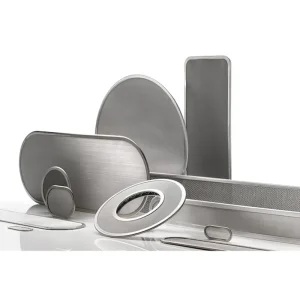
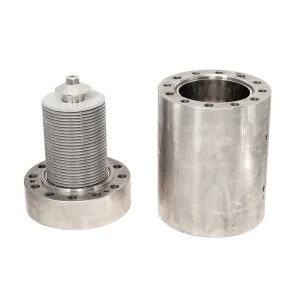
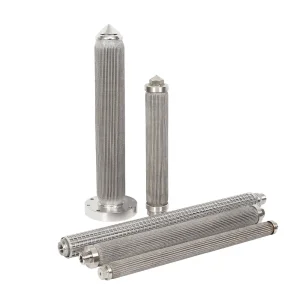
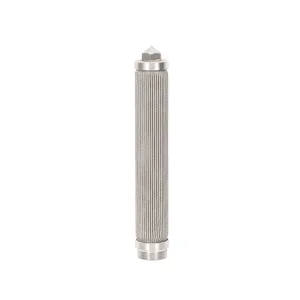
Explore our top-tier stainless steel polymer melt filtration units, engineered for minimal delta-P, superior dirt-holding capacity, and extended on-stream operational life.
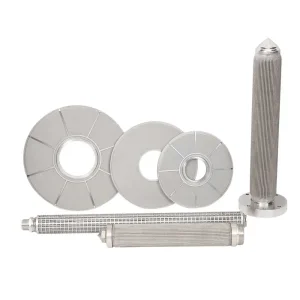
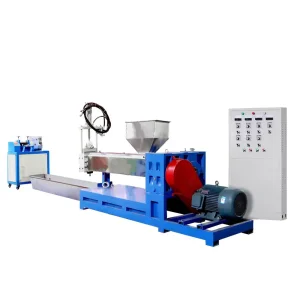
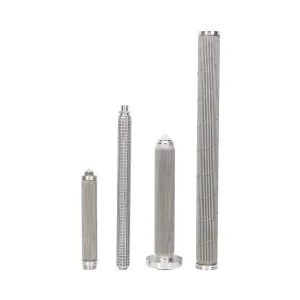
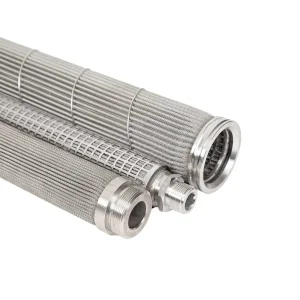
In modern high-speed polymer processing—encompassing PET synthetic fiber spinning, BOPP optical film extrusion, and post-consumer plastic recycling—the efficiency of continuous melt filtration dictates both product yield and mechanical integrity. A premier polymer filtration machine serves as the critical line of defense against particulate contamination, cross-linked gels, carbonized degradation products, and inorganic inclusions.
Primary engineering challenges in molten polymer processing stem from non-Newtonian fluid behaviors under high shear rates, extreme operating temperatures (up to 350°C), and differential operational pressures reaching 35 MPa. Standard filtration mechanisms often collapse under such severe thermal and mechanical stresses, causing gel shear-through, rapid channel clogging, and premature system downtime. Leading manufacturers solve these physics-based constraints by integrating advanced metallurgy, finite-element fluid channel designs, and multi-layered sintered mesh matrices.
Unlike rigid metallic contaminants, polymer micro-gels are deformable viscous entities. High-quality leaf disc and candle filters leverage tortuous-path sintered stainless steel fiber felt to capture gels via depth-filtration rather than mere surface straining, preventing extrusion wire breakages.
Stagnation points inside a melt filter lead to thermal degradation and polymer charring. State-of-the-art filtration machine factories employ CFD (Computational Fluid Dynamics) modeling to craft streamlined flow channels with zero dead zones, guaranteeing narrow residence time distribution (RTD).
Excessive pressure drop (ΔP) across filter media causes melt temperature spikes and degrades polymer chains. Sintered metal mesh structures offer high porosity (up to 80%), minimizing initial ΔP while maximizing effective filtration surface area per volume unit.
As global sustainability mandates push plastic recycling toward 100% PCR (Post-Consumer Recycled) content and synthetic fiber producers strive for sub-denier fineness, polymer filtration machinery is undergoing radical technological shifts. Top-tier manufacturers are pioneering four foundational tech pillars:
Legacy manual screen changers induce severe pressure fluctuations during index changes. Future continuous hydraulic backwash systems integrate embedded pressure sensors, thermal imaging, and adaptive AI algorithms. By dynamically regulating backwash timing based on real-time melt rheology, polymer loss is reduced to under 0.1% while maintaining zero downstream flow disruption.
Traditional SUS 304 wire mesh is increasingly replaced by nano-porous sintered 316L, Hastelloy C-276, and Inconel 625 elements. Advanced vacuum sintering techniques create non-uniform gradient pore structures (e.g., 80 micron outer pre-filter layer transitioning into a 5 micron inner precision layer), boosting dirt-holding capacity by 300% over woven wire cloth.
Sustainability in filter cartridge manufacturing emphasizes extended circular lifecycles. Modern factories provide automated TEG (Triethylene Glycol) hydrolysis, vacuum calcination ovens, and high-frequency ultrasonic cleaning protocols. Polymer candle filter cartridges can undergo 10–15 regeneration cycles without structural pore distortion.
Incorporating IO-Link digital pressure transducers, vibration analysis on continuous rotating disc screens, and automated clogging telemetry allows plant operators to predict filter replacement windows days in advance, eliminating unscheduled extrusion line stoppages.
Polymer melt filtration requires distinct operational parameters across film processing, nonwovens manufacturing, and mechanical recycling. The table below details key performance metrics across major industry verticals:
| Application Sector | Primary Polymer Types | Filter System Architecture | Filtration Rating (μm) | Key Operational Challenge |
|---|---|---|---|---|
| Spunbond Nonwovens | PP, PET, PLA | Hydraulic Continuous Candle Filters | 15 – 40 μm | Preventing spinneret orifice clogging & filament breaks |
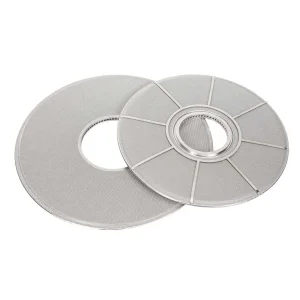
| BOPP / BOPET Optical Film | PP, PET, PEN | Multi-Plate Leaf Disc Filters (Segmented) | 5 – 20 μm | Eliminating optical specks, fisheyes, and micro-gels |
| Recycling & Pelletizing | rPET, PE, ABS, PA | Continuous Dual-Piston Belt Screen Changers | 80 – 250 μm | Handling heavy paper, aluminum, and sand contamination |
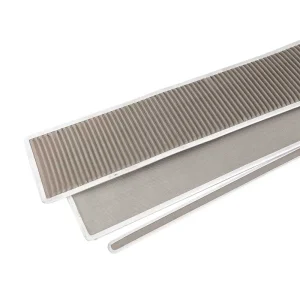
| Chemical Fiber (POY/FDY) | Polyester, Nylon 6/66 | Pleated Metal Felt Filter Cartridges | 3 – 10 μm | Extreme pressure resistance under high-viscosity flow |
As global buyers seek robust manufacturing partners, leading China polymer filtration machine manufacturers combine extensive metallurgical supply chains with rigorous international quality standards. Modern factories in Zhejiang and Jiangsu industrial hubs provide unmatched scale and technical flexibility.
From raw stainless steel wire drawing and precision weaving to advanced vacuum sintering furnaces, vertically integrated Chinese plants maintain complete control over raw material purity, ensuring consistent tensile strength and mesh uniformity.
State-of-the-art factories employ automated robotic laser seam welding, 5-axis CNC machining for filter housings, and ISO 8 cleanroom assembly spaces to eliminate particulate contamination prior to shipment.
Full compliance with ISO 9001:2015 quality systems, CE machine safety directives, and EN 10204 3.1 material traceability certificates ensures seamless deployment in North American and European production facilities.
Selecting the optimal polymer filtration machine requires evaluating complex rheological and commercial trade-offs. Procurement teams and chief engineers must audit four fundamental engineering vectors before issuing a Purchase Order (PO):
Calculate required filtration area ($A$) based on maximum throughput ($Q$, kg/hr) and allowable flux rate ($J$, kg/m²·hr). Insufficient surface area forces rapid pressure buildup, triggering premature filter disc changes.
Match metal grade (SUS 304 vs SUS 316L vs Nickel Alloys) to polymer chemistry. Corrosive resins like PVC or fluoropolymers demand Hastelloy housings, whereas standard PP/PE extrusion thrives on 304/316L sintered felt.
Audit energy loss incurred by excessive pressure drops. High-porosity sintered metal media yields lower flow resistance, translating into lower drive motor power draw on extruders across a 10-year service lifecycle.
Ensure manufacturer provides global technical support, rapid-dispatch replacement seals, customized filter disc packs, and on-site engineering commissioning to guarantee 99.5% plant uptime.
Get direct engineering answers regarding polymer filtration machine selection, maintenance protocols, and operational optimization.
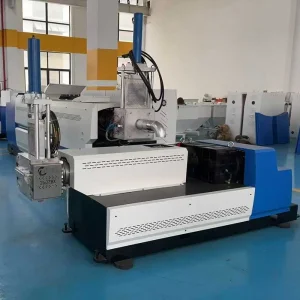
Discover our high-capacity extrusion screen mesh filters, leaf disc elements, and industrial plastic granulating lines engineered for maximum throughput and seamless operational integration.