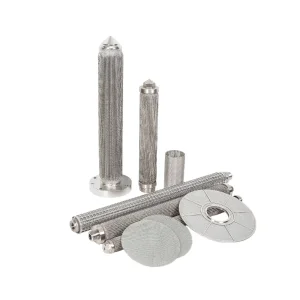
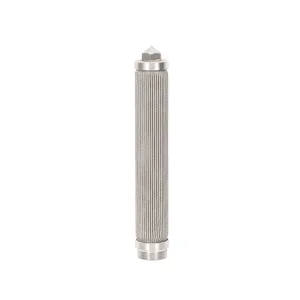
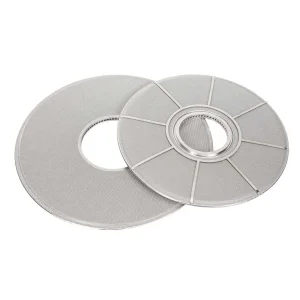
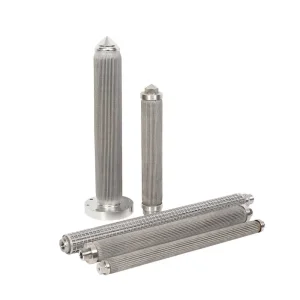
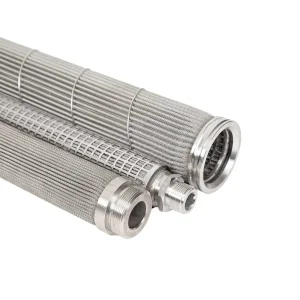
Explore our core engineering catalog designed for seamless integration into global extrusion lines, chemical reactors, and high-viscosity filtration housings.
The global filtration landscape has undergone a monumental paradigm shift over the past decade. Modern industrial chemical processing, polymer manufacturing, and advanced green energy infrastructure demand filtration systems capable of withstanding operational conditions far exceeding the physical limits of traditional woven wire mesh or organic polymer membranes. Sintered powder filter elements—fabricated through high-temperature vacuum metallurgy using titanium, stainless steel (316L, 304L, 310S), Nickel, or Hastelloy powders—have emerged as the undisputed standard for extreme-service liquid and gas clarification.
Driven by tighter global environmental mandates and the rapid expansion of high-purity chemical processing, the industry is witnessing three key technological vectors:
Transitioning from random pore distribution to highly controlled, spherical powder classification via advanced gas atomization, ensuring sharp cut-off efficiency and minimal shear stress on polymers.
Global manufacturing plants are aggressively seeking lower Total Cost of Ownership (TCO). Sintered porous metal cartridges offer chemical, thermal, and ultrasonic cleanability, allowing dozens of reuse cycles.
Co-sintering asymmetric pore layers (coarse support layers combined with ultra-fine powder active surfaces) to multiply dirt-holding capacity while dramatically lowering operating pressure drop (ΔP).
Technical Insight: Unlike standard fiber filters that suffer from media migration or pore collapse under pressure surges, sintered powder structures form solid metallurgical bonds at grain contact points during vacuum sintering. This yields an unyielding, fixed-pore matrix with absolute particle retention stability.
When Tier-1 EPC contracts and multinational chemical processing brands source sintered metal components from international exporters, the procurement evaluation extends far beyond unit price. Procurement officers and plant reliability engineers prioritize rigorous engineering compliance, material authenticity, and seamless operational interchangeability.
| Evaluation Vector | Technical Specification Requirement | Impact on Plant Operations |
|---|---|---|
| Metallurgical Traceability | PMI (Positive Material Identification) report, Spectrometer heat-number logging for SUS 316L, 304, Hastelloy C276. | Prevents unexpected intergranular corrosion and material failure in acidic or high-chloride chemical environments. |
| Pore Distribution Accuracy | Bubble Point Testing according to ISO 4003 / ASTM E128 standards. Mean pore size vs. absolute rating verification. | Guarantees zero particle bypass above target micron rating, preserving downstream pump seals and die lips. |
| Mechanical Integrity | Collapse/Burst resistance testing per ISO 2941. Weld seam micro-section examination. | Ensures filter cartridges sustain differential pressure spikes up to 210 bar without axial buckle or sleeve rupture. |
| Dimensional Precision | CNC machined end fittings (DOE, NPT, Threaded Code 7, Bayonet) with custom Gasket seats (FKM, PTFE, Kalrez). | Allows true drop-in replacement into legacy housing manifolds (e.g., Pall, Fluid Dynamics, Maag systems). |
As a specialized manufacturer and global exporter, our sintered powder and metal mesh filter elements are engineered to resolve complex fluid separation bottlenecks across four core industrial pillars:
In BOPET, BOPP, Nylon 66, and Spunbond nonwoven lines, melt gel filtration is crucial. Sintered powder candles and pleated mesh disc filters eliminate degraded black specks, cross-linked gels, and titanium dioxide agglomerates prior to extrusion spinning, protecting spinneret nozzles and reducing thread breakage rates.
Precious metal catalysts (Platinum, Palladium, Nickel on carbon) used in slurry hydrogenation reactors require zero-loss liquid-solid separation. Sintered porous metal blowback filter elements capture sub-micron solid catalyst particles with 99.9% efficiency, enabling automatic automated backwashing.
Sintered titanium powder sheets and porous transport layers (PTL) serve as essential core components in PEM (Proton Exchange Membrane) and Alkaline water electrolyzers, offering high electrical conductivity, optimum gas bubble release, and extreme acid corrosion resistance.
Achieving micron-accurate porous metal filtration demands absolute mastery over powder metallurgy variables. Our state-of-the-art production facility incorporates specialized cold isostatic pressing (CIP), precision automated lathe machining, high-vacuum sintering furnaces, and robotic TIG/plasma welding setups.
Customization Pipeline: We transform customer engineering specifications into validated physical components through a systematic 5-step engineering pipeline:
Sieving and selecting spherical powders (316L, Titanium, Nickel) with precise grain diameter distributions.
Applying uniform hydrostatic pressure to form seamless green tubes, sheets, or conical geometries.
High-temperature thermal bonding under high vacuum (10^-4 Pa) to eliminate oxidation and maximize tensile strength.
Orbital TIG welding of end caps, threaded adapters, and reinforcing internal cores without thermal distortion.
Exporting high-precision filtration products to North America, the European Union, Southeast Asia, and the Middle East requires flawless alignment with regional industrial codes and import protocols. We provide turnkey export compliance packages for every consignment.
Manufactured in strict compliance with ISO 9001:2015 quality management systems. Pressure vessel internal components align with ASME Section VIII and EU PED (Pressure Equipment Directive 2014/68/EU) guidelines.
Elements undergo ultrasonic solvent cleaning, hot-air drying, nitrogen purging, VCI anti-corrosion film wrapping, and custom foam-lined wooden export crate packing to guarantee 100% rust-free maritime transport.
Every batch is dispatched with complete Mill Test Certificates (EN 10204 3.1), Bubble Point Test Certificates, Dimensional Inspection Sheets, and step-by-step chemical ultrasonic cleaning guidelines.
As industrial processes embrace higher automation and continuous digital monitoring, the next generation of sintered powder filter elements will incorporate smart microstructures and advanced additive manufacturing technologies.
3D printing complex internal fluid channels integrated directly into porous powder structures to minimize flow resistance in high-viscosity media.
Functionalizing internal porous metal pore surfaces with catalytic coatings to combine filtration and chemical conversion in a single step.
Integrating micro-thermal and pressure sensors into element end fittings for real-time Industry 4.0 predictive maintenance alerts.
Find authoritative engineering answers regarding selection, cleaning, material compatibility, and customization of porous metal filter media.
While pleated wire mesh provides a higher open surface area for light contaminant loads, sintered powder elements offer superior structural rigidity, depth-filtration performance, and precise pore size control. Powder elements withstand drastically higher differential pressures (ΔP > 25 MPa) without media deformation or pore opening enlargement, making them ideal for high-viscosity polymer melts, abrasive slurry, and extreme pressure backwash environments.
Regeneration protocols depend on the nature of the contaminant. For organic polymers (PET, PA, PP), pyrolytic thermal burn-off or TEG (Triethylene Glycol) boiling tanks are utilized. For inorganic scales and chemical contaminants, sequential ultrasonic bath immersion using mild caustic (NaOH) followed by acid passivation (HNO3/Citric acid) and high-pressure reverse gas/water flushing restores clean pressure drop to within 95-98% of original values.
Absolute rating defines the particle size at which 99.9% of solid particles are retained under standardized test conditions (ISO 4003 bubble point test). Nominal rating refers to an arbitrary gravimetric percentage (e.g., 85%). For critical applications such as polymer fiber spinning or catalyst guard protection, engineering specifications must always mandate absolute-rated porous media to prevent downstream quality failures.
Yes. We specialize in OEM engineering and reverse-engineering replacement filter cartridges, candle elements, and leaf discs for all major global filter housing manufacturers. By providing physical samples or technical dimensional drawings (OD, ID, overall length, thread specification, and sealing interface), we deliver drop-in elements with identical or enhanced flow efficiency.
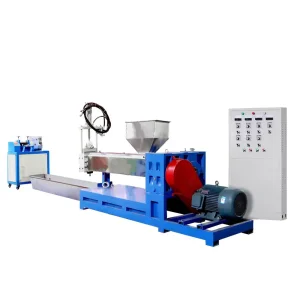
Explore our complete range of specialized stainless steel candle elements, melt disc assemblies, and granulating equipment.