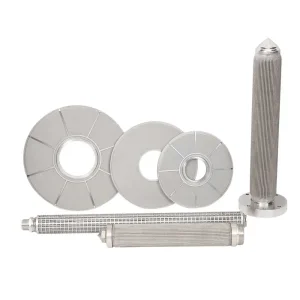
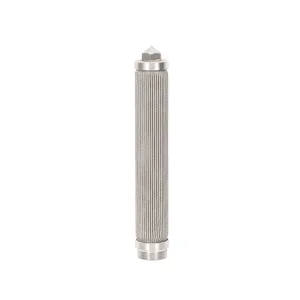
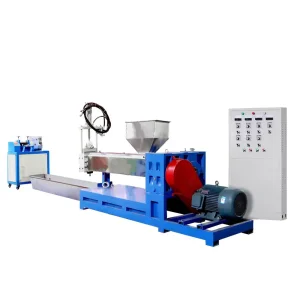
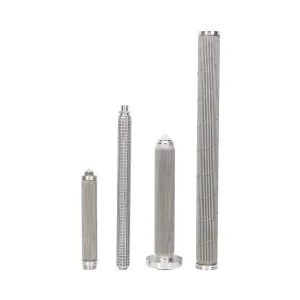
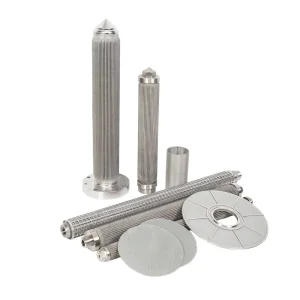
Explore our top ODM and OEM high-viscosity polymer candle filter elements, leaf disc filters, and recycling pelletizing machinery.
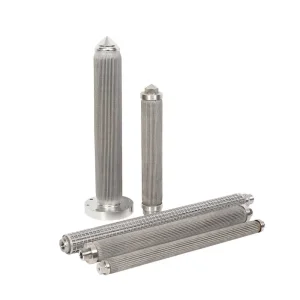
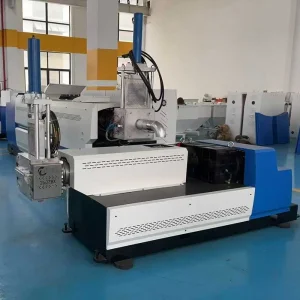
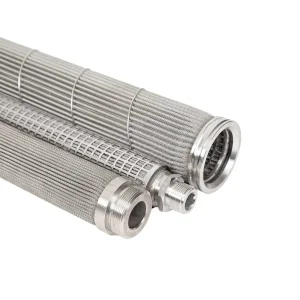
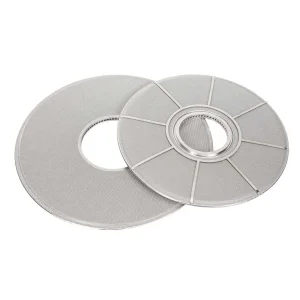
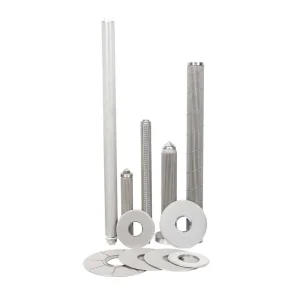
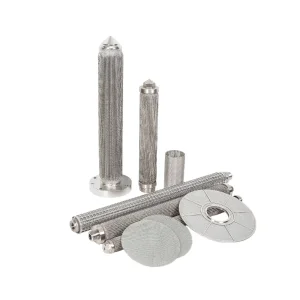
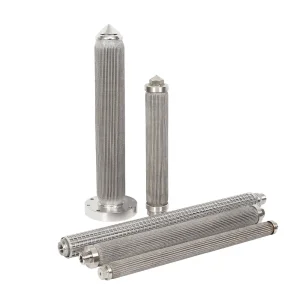
In modern industrial processing, continuous melt filtration represents one of the most critical unit operations across polymer synthesis, film casting, chemical fiber spinning, and plastic recycling. As global market demands push processing temperatures beyond 300°C and system pressures past 200 bar, traditional consumable filter media succumb to structural collapse, gel shear-through, and unacceptable pressure drops (ΔP). Premium ODM filter cartridge manufacturers must deliver solutions engineered at the molecular level, balancing absolute pore rating precision with high dirt holding capacity (DHC) and mechanical longevity.
This technical whitepaper outlines the structural physics, metallurgical selections, procurement metrics, and macro-industrial solutions engineered by leading OEM/ODM filter cartridge factories. By evaluating micro-porous sintered metal fiber felts, multi-layered stainless steel wire cloth, and pleating architectures, plant engineers and procurement directors can achieve minimal total cost of ownership (TCO) while guaranteeing uncompromised end-product quality.
Analyzing the total economic impact, structural requirements, and custom technical parameters evaluated by global B2B buyers.
Global procurement shifts away from initial unit purchase price toward overall life-cycle economics. Premium SUS 304 / SUS 316L filter elements engineered by specialized factories tolerate up to 20 calcination or chemical backwashing cycles, reducing recurring operating expenses by over 45% compared to single-use media.
High differential pressure (ΔP) damages polymer chains due to excess shear stress. Enterprise buyers demand candle filter cartridges and leaf discs with up to 80% open porosity (void volume), allowing high flow rates at low pressure differentials, preserving melt rheology and polymer intrinsic viscosity (IV).
In continuous extrusion lines, a single weld failure causes cataclysmic downtime costing tens of thousands of dollars per hour. ODM manufacturers utilize automated plasma seam welding and vacuum sintering to ensure high collapse rating thresholds (>210 bar differential pressure resistance).
When selecting customized candle filter cartridges from an ODM factory, understanding the structural differences between woven wire mesh and non-woven sintered metal fiber felt is imperative for process optimization:
| Performance Metric | Woven Wire Cloth (SUS 304/316L) | Sintered Metal Fiber Felt | Multi-Layer Sintered Mesh |
|---|---|---|---|
| Porosity / Void Volume | 30% - 45% | 75% - 85% | 50% - 65% |
| Dirt Holding Capacity (DHC) | Standard (Surface Filtration) | Exceptional (3D Depth Filtration) | High (Hybrid Matrix) |
| Filtration Rating Range | 10μm - 500μm | 3μm - 60μm | 5μm - 200μm |
| Gel Retention Capability | Moderate (Prone to Shear-Through) | Outstanding (Complex Tortuous Path) | High |
| Cleanability & Reusability | Very Easy (Ultrasonic / Solvent) | Requires Controlled Calcination | Excellent Chemical/Backwash Cleaning |
Tailored filtration matrixes for chemical fiber, biaxially oriented film, and circular plastic economy infrastructures.
In synthetic yarn and staple fiber production (POY, FDY, PSF), microscopic gel particles and carbonized inclusions cause filament breakage on spinnerets. Customized CPF (Continuous Polymer Filter) candle assemblies using 316L stainless steel pleated cartridges increase spinneret pack life by 300%, maintaining consistent filament denier and color uniformity.
Ultra-thin capacitor films and optical-grade display films require zero optical defects (pinholes or fisheyes). Leaf disc filter systems (such as Win Series hard disc and soft disc designs) provide large surface area within a compact vessel footprint, eliminating stagnant flow zones where thermal degradation occurs.
For hygiene and medical spunbond lines, continuous melt flow without pressure surges is paramount. Pleated candle cartridges engineered with graded pore density arrest contaminants while allowing high volumetric throughput, ensuring uniform fiber web formation across high-speed beams.
Recycling heavily contaminated PCR/PIR plastics (PP, PE, PS) requires robust continuous screen changers and high-capacity screen mesh filters. Custom-engineered multi-layer extruder screen discs withstand severe solid contaminant loads without blinding, powering efficient pelletizing operations.
The operational lifespan and filtration efficiency of an ODM filter element depend fundamentally upon metallurgical selection, pore geometry engineering, and seam welding integrity. Leading factories employ advanced alloy metallurgy to withstand aggressive chemical environments and extreme thermal cycles.
A central decision in ODM engineering is selecting between cylindrical (smooth) and pleated filter element geometries. While smooth cylindrical elements provide ease of cleaning and uniform flow for ultra-high viscosity resins (>1,000 Pa·s), pleated filter cartridges increase the effective filtration surface area by 200% to 400% within identical vessel dimensions.
This dramatic expansion of surface area lowers the face velocity across the media, yielding three immediate benefits:
Unlike disposable synthetic cartridges, high-grade metallic filter elements represent long-term capital assets. A standardized cleaning methodology developed by our ODM technical facility restores permeability to >98% of virgin specification:
Rigorous quality control protocols ensuring compliance with ISO, CE, FDA, and global industrial standards.
Every custom filter element undergoes non-destructive bubble point testing according to ISO 4003 standards to verify maximum pore size and guarantee absolute pore rating accuracy without manufacturing pinholes.
Structural integrity is validated under differential pressure fatigue testing up to 210 bar. Core tubes and outer protection shrouds are mathematically modeled via FEA (Finite Element Analysis) to prevent catastrophic buckling.
All stainless steel alloys are batch-certified with full raw material mill test reports (MTR) according to EN 10204 3.1 standards, ensuring full compliance for food-contact plastics, medical devices, and pharmaceutical applications.
Expert technical insights regarding ODM filter cartridge manufacturing, customization options, and plant operation.
Standard custom ODM prototyping requires 7 to 14 working days following CAD drawing approval. Full production batch orders (500 to 5,000 units) are typically delivered within 3 to 4 weeks, with expedited emergency production options available for plant turnaround schedules.
SUS 304 is ideal for non-corrosive commodity polymers like Polypropylene (PP) and Polyethylene (PE) operating under standard conditions. SUS 316L is strongly recommended for corrosive chemical environments, high temperatures (>280°C), or polymers like PET, PA66, and PC that produce acidic byproducts during thermal processing.
Yes. Our ODM factory specializes in reverse engineering and dimensionally matching all major international OEM vessel connections, including standard NPT/BSP threads, NLS adapters, 222/226 O-ring connections, and custom flange interfaces, guaranteeing 100% drop-in compatibility.
With proper cleaning protocols (such as TEG vapor depolymerization, calcination, and ultrasonic cavitation), premium 316L sintered fiber felt and wire mesh elements can routinely undergo 15 to 20 rejuvenation cycles without compromising pore structure or structural strength.
Discover our comprehensive collection of candle filter elements, CPF cartridges, and plastic recycling equipment.