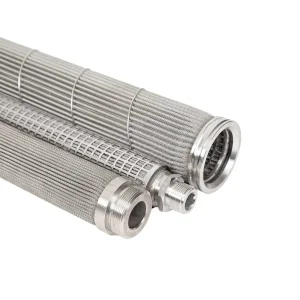
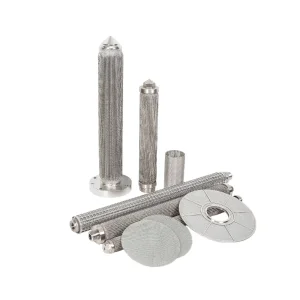
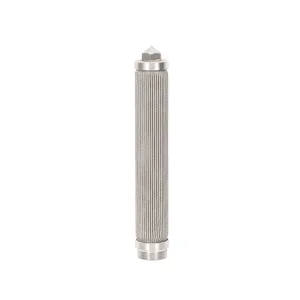
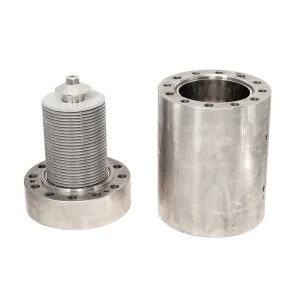
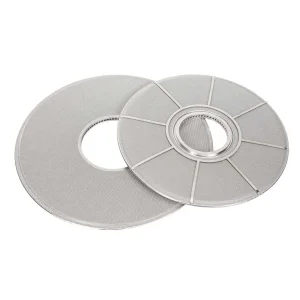
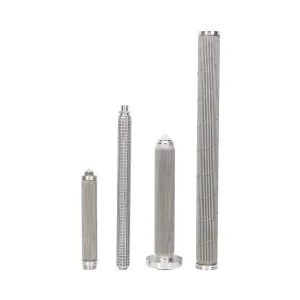
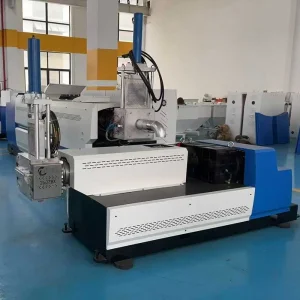
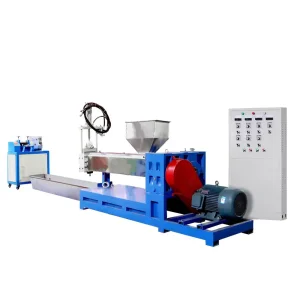
Explore our flagship series of leaf disc elements, candle filter cartridges, wire mesh screen packs, and heavy-duty granulating machinery engineered for zero-defect polymer processing.
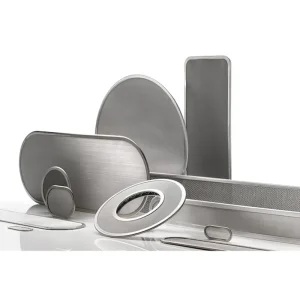
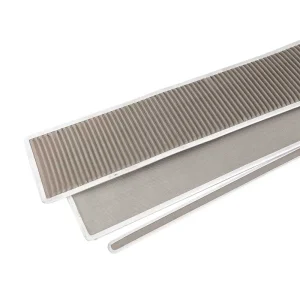
The global polymer processing sector—spanning thermoplastic extrusion, biaxially oriented film manufacturing (BOPET, BOPP, BOPA), synthetic fiber spinning (Polyester, Nylon, Polypropylene), and post-consumer plastic recycling—is undergoing an unprecedented technological transition. As multinational polymer converters strive for higher throughputs, thinner film gauges, and rigorous circular economy compliance, the operational stress placed on melt filtration systems has amplified exponentially.
The integration of Post-Consumer Recycled (PCR) and Post-Industrial Recycled (PIR) resin introduces variable particulate sizes, cross-polymer gels, paper fibers, and degraded oxidized specks that rapidly blind traditional single-layer wire screen packs.
Optical-grade capacitor films, lithium battery separators, and flexible food packaging require absolute retention of gels and hard contaminants down to 3 to 5 microns without inducing thermal polymer degradation or shear stress.
Unplanned extruder shutdowns caused by filter blowout or excessive pressure differential drops (ΔP) lead to catastrophic loss of resin melt batch continuity, high energy expenditure, and extensive downtime cost per hour.
Understanding the physics of high-viscosity non-Newtonian fluid flow through porous metallic media is critical when selecting between Polymer Leaf Disc Filters, Candle Filter Cartridges, and Multi-layer Extruder Screen Mesh packs.
When molten polymer (PET, PP, PE, PA66) passes through a metallic porous bed, the pressure drop across the media is governed by the modified Darcy-Forchheimer equation for non-Newtonian fluids:
Where η represents dynamic melt viscosity, K is the absolute permeability coefficient of the metallic fiber felt or woven mesh, v is the linear melt velocity, L is the media thickness, and β is the non-Darcian inertia coefficient. Maintaining low velocity gradients prevents local polymer stagnation, thermal degradation, and premature gel breakdown.
Industrial polymer melt contaminants are divided into rigid solids (metal turnings, silica, degraded carbon specks) and soft deformables (high molecular weight micro-gels). Standard single-layer wire cloth often lets soft gels extrude through under high pressure. Advanced SUS 316L Sintered Metal Fiber Felt utilizes deep-bed filtration kinetics where three-dimensional random fiber networks capture micro-gels through tortuous depth mechanical entrapment and shear-stress relaxation.
| Filtration Media Type | Structure & Architecture | Absolute Micron Rating (μm) | Dirt Holding Capacity (g/cm²) | Regeneration Capability |
|---|---|---|---|---|
| Sintered Metal Fiber Felt | Non-woven 3D random stainless steel micro-fibers sintered at high temp | 3 - 60 μm | Very High (0.08 - 0.15 g/cm²) | Ultrasonic, Pyrolysis, TEG Bath (Up to 20 cycles) |
| Multi-Layer Sintered Wire Mesh | Woven wire mesh sheets diffusion-bonded under thermal vacuum | 5 - 250 μm | Medium (0.03 - 0.06 g/cm²) | Backwashing, Solvent Flush, Ultrasonic |
| Plain/Twill Woven Screen Packs | Single or spot-welded stainless steel wire cloth layers | 20 - 500 μm | Low (0.01 - 0.03 g/cm²) | Single-use / Disposable continuous belt |
| Metal Powder Sintered Discs | Isostatically pressed metallic spherical powder grains | 0.5 - 20 μm | Medium-Low (High rigid retention) | Chemical Acid/Solvent Bath Cleaning |
As a specialized ODM/OEM polymer filter manufacturer based in Zhejiang, China, Pujiang HG Plastic Machinery Co., Ltd. provides complete customized design-to-production workflows tailored to OEM extrusion system builders and multinational polymer processing facilities.
We analyze customer polymer chemistry (PET, PE, PP, PA, PC, fluoropolymers), melt flow index (MFI), operating temperature, viscosity curves, and target contaminant particle distribution.
Utilizing 3D finite element analysis (FEA) and Computational Fluid Dynamics (CFD), we model internal melt flow channels within candle filter hubs and leaf disc sector drains to eliminate dead zones.
Selecting optimum alloy grades: SUS 304 for standard polypropylene/polyethylene extrusion; SUS 316L for aggressive chemical fibers; and Hastelloy C-276 / Inconel 625 for fluoropolymer processing.
Thermal diffusion sintering under ultra-clean vacuum furnaces binds micro-wires and porous fibers without sealant or bonding agents, ensuring high tensile burst strength up to 210 bar differential pressure.
Every batch undergoes Bubble Point Testing (ISO 4003), absolute pore size distribution validation, dimensional CMM verification, and helium leak testing prior to vacuum export packaging.
We provide clients with standard operating procedures (SOP) for TEG (Triethylene Glycol) hydrolysis, calcination oven thermal cleaning, and ultrasonic bath revival to extend filter operational lifespans up to 5 years.
Polymer filtration elements manufactured by HG Machinery serve critical roles in major chemical processing hubs worldwide, including North America, the European Union, Southeast Asia, the Middle East, and South America.
To meet the demanding global compliance frameworks of tier-1 plastic machinery builders and chemical conglomerates, our manufacturing plant operates strictly under ISO 9001:2015 Quality Management Standards.
Verifies the maximum pore diameter and structural integrity of porous sintered metallic media, ensuring no oversized pinholes or seam defects exist.
Evaluates dirt holding capacity, filtration efficiency, and Beta ratios (β-values) under simulated fluid flow differential conditions.
Full raw material heat number traceability, PMI (Positive Material Identification) spectrographic alloy checks, and compliance with ASME Section VIII pressure vessel directives.
Detailed technical answers to common engineering inquiries from polymer plant managers, procurement officers, and machinery designers.
Leaf Disc Filters offer a flat, modular donut geometry mounted on a central tie-rod bundle, providing an exceptionally high filtration surface area within a short vertical housing length. They are ideal for high-throughput film extrusion lines (BOPET/BOPP) where uniform residence time is critical. Candle Filter Cartridges utilize cylindrical or pleated tubular geometries, offering deep filtration volume and easier backwashing capability, making them preferred for synthetic fiber spinning, resin polymerization, and compact extrusion housings.
Stainless Steel 304 (SUS 304) is the industry benchmark for standard polyolefin processing (polyethylene, polypropylene) under non-corrosive conditions up to 300°C. Stainless Steel 316L (SUS 316L) contains molybdenum, providing significantly higher resistance to organic acids, halogenated compounds, and chemical fiber solvents (e.g., in PET, Nylon, and PC melt lines). For highly corrosive fluoropolymers or acidic additives, specialized nickel alloys like Hastelloy C-276 are required.
Our heavy-duty sintered metallic candle filter cartridges are engineered to withstand differential burst pressures ranging from 150 bar to 210 bar (2,175 psi to 3,045 psi), depending on internal core structural reinforcement and wire mesh wire diameter configuration. However, standard operational procedures recommend initiating filter regeneration or backwashing when ΔP reaches 30 to 50 bar to prevent shear-induced gel passage.
Yes, high-grade metallic filter elements (sintered felt and wire mesh) are fully reusable. Standard cleaning procedures involve TEG (Triethylene Glycol) boiling baths to dissolve polyester residues, followed by controlled vacuum pyrolysis furnaces to carbonize remaining polymer chains, and completed with high-frequency ultrasonic baths with mild surfactant flushes. Proper cleaning can restore up to 95-98% of original clean pressure drop permeability over multiple cycles.
We provide end-to-end ODM/OEM support. Customers can supply 2D engineering drawings (DWG/PDF) or 3D STEP files, or mail physical sample filter elements to our technical center. Our engineering team conducts reverse engineering dimensional measurement, material alloy spectrographic analysis, and mesh pore size determination, returning detailed manufacturing blueprints within 48 hours for client sign-off.
Explore our full specialized catalog of high-efficiency SUS 304/316 polymer melt filter elements, pleated candle cartridges, and plastic recycling granulating systems.