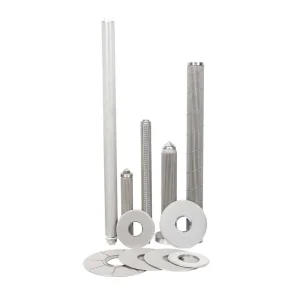
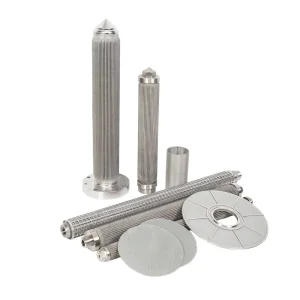
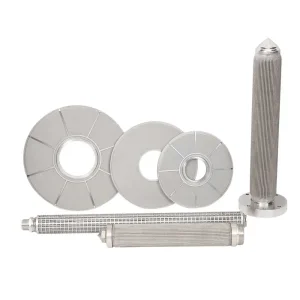
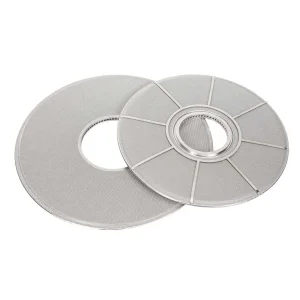
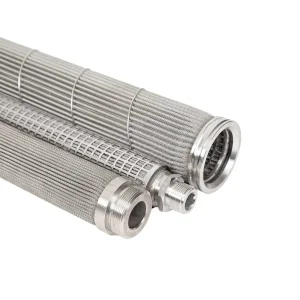
Explore our high-performance OEM candle filter elements, screen mesh assemblies, and recycling granulating systems engineered for rigorous melt filtration processes.
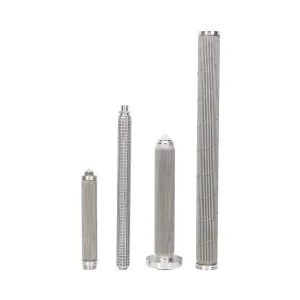
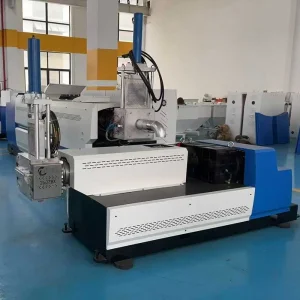
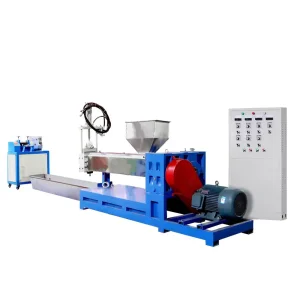
A deep dive into fluid dynamics, shear stress mitigation, and dirt retention mechanics in high-temperature polymer extrusion lines.
In high-viscosity polymer melt filtration (such as PET, PA66, PP, and PE processing), molten plastics exhibit non-Newtonian, shear-thinning fluid behavior under temperatures reaching up to 350°C and operational pressures exceeding 250 bar. Standard woven wire mesh media often succumbs to structural wire displacement under severe initial pressure drops ($\Delta P$), resulting in rating degradation, pore enlargement, and unacceptable gel pass-through.
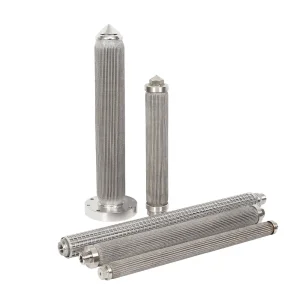
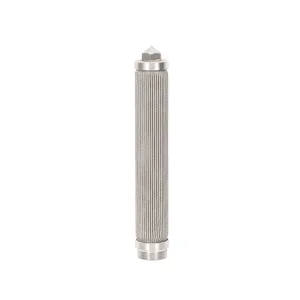
Precision-engineered OEM candle filter media utilizes multi-layered sintered metal fiber felts (3D depth filtration matrix) or vacuum-sintered wire mesh structures. By increasing total filtration surface area via geometric star-pleating, candle filter elements lower the localized flux rate (flow per unit area), dramatically reducing differential pressure drop, preventing polymer degradation caused by localized frictional heating, and ensuring absolute particle containment.
Polymer contaminants are rarely rigid spheres; they primarily consist of deformable organic gels, degraded cross-linked oligomers, and hard inorganic catalyst residues (such as $TiO_2$ additives). Under extreme hydraulic shear stress, soft gels squeeze through conventional 2D surface wire meshes.
Our specialized OEM Candle Filter Cartridges utilize asymmetrical depth-filtration gradient structures. Highly porous outer layers trap large inorganic particulate, while sub-micron inner sintered metallic fiber matrices capture semi-deformable gels through tortuous flow channels and mechanical entrapment. This hybrid mechanism extends continuous on-stream service life by up to 300% compared to standard cylindrical screen mesh packs.
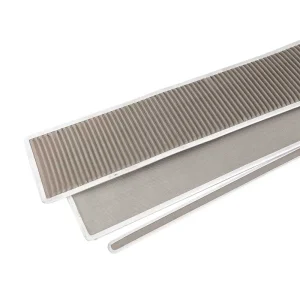
Comparing Sintered Stainless Steel Fiber Felt vs. Multi-Layer Woven Wire Mesh for OEM Candle Filter Manufacturing.
As a premier OEM Candle Filter Media Manufacturer, we supply two distinct medium configurations tailored to specific polymer melt viscosities, pressure boundaries, and cleaning requirements. Selecting the optimal combination of metallurgical alloy and porous architecture is crucial to eliminating melt stream inclusions and line stoppages.
| Performance Specification | Sintered Metal Fiber Felt (3D Depth Media) | Multi-Layer Woven Wire Mesh (2D/3D Hybrid) | Sintered Metal Powder / Porous Metal |
|---|---|---|---|
| Primary Filtration Mechanism | Tortuous Depth Entrapment & Gel Retention | Surface Straining & Controlled Pore Sieving | Rigid Pore Depth Sieving |
| Porosity Range (%) | 75% – 85% (High Dirt Capacity) | 35% – 55% (Standard Flow) | 30% – 45% (Low Permeability) |
| Micron Rating (Absolute) | 1 μm to 60 μm | 5 μm to 250 μm | 0.5 μm to 20 μm |
| Permeability & Delta-P | Ultra-Low Initial $\Delta P$, High Flow Rate | Moderate Initial $\Delta P$ | High Initial $\Delta P$ |
| Available Material Alloys | AISI 316L, Hastelloy C-276, Fecralloy | SUS 304, SUS 316L, Alloy 20, Monel 400 | 316L Stainless Steel, Titanium Grade 2 |
| Thermal Cleanability (TEG/Pyrolysis) | Excellent (20+ Reuse Cycles) | Outstanding (30+ Reuse Cycles) | Fair (Risk of pore clogging) |
| Primary Industry Application | BOPET/BOPP Film, Spunbond Nonwovens | Extruder Screen Packs, Recycled Granulation | Corrosive Chemical Gas & Monomer Liquid |
The global benchmark alloy for polymer melt processing. Offers exceptional resistance to intergranular corrosion, high thermal stability up to 400°C, and compatibility with standard TEG (Triethylene Glycol) hydrolysis and vacuum calcination cleaning systems.
Specified for highly aggressive polymer chemistries, such as Fluoropolymers (PVDF, PTFE processing), Polyvinyl Chloride (PVC) melt streams, and acidic monomer filtration. Prevents pitting and stress-corrosion cracking under extreme chemical exposure.
An iron-chromium-aluminum alloy engineered for extreme thermal environments exceeding 600°C. Creates a protective, self-healing aluminum oxide ($Al_2O_3$) surface layer that prevents media oxidation during continuous high-temperature operation.
Maximizing active surface area while ensuring high collapse pressure resistance under extreme dynamic load conditions.
To maximize total filtration area within a compact vessel footprint (CPF housing), OEM candle filter elements utilize longitudinal star-pleating. By expanding effective surface area by 200% to 400% compared to smooth cylindrical elements, flow velocity through the medium is reduced proportionally.
Failure at element connection joints can cause catastrophic unfiltered polymer bypass, ruining entire production batches. We manufacture custom end-caps matched exactly to major OEM vessel specifications (such as Maag, Nordson, Kreyenborg, Seebach, and Fuji Filter systems).
Why leading global polymer producers and extrusion OEMs partner directly with our Zhejiang manufacturing facility.
From precision stainless steel wire drawing and specialized weaving to continuous vacuum sintering furnaces, our direct control over the entire production chain ensures batch-to-batch consistency while eliminating multi-tier middleman markups.
Our dedicated engineering team translates client CAD drawings or worn sample elements into production-ready specifications within 48 hours. Prototype samples are fabricated and bubble-point tested rapidly to minimize engineering lead times.
Every manufactured OEM candle filter cartridge undergoes strict quality checks: Bubble Point Pressure Testing according to ISO 4003 to verify pore integrity, Permeability testing according to ISO 4022, and dimensional verification.
Optimizing procurement strategy for Plant Managers, Technical Buyers, and Extrusion Line Engineers.
When procuring replacement Candle Filter Cartridges, focusing solely on initial element cost overlooks the far larger costs associated with unscheduled line shutdowns, film web breaks, and thermal cleaning degradation.
Our premium grade 316L sintered metal fiber media delivers 3x higher dirt holding capacity than commodity woven screen filters. Extending continuous filter run-times from 30 days to 90 days cuts annualized maintenance labor, gasket consumption, and energy spent during system startup heating cycles.
For large-scale film producers and nonwoven manufacturers, stockouts of critical filter media can result in plant downtime costing tens of thousands of dollars per hour. We offer global supply chain safety solutions:
Deploying specialized candle filter media across demanding industrial polymer processing sectors.
Biaxially Oriented Polyethylene Terephthalate (BOPET) and Polypropylene (BOPP) ultra-thin packaging films require absolute removal of particulate matter down to 5 to 10 microns. Any un-melted gel or hard impurity causes pinholes and web snapping at high orientation speeds (up to 500 m/min). Our pleated candle filter elements ensure crystal-clear optical quality and uninterrupted film drawing.
In PP nonwoven hygiene and medical fabric production, spinneret nozzle capillaries measure as fine as 0.15 mm. Minor polymer inclusions plug spinneret holes, causing filament defects and uneven fabric density. High-porosity candle filter cartridges filter out micro-gels while maintaining continuous polymer melt delivery to the spinning pack.
Recycling post-consumer PET bottles, PE films, and PP woven bags involves highly contaminated melt streams containing paper residue, cross-linked polymers, and metal traces. Robust multi-layer stainless steel mesh candle filters provide continuous filtration and high mechanical strength to withstand heavy dirt loads during pelletizing.
Continuous filament yarn (POY, FDY) and industrial staple fiber lines demand absolute filtration purity. Installed upstream of melt pumps, our custom 316L candle filters eliminate micro-inclusions that cause yarn breaks during high-speed texturing and spinning operations.
In virgin resin manufacturing plants (polyolefin, polyacrylate, polycarbonate synthesis), high-pressure melt candle filters remove reaction catalysts, carbonized specks, and cross-linked gels prior to underwater pelletization, ensuring prime resin grade classification.
Processing sticky, high-tack EVA, polyamide, and polyurethane hot-melt adhesives requires filter media with smooth surface morphology to facilitate easy backflushing and prevent polymer charring within stagnant dead zones.
Meeting international industrial and food-contact compliance frameworks for critical polymer applications.
Full Quality Management System covering wire weaving, vacuum sintering, assembly welding, and non-destructive testing.
Compliance for stainless steel metal components intended for food packaging film and pharmaceutical container extrusion.
Strict adherence to European chemical safety directives. Free from SVHC (Substances of Very High Concern) and heavy metal contaminants.
Pressure Equipment Directive structural design compliance for high-pressure filter element containment vessels.
How evolving environmental regulations and circular economy demands are shaping OEM filter media design.
As the global polymer sector transitions toward circular plastic economies, advanced chemical recycling (depolymerization and pyrolysis oil purification) requires filter media capable of stripping corrosive sub-micron catalyst fines under severe temperature regimes up to 500°C.
Processing bio-polymers like PLA and PBAT presents unique thermal sensitivity challenges. Filter media must provide ultra-smooth internal channels and zero fluid stagnation zones to prevent thermal degradation and color yellowing during filtration.
Modern filter maintenance is shifting away from harsh chemical solvents toward eco-friendly TEG hydrolysis and high-frequency ultrasonic cleaning. Our enhanced 316L sintered fiber felts are engineered to endure repeated ultrasonic cavitation without fiber breakdown.
Detailed technical solutions for engineering directors, maintenance leads, and global buyers.
Sintered Metal Fiber Felt is a three-dimensional non-woven depth matrix composed of randomly laid metal micro-fibers vacuum-sintered at high temperatures. It offers extremely high porosity (up to 85%) and superior dirt-holding capacity, making it ideal for capturing deformable gels and fine particles with minimal pressure drop. In contrast, Woven Wire Mesh is a two-dimensional surface filtration medium with uniform geometric pore openings, making it easier to clean and better suited for rigid particle separation and extruder screen pack applications.
With proper cleaning procedures—such as TEG (Triethylene Glycol) thermal hydrolysis, vacuum calcination pyrolysis, solvent soaking, and high-frequency ultrasonic bath flushing—our 316L stainless steel candle filter cartridges can typically be cleaned and reused for 15 to 20+ operational cycles without degrading structural integrity or micron rating precision.
Yes. We specialize in custom OEM and ODM manufacturing. Our engineering team can reverse-engineer worn elements, analyze alloy composition via X-ray fluorescence (XRF), measure exact thread specifications, and reproduce custom star-pleated candle filter cartridges fully compatible with major European, American, and Asian filtration system housings.
Every production batch undergoes mandatory Bubble Point Pressure Testing according to ISO 4003 to verify pore size uniformity and zero pinhole defects. In addition, elements are subjected to ISO 4022 Permeability Testing, helium leak detection, and high-pressure collapse resistance verification up to 210 bar differential pressure ($\Delta P$).
Explore our full line of leaf disc filters, high-viscosity candle elements, extruder screen packs, and plastic recycling equipment.