Precision-engineered components and machinery supplied directly from certified China OEM manufacturing plants.
Analyzing global market shifts toward circular polymer economics, melt filtration efficacy, and OEM machinery manufacturing.
The global industrial landscape is undergoing a structural paradigm shift driven by stringent regulatory frameworks, environmental, social, and governance (ESG) mandates, and the urgent economic imperative to build robust circular supply chains. Within this framework, OEM plastic reprocessing machines, advanced polymer melt filtration assemblies, and high-capacity pelletizing lines form the critical foundation of modern post-industrial (PIR) and post-consumer (PCR) polymer recovery.
Modern polymer reprocessing is no longer merely a mechanical shredding and remelting operation. It is a highly specialized fluid dynamics and chemical engineering domain requiring precise thermodynamic control, continuous non-stop melt filtration, and mechanical decontamination. Leading global enterprises demand machinery capable of converting highly contaminated plastic waste streams—ranging from agricultural films and woven bags to high-viscosity PET flakes and chemical fiber spinning waste—into virgin-grade resin pellets with minimal thermal degradation.
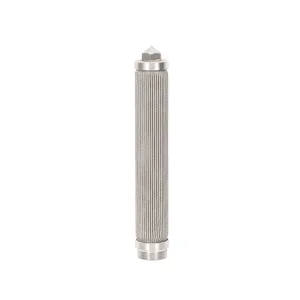
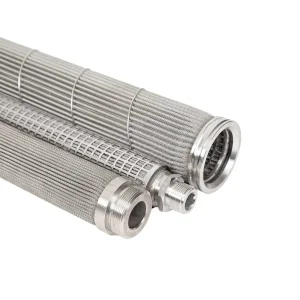
Technical Insight: Information gain in polymer reprocessing relies on optimizing the differential pressure ($\Delta P$) across stainless steel filter media. High-viscosity polymers like PET and PA require multi-layer SUS304/316L pleated candle cartridges to maintain structural integrity under process pressures exceeding 250 bar.
Comprehensive engineering breakdown of integrated recycling systems, melt filtration media, and pelletizing lines.
Heavy-duty single and dual-shaft shredders engineered with wear-resistant D2 tool steel knives. Operates with hydraulic force-feeders to process high-density bale stocks, rigid drums, and thin agricultural films with uniform grain sizing.
High-speed centrifugal washers coupled with continuous float-sink separation tanks. Removes soil, organic residues, adhesives, and surface contaminants down to < 50 ppm purity level prior to extrusion.
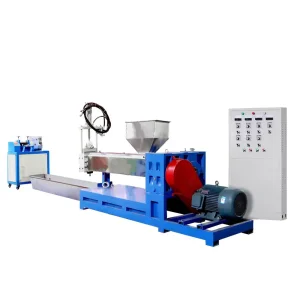
Single-screw and co-rotating twin-screw extruders featuring dual vacuum degassing zones. Efficiently strips volatile organic compounds (VOCs), moisture, and low-molecular inks from the molten polymer matrix.
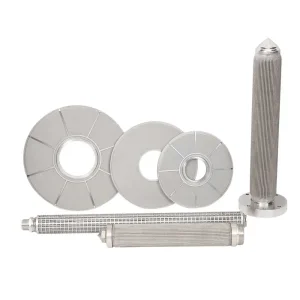
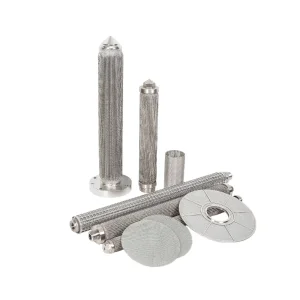
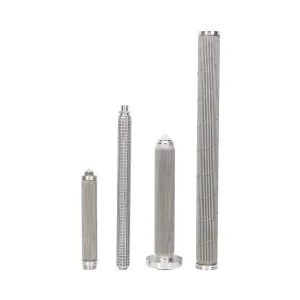
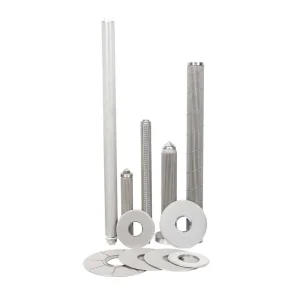
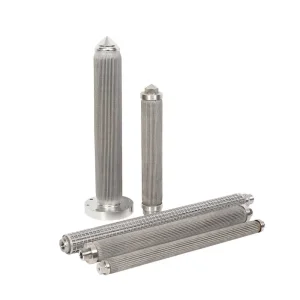
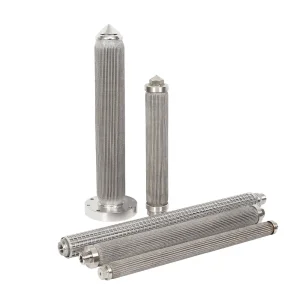
Includes continuous hydraulic plate screen changers, dual-piston backwash filters, and high-surface-area SUS304/316L candle/leaf-disc filter elements designed for high thermal stability and minimal melt pressure variance.
| Filtration Element Type | Primary Material Grade | Filtration Rating Range | Operating Temp Range | Core Application Scenarios |
|---|---|---|---|---|
| Polymer Candle Filter Cartridges | SUS304 / SUS316L Sintered Mesh | 3 μm – 100 μm | Up to 340 °C | Chemical Fiber, Spunbond Nonwoven, BOPET Films |
| Extruder Screen Mesh Discs | Plain / Dutch Weave SS Mesh | 20 μm – 500 μm | Up to 300 °C | PP/PE Film Pelletizing, Cable Compound Extrusion |
| Leaf Disc Filters | Multi-Layer Sintered Wire Cloth | 5 μm – 80 μm | Up to 350 °C | High-Viscosity Polymer Refining, PET Bottle Recycling |
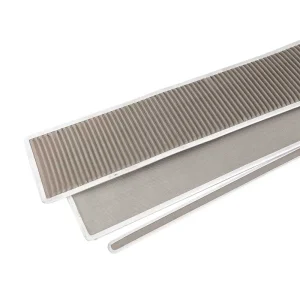
| Pelletizing Machine Screens | Hardened Tool Steel Base + SS Mesh | 40 Mesh – 200 Mesh | Up to 280 °C | Water-ring & Underwater Strand Granulation Lines |
Why leading multinational corporations partner with specialized Chinese manufacturing hubs for bespoke polymer reprocessing lines.
China's industrial clusters (such as Zhejiang and Jiangsu provinces) provide direct access to raw metallurgy, precision CNC machining centers, specialized surface treatment plants, and automated assembly facilities. This localized ecosystem reduces manufacturing lead times by 40% compared to Western counterparts.
Unlike rigid off-the-shelf equipment vendors, Chinese OEM/ODM factories offer total modular customization. From tailored screw profile geometries (L/D ratios from 28:1 to 52:1) to custom flange connections for existing melt pumps and filter housings, systems are engineered to fit exact facility layouts.
Capital expenditure (CAPEX) for a complete Chinese continuous plastic reprocessing pelletizing line is often 30% to 50% lower than equivalent European systems, without compromising structural durability, control precision (PLC touch-screen automation), or safety certifications (CE, ISO9001:2015).
Emerging innovations reshaping the polymer recycling, melt filtration, and extrusion sectors.
Integration of IoT sensors and pressure-transducer feedback loops that automatically adjust backwash frequency and hydraulic screen shift speeds. Real-time viscosity calculation prevents melt degradation during heavy contamination surges.
Next-generation continuous screen changers utilize micro-dispensing pistons to purge accumulated contaminants with under 0.5% polymer melt loss per cycle, drastically reducing raw material waste during 24/7 continuous operation.
Incorporating super-critical fluids into extruder barrels to strip stubborn odors, migration compounds, and food-contact volatile residues from PCR HDPE/PP packaging materials to achieve true food-grade resin compliance.
Tailored machinery and filtration setups engineered for diverse polymer recycling streams.
Challenge: Severe sand, earth, and moisture contamination causing frequent screen blockage and rapid mechanical wear.
Solution: Heavy-duty wet granulator paired with multi-channel friction washer, twin-cylinder continuous backwash screen changer with hardened SUS304 80-mesh filter screens, and water-ring pelletizing system.
Challenge: Melt viscosity fluctuations and sub-micron gels causing filament breakage during high-speed spinning.
Solution: High-precision stainless steel pleated candle filter housing equipped with 10-micron SUS316L media, ensuring long continuous run-times without pressure spikes.
Challenge: Intrinsic Viscosity (IV) loss during thermal extrusion and black-spec carbonization in static melt zones.
Solution: Vacuum-assisted ring-water pelletizer coupled with large-area leaf disc filter assemblies featuring streamlined internal flow channels to eliminate melt stagnation.
Key technical parameters evaluated by tier-1 purchasing directors when sourcing OEM machinery.
| Evaluation Parameter | Standard Specification | Enterprise Quality Standard | OEM Custom Capability |
|---|---|---|---|
| Screw & Barrel Alloy | 38CrMoAlA (Nitrided) | Bimetallic Alloy Coating (Nikon 60) | Tungsten Carbide / Hastelloy Inlays |
| Melt Pressure Tolerance | 200 Bar Maximum | 350 Bar Continuous Duty | Up to 500 Bar Ultra-High Pressure |
| Filter Media Material | Commercial Stainless Mesh | SUS316L Sintered Fiber Felt | Custom Layered Alloy Composites |
| Control Automation | Manual / Relay Switch | Siemens S7-1500 PLC + Touch Panel | Industry 4.0 MES / OPC-UA Integration |
Explore our complete range of certified replacement elements and processing machinery lines.
In-depth responses from our senior mechanical and polymer engineering specialists.
Woven wire mesh consists of geometrically aligned stainless steel wires (plain or Dutch weave) providing precise 2D aperture sizing. It is ideal for surface filtration of rigid particulate contaminants. In contrast, sintered metal fiber felt is a 3D non-woven structure made of random stainless steel micro-fibers diffusion-bonded at high temperatures. Sintered felt offers higher dirt-holding capacity (up to 3x longer operational life) and lower pressure drop ($\Delta P$), making it superior for gel capture in high-viscosity polymer melts such as PET and PA spinning.
Continuous backwash screen changers utilize dual or four-piston channels. When differential pressure across a filter station reaches a pre-set threshold, a tiny fraction of the clean downstream polymer melt is diverted backwards through the offline filter pack. This hydraulic pulse flushes out trapped contaminants through a discharge port without stopping the main extruder flow or dropping line pressure. Melt loss is typically under 0.5% compared to 3-5% with manual screen dumps.
For abrasive post-consumer waste containing glass fiber, sand, or mineral fillers, we recommend extruder screws and barrels treated with bimetallic tungsten carbide coatings (HRC 62-68). For filter elements processing acidic or corrosive polymers (such as PVC or flame-retardant additives), SUS316L stainless steel or Hastelloy C-276 alloys are mandatory to prevent intergranular corrosion and stress-cracking.
Yes, high-quality stainless steel candle filters are designed for multiple cleaning cycles. Standard industrial cleaning protocols include: (1) Thermal pyrolysis / TEG (triethylene glycol) boiling to degrade organic polymer residue; (2) Ultrasonic bath cleaning with specialized detergent to remove inorganic particles; (3) High-pressure reverse fluid flushing; and (4) Bubble-point integrity testing to verify pore size restoration prior to re-installation.
Tier-1 Chinese manufacturers enforce ISO9001:2015 quality management systems. Dimensional accuracy is verified using automated 3D CMM (Coordinate Measuring Machines) and optical projectors. Filter pore size and permeability are tested per ISO 4003 (bubble point test) and ISO 3968 (pressure drop vs. flow rate). Material composition is validated via PMI (Positive Material Identification) X-ray spectroscopy.
Standard replacement filter elements and screen discs are typically produced within 10 to 15 business days. Complete turnkey OEM reprocessing and pelletizing machine lines require 45 to 60 days for precision machining, assembly, electrical wiring, and full Factory Acceptance Testing (FAT) prior to international export shipping.