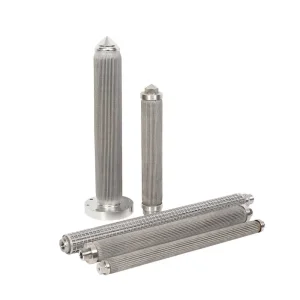
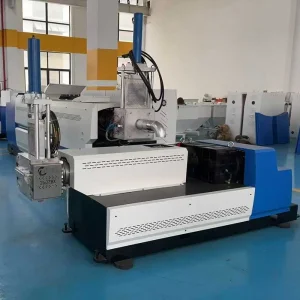
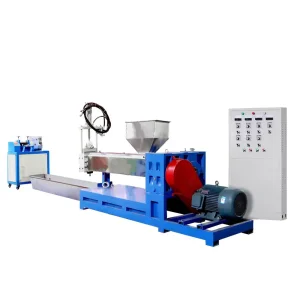
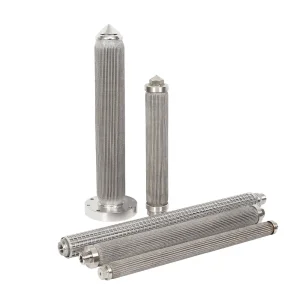
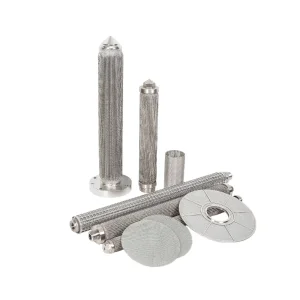
High-precision polymer filter components and recycling machinery built for high-throughput PET washing lines.
Analysis of regulatory mandates, circular economy metrics, and technical requirements driving wholesale PET washing line procurement.
The transition from linear plastics consumption to a closed-loop circular economy is no longer merely an ESG milestone; it is a regulatory imperative enforced across global industrial markets. With stringent legislation such as the European Union’s Single-Use Plastics (SUP) Directive requiring at least 25% recycled PET in beverage bottles by 2025 and 30% by 2030, global beverage conglomerates and plastic converters are aggressively expanding their post-consumer resin (PCR) sourcing. As a leading Wholesale PET Bottle Washing Line Supplier & Exporter, we deliver industrial washing architectures engineered to process highly contaminated post-consumer baled bottles into pristine, food-grade rPET flakes.
Achieving commercial viability in PET recycling demands overcoming challenging raw material variations. Baled post-consumer PET bottles contain substantial amounts of Polyvinyl Chloride (PVC) sleeves, Polyolefin (PP/PE) caps, organic dirt, pressure-sensitive adhesives, and metallic contaminants. Our high-capacity washing plants integrate multi-stage mechanical sorting, chemical hot washing, and dynamic centrifugal drying to ensure that output flakes consistently meet EFSA and US FDA LNO (Letter of No Objection) requirements for direct food-contact packaging.
Conventional washing systems rely solely on cold friction to remove superficial dirt, leaving sub-surface glue residues and organic migration intact. High-efficiency decontamination requires controlling caustic soda concentration (NaOH 1.2–2.0%), temperature kinetics (85°C–90°C), and residence times (15–20 minutes) within the hot washing reactor to saponify glue without initiating hydrolysis of the PET polymer matrix, preserving Intrinsic Viscosity (IV).
Why leading global recyclers partner with Tier-1 Chinese PET recycling equipment exporters.
Our washing lines utilize premium SUS 304 and SUS 316 stainless steel for all components in contact with corrosive hot caustic wash solutions. High-friction rotor blades are coated with tungsten carbide wear-resistant layers, multiplying operational life 3-fold compared to standard carbon steel alternatives.
Based in China’s premier plastic machinery manufacturing hubs (Zhejiang/Jiangsu), our factory leverages fully integrated supply chains. From in-house CNC precision machining of granulator rotors to deep melt-filter mesh weaving, we maintain strict total quality management (TQM) with ISO 9001 certification.
By deploying optimized motor drive trains, heat recovery heat exchangers, and continuous water clarification units, our PET bottle washing lines reduce energy consumption per ton of output by up to 28%, significantly accelerating Total Cost of Ownership (TCO) payback for global operators.
A deep technical walkthrough of modular unit operations from baled waste input to purified rPET flakes.
Post-consumer PET bales are processed in a heavy-duty hydraulic De-baler to separate compressed bottles without crushing glass or embedding soil. The loose bottles enter a 9-meter screening Trommel to extract stones, sand, and loose caps. Subsequently, NIR (Near-Infrared) Optical Sorters automatically eject non-PET polymers (PVC, PP, PE, PS, PLA) and color-sort transparent clear bottles from amber, blue, and opaque fractions.
Pre-sorted bottles are continuously fed into high-speed Wet Granulators equipped with V-shaped rotor knife configurations. Water injection inside the crushing chamber cools the blades, prevents thermal polymer degradation, and initiates immediate pre-washing by loosening label adhesives. Flakes are calibrated through a 10mm-12mm stainless steel screen mesh.
Flakes enter the continuous Hot Washing Reactor operating at 85-90°C with controlled dosing of Sodium Hydroxide (NaOH) and specialty surfactants. This process dissolves hot-melt adhesives, strips oily residues, and neutralizes organic contaminants. Downstream High-Speed Friction Washers operating at 1,200 RPM generate intense flake-to-flake friction, scouring off residual glue and caustic chemicals.
In the Hydrodynamic Sink-Float Tank (water density = 1.0 g/cm³), light polyolefin cap materials (PP/PE density < 0.95 g/cm³) float to the surface and are skimmed off, while heavy PET flakes (density ~1.38 g/cm³) sink to the bottom. The washed flakes are conveyed to a dynamic Centrifugal Dryer (< 1% moisture) followed by a Zig-Zag Air Classifier to remove light paper labels and dust particles.
Tailoring washing line specifications based on downstream rPET manufacturing requirements.
Requires maximum purity (<10 ppm PVC, <20 ppm PO, <10 ppm metal). The washing line must be equipped with double optical sorting (pre-wash bottle sort + post-wash flake sort), dual hot washing tanks, continuous water filtration, and downstream SSP (Solid State Polymerization) pelletizing integration.
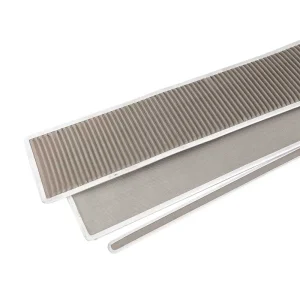
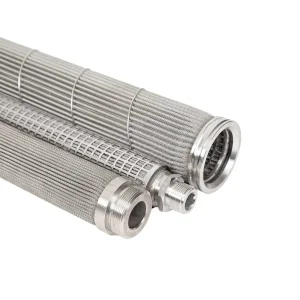
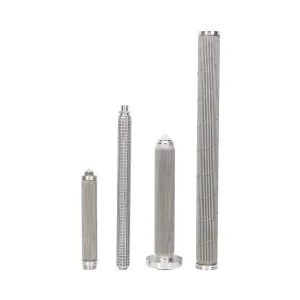
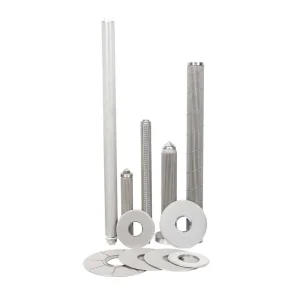
Demands low moisture and absolute absence of melt-blocking particulates. Washed flakes directly feed fine-mesh continuous melt filtration systems (Polymer Candle Filters or Disc Filters rated at 40-75 microns) prior to spinneret extrusion.
Utilized for producing food packaging trays, blister packs, and folding boxes. Flake visual clarity and lack of black spots are paramount. Incorporates fine air separation and optical color sorters to eliminate yellow flakes.
High tensile strength requires preservation of PET molecular chain length. Mechanical stress during washing must be minimized, and drying must be coupled with continuous crystallizer units.
Technical comparison parameters for evaluating turnkey PET bottle washing lines.
| Performance Specification | Standard Commercial Grade | High-Purity Fiber Grade | Food-Grade (Bottle-to-Bottle) |
|---|---|---|---|
| Line Capacity Range | 1000 kg/h - 2000 kg/h | 2000 kg/h - 4000 kg/h | 3000 kg/h - 6000 kg/h |
| PVC Contamination Level | < 150 ppm | < 50 ppm | < 10 ppm (NIR flake sorted) |
| Polyolefin (Cap) Content | < 100 ppm | < 30 ppm | < 10 ppm |
| Glue & Organic Residue | < 200 ppm | < 50 ppm | < 20 ppm |
| Flake Moisture Content | < 1.5% | < 1.0% | < 0.5% (Multi-stage Turbo Dryer) |
| Specific Water Consumption | 3.0 - 4.0 m³/ton | 2.0 - 3.0 m³/ton | 1.2 - 1.8 m³/ton (ZLD Water Recycling) |
| Core Wetted Metallurgy | SUS 304 Stainless Steel | SUS 304 / SUS 316 | SUS 316 Stainless Steel + Ti Coating |
Explore our full exporter catalog of pelletizers, polymer melt filter elements, and custom screen solutions.
Expert answers to critical engineering, operational, and financial questions regarding PET bottle washing lines.
Achieving <10 ppm PVC contamination requires a multi-barrier approach. First, our automated NIR optical sorters inspect whole bottles before crushing, detecting PVC bottle bodies and sleeves based on chemical spectral absorption. Second, post-washing optical flake sorters utilize high-resolution color and polymer sensors to detect any residual PVC micro-flakes that passed through the granulator. Finally, precise density separation in our Float-Sink tanks removes light polymers, guaranteeing pristine PET purity.
The hot washing system utilizes an aqueous solution containing 1.0%–1.8% Sodium Hydroxide (NaOH) maintained at 85°C–90°C, combined with specialized non-foaming anionic surfactants (0.2% concentration). NaOH saponifies glue residues and strips dirty grease films, while surfactants lower surface tension to prevent re-deposition of loosened dirt onto the PET flake surface. Automatic dosing pumps continuously monitor and adjust chemical concentration via conductivity sensors.
IV loss in PET occurs primarily through thermal hydrolytic degradation caused by prolonged exposure to moisture at elevated temperatures. Our washing lines minimize thermal stress by restricting hot wash residence times to optimized windows (15-20 min) and implementing rapid multi-stage mechanical drying. The mechanical centrifugal spin dryers immediately strip surface water down to <1%, preventing hydrolytic breakdown before the flakes enter extrusion or pelletizing stages.
Without water treatment, a standard PET washing line consumes roughly 3 to 5 cubic meters of fresh water per ton of PET flakes. However, our integrated closed-loop water treatment system utilizes continuous flocculation, dissolved air flotation (DAF), and multi-media sand/carbon filtration to clarify process water. This allows 90%-95% of process water to be recycled back into the friction and sink-float units, dropping fresh water consumption to under 0.2 m³ per ton.
We offer complete engineering customization tailored to your site layout and electrical standards. Options include custom voltage configurations (e.g., 380V/50Hz, 460V/60Hz, 415V/50Hz), choice of electrical brands (Siemens PLC, Schneider controls, ABB drives), specialized blade metallurgy for abrasive bottle inputs, anti-corrosion SS316 tank upgrades, and modular expansion footprints for scaling throughput from 1,000 kg/h up to 6,000 kg/h.