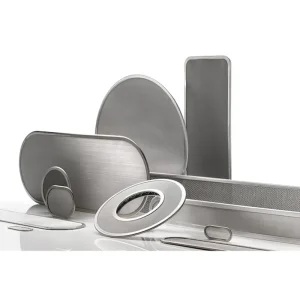
ISO 9001:2015 Certified Polymer Filtration Manufacturer

Wholesale Polymer Filter Exchanger Supplier & Factory

Industrial-Grade Continuous Melt Screen Changers, Sintered Candle Elements & Leaf Disc Filtration Systems for Extrusion, Nonwovens & High-Viscosity Polymer Processing.

Featured High-Precision Polymer Filter Elements

Engineered for extreme pressure differentials ($\Delta P$), zero-downtime screen exchanges, and micron-level melt purification across global industrial extrusion plants.
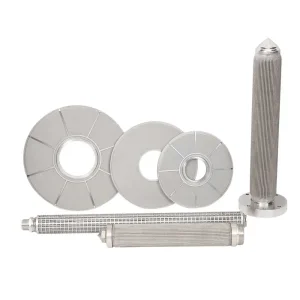
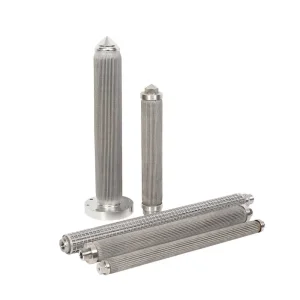
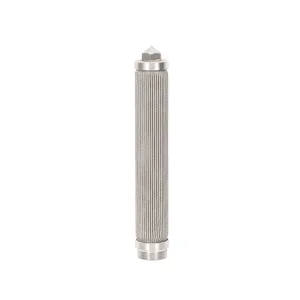
Famous Candle Filter Cartridge for Polymer Melt in Spunbond Nonwoven Production

Famous Candle Filter Cartridge for Polymer Melt in Spunbond Nonwoven Production

Inquire Now →
Polymer Candle Filter Elements SUS 304 for High-Viscosity Filtration

Polymer Candle Filter Elements SUS 304 for High-Viscosity Filtration Factory

Inquire Now →
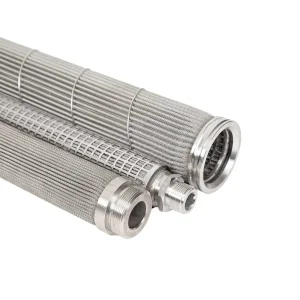
Candle Filter Cartridge and Elements for Polymer Processing

Candle Filter Cartridge and Elements for Polymer Processing Quality Solutions

Inquire Now →
High-Quality Candle Filter Cartridge in Spunbond Nonwoven Production

High-Quality Candle Filter Cartridge in Spunbond Nonwoven Production Line

Inquire Now →
OEM Polymer Candle Filter Elements SUS 304

OEM Polymer Candle Filter Elements SUS 304 High-Quality Filtration Solutions

Inquire Now →
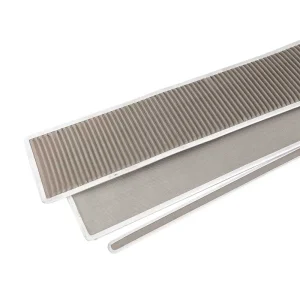
Polymer Extruder Screen Mesh Filters Factory Direct Micron Solutions

Polymer Extruder Screen Mesh Filters Factory Direct Micron Filtration Solutions

Inquire Now →
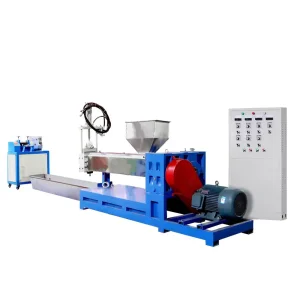
PP Plastic Pelletizing Machine Efficient Recycling Equipment

Famous High-Quality PP Plastic Pelletizing Machine Efficient Recycling Equipment

Inquire Now →
ODM Polymer Extruder Screen Mesh Filters Supplier Stainless Steel

ODM Polymer Extruder Screen Mesh Filters Stainless Steel Factory Exporter

Inquire Now →

1. Global Industrial Landscape of Polymer Filter Exchangers & Screen Changers

Examining the macro-economic forces, technical demands, and continuous melt purification trends shaping polymer extrusion worldwide.

Macro Drivers & Market Elasticity

In the contemporary polymer manufacturing sector, melt quality dictates product marketability. A Polymer Filter Exchanger (frequently designated as a continuous screen changer or hydraulic melt filter exchanger) represents the critical gatekeeper between raw polymer synthesis or recycling extruders and down-stream dies. Global polymer consumption—spanning Polypropylene (PP), Polyethylene (PE), Polyethylene Terephthalate (PET), Polyamide (PA), and Polycarbonate (PC)—exceeds 380 million metric tons annually.

The global push toward Circular Economy standards (such as the EU Packaging and Packaging Waste Regulation) has forced converters to incorporate higher ratios of Post-Consumer Recyclate (PCR) and Post-Industrial Recyclate (PIR). Recycled feedstocks introduce unpredictable particulate contamination, degradation gels, aluminum specks, and paper fibers into the melt stream. Consequently, robust, zero-downtime polymer filter exchangers have evolved from optional auxiliary equipment into mandatory capital assets required to safeguard melt purity, maintain stable head pressure ($\Delta P$), and prevent expensive spinneret or die-gap blockages.

Viscosity Dynamics & Pressure Differentials

Polymer melt processing takes place under extreme thermodynamic conditions: temperatures ranging from 180°C to 340°C and operational pressures up to 350 bar (5,000 PSI). At these parameters, polymer melts display non-Newtonian, shear-thinning viscoelastic behavior.

When high-viscosity melts pass through a filter screen or candle element, foreign contaminants accumulate on the filter medium surface. This creates a cake layer that exponentially increases the differential pressure ($\Delta P$). An unmanaged $\Delta P$ causes melt temperature spikes due to viscous dissipation, degradation of heat-sensitive polymers (like PVC or PET), and volumetric output fluctuations. Wholesale polymer filter exchangers engineered by premium factories utilize advanced pressure transducer feedback loops and precision-ground hydraulic slide plates to execute screen shifts seamlessly without stopping the production line or introducing air bubbles into the polymer flow path.

350 Bar
Max Pressure Tolerance
< 15 Sec
Hydraulic Shift Time
3um - 200um
Filtration Precision
99.8%
Contaminant Capture Rate

2. China Factory Efficiency & Manufacturing Supremacy

Why Tier-1 global plastic extruders and chemical fiber multinationals source high-spec polymer filter exchangers directly from qualified Chinese OEMs.

Complete Industrial Metallurgy Ecosystem

China's specialized industrial clusters (such as Zhejiang and Jiangsu precision engineering zones) integrate raw stainless steel forging, vacuum sintering furnaces, 5-axis CNC machining centers, and surface nitriding facilities within a tight geographical radius. This concentration minimizes raw material lead times and enables ultra-precise machining tolerances ($\pm 0.005\text{ mm}$) for filter exchanger bodies and sealing plates.

Strict OEM/ODM Quality Control

Leading Chinese manufacturers adhere to international quality benchmarks including ISO 9001:2015, CE PED (Pressure Equipment Directive 2014/68/EU), and ASME Boiler & Pressure Vessel standards. Every wholesale polymer filter exchanger undergoes hydrostatic pressure testing up to 1.5 times working pressure, dynamic thermal expansion verification, and ultrasonic weld non-destructive testing (NDT) prior to shipment.

Cost-to-Performance Superiority (TCO)

By leveraging standardized modular design blueprints and high-volume automated manufacturing, Chinese factories deliver polymer filter exchangers at 30% to 50% lower capital cost compared to Western European counterparts. This allows global plastics processors to achieve ROI payback within 4 to 8 months through scrap reduction and extended filter element lifespans.

Technical Comparison: Standard Screen Changers vs. Advanced Continuous Polymer Filter Exchangers

Feature Parameter Manual / Discontinuous Screen Changer Single-Piston Hydraulic Exchanger Dual-Bolt Continuous Filter Exchanger Continuous Rotary Disc Exchanger
Process Interruption Requires Line Shutdown Slight Pressure Drop (< 10%) Zero Line Interruption (0% Shutdown) Zero Line Interruption (0% Shutdown)
Melt Pressure Stability ($\Delta P$) Severe Fluctuations Moderate Spike During Shift Ultra-Stable ($\pm 1.5$ Bar) Constant Hydrostatic Balance
Filter Area Utilization Single Screen Pack Single Screen Pack Dual Active Screens (100% Redundancy) 75% Active, 25% Cleaning/Positioning
Max Operating Pressure 150 Bar 250 Bar 350 Bar 500 Bar
Ideal Applications Low-grade Pipe & Profile Extrusion Masterbatch & Compound Granulation BOPP/BOPET Films, Spunbond Nonwovens High-purity Resin Synthesis & Fine Fiber

3. Technical Architecture & Engineering Fundamentals

Deconstructing the mechanical, thermal, and fluid-dynamic mechanisms inside high-performance polymer melt filtration systems.

High-Pressure Metallic Sealing Mechanisms

The core challenge in polymer filter exchanger design is achieving a zero-leakage seal at 300°C under 35 bar of polymer pressure without causing mechanical binding or galling of moving parts. Modern exchangers utilize pressure-activated metallic seal rings made from specialized copper-beryllium or hardened bronze alloys.

As upstream polymer pressure increases, the internal fluid force expands the metallic seal ring tightly against the breaker plate housing. This dynamic pressure-seal principle eliminates molten polymer leakage while allowing smooth hydraulic piston actuation during screen change sequences.

Filter Media: Sintered Metal Mesh vs. Candle Cartridges

The choice of internal filter media directly influences fluid dynamics, residence time, and gel-retention capability:

  • Multi-Layer Sintered Wire Mesh Packs: Consisting of a fine filtration layer (e.g., 20 Micron Dutch weave) sandwiched between coarse support meshes. Sintering fuses the wire contact points under high vacuum, preventing pore geometry deformation under high shear stress.
  • Sintered Metal Fiber Candle Cartridges: Constructed from 316L stainless steel micro-fibers non-wovenly laid and vacuum-sintered. Candle elements provide an exceptionally high porosity (up to 80%), offering 3 to 5 times more filtration surface area within the same housing volume compared to flat screen discs.
Engineering Insight: Rheological Fluid Flow Optimization

Improperly designed internal flow channels introduce "dead zones" where polymer residence time is prolonged. At elevated temperatures, stagnant polymer undergoes thermal degradation, cross-linking, and carbonization—forming hard black specks that contaminate the final product. Advanced polymer filter exchangers utilize 3D CFD (Computational Fluid Dynamics) fluid channel modeling to guarantee streamlined, uniform flow profiles with zero stagnant volume.

4. Sector-Specific Application Scenarios & Engineering Integration

Tailored polymer melt filtration configurations designed to meet stringent technical demands across key industrial sectors.

A. Spunbond & Meltblown Nonwoven Fabric Lines

Spunbond PP nonwoven extrusion lines (e.g., Reicofil-type systems) operate spinneret beam orifices as fine as 0.15 mm to 0.3 mm. A single microscopic speck of dirt or degraded gel will clog the spinneret hole, causing filament breakage ("drips") and costly web defects.

Solution Configuration: Dual-bolt continuous polymer filter exchangers fitted with SUS 316L sintered metal fiber candle filter cartridges (15 to 25 Micron rating). The dual-bolt mechanism ensures continuous polymer flow during filter indexing, keeping melt pressure variance at the spinneret beam within $\pm 0.5$ Bar.

B. BOPP / BOPET Optical & Packaging Film Lines

Biaxial Orientation Polypropylene (BOPP) and Polyethylene Terephthalate (BOPET) film production lines run at high speeds (up to 500 m/min). Any micro-void or gel particle causes film snapping in the transverse direction (TDO) oven, halting production for hours.

Solution Configuration: High-surface-area Leaf Disc Filter Assemblies installed inside a hydraulic filter exchanger body. Stainless steel leaf discs with 5 to 10 Micron ratings trap hard particulates and deformable gels, yielding optical-grade clarity for capacitor films and flexible food packaging.

C. Post-Consumer Plastic Recycling (PCR/PIR Pelletizing)

Recycling heavily contaminated waste plastics (agricultural film, post-consumer bottles, shredded rigid containers) introduces paper pulp, wood debris, rubber particles, and soft aluminum foils into the extruder barrel.

Solution Configuration: Continuous Hydraulic Backflush Screen Changers. When pressure rises, the exchanger automatically diverts a portion of purified melt in a reverse flow direction to backflush foreign contaminants off the screen mesh, expelling them through a discharge valve without manual operator intervention.

D. High-Viscosity Chemical Fiber Spinning (POY / FDY / Staple Fiber)

Chemical fiber spinning (Polyester, Polyamide) demands extreme thermal control and melt homogenization. High-viscosity polymer melts require long filter life to prevent frequent line disruptions.

Solution Configuration: Multi-station cylindrical candle filter exchangers engineered from SUS 316/316L with high-porosity sintered wire mesh. Provides massive filtration area, extended online service life (up to 60 days per cycle), and easy ultrasonic chemical cleaning for filter element reuse.

5. Emerging Technologies & Industry Trends in Polymer Melt Filtration

How Industry 4.0 automation, smart sensors, and advanced metallurgy are redefining polymer filter exchanger design.

AI-Driven Predictive Pressure Control

Modern wholesale polymer filter exchangers are integrating IoT pressure sensors and PLC algorithms. By continuously analyzing the rate of differential pressure rise ($\frac{d\Delta P}{dt}$), the system predicts filter cake saturation and automatically triggers screen shifts or backwash cycles at the optimal fluid moment, preventing sudden pressure spikes.

Zero-Loss Continuous Backflushing

Traditional screen changes waste several kilograms of polymer melt during purge cycles. Next-generation backflush filter exchangers utilize precision hydraulic proportioning valves to reduce melt loss to under 0.1% per backwash cycle, delivering substantial savings when processing high-cost polymers like PEEK, Fluoropolymers, or PC.

Nanocoated & Hastelloy Filter Elements

To resist corrosive polymer melts (such as fluoropolymers, PVDF, or flame-retardant additives containing bromine/chlorine), factory manufacturers are applying physical vapor deposition (PVD) Titanium Nitride (TiN) coatings and utilizing Hastelloy C-276 alloys to prevent chemical pitting and extend screen exchanger life.

6. Technical Procurement Guide & Buyer Decision Framework

Key criteria industrial buyers and project engineers must evaluate when sourcing wholesale polymer filter exchangers from manufacturers.

Essential Technical Parameters Checklist

  • Melt Flow Index (MFI / MFR): Determine low MFI (e.g., 0.5 g/10min pipe grade) vs high MFI (e.g., 1200 g/10min meltblown PP) to size hydraulic actuator force.
  • Effective Filtration Surface Area ($cm^2$): Calculate required surface area based on targeted throughput rate ($\text{kg/hr}$) and maximum allowable initial $\Delta P$.
  • Material Grade Selection: SUS 304 for general polyolefins; SUS 316/316L for PET/PA; Hastelloy or Bimetallic lining for corrosive PVC/Fluoropolymers.
  • Heating Method: High-density ceramic cartridge heaters or cast-aluminum electric heater bands with multi-zone thermocouple control (J-type or K-type).

Factory OEM Sourcing Protocol

  • CAD/BIM Integration: Request 3D STEP models to verify center-line height, extruder flange bolt pattern, and maintenance clearance.
  • Spare Parts Kit Standard: Ensure the factory supplies spare metallic seal rings, heater bands, thermocouples, and screen breaker plates with initial delivery.
  • Factory Acceptance Test (FAT): Demand hot-runner oil circulation heating tests and hydraulic system hold-pressure testing prior to export packing.
  • Compliance Certification: Verify CE marking, ISO certification, and material traceability test reports (EN 10204 3.1 certificates).

7. Frequently Asked Questions (Technical FAQ)

Expert technical answers addressing common engineering inquiries regarding polymer filter exchangers and screen changers.

Q1: What is the primary difference between a standard hydraulic screen changer and a polymer filter exchanger?
A standard hydraulic screen changer usually employs a single slide plate or piston holding flat screen packs for general extrusion processes where brief pressure drops are acceptable. A polymer filter exchanger (often continuous dual-bolt, rotary, or multi-candle design) is engineered for high-precision, continuous applications like film blowing, spunbond nonwovens, and fiber spinning. It maintains constant downstream pressure and zero flow interruption during filter medium shifts or backwashing.
Q2: How do I select the proper micron rating ($\mu\text{m}$) for my polymer filter elements?
Micron selection depends on the downstream orifice diameter and final product tolerance. As a general industry guideline:
  • Spunbond Nonwovens & Micro-Denier Fiber: 15 $\mu\text{m}$ to 25 $\mu\text{m}$ sintered fiber felt.
  • BOPP / BOPET Optical Film: 5 $\mu\text{m}$ to 15 $\mu\text{m}$ leaf disc filter elements.
  • Cast Film & Sheet Extrusion: 40 $\mu\text{m}$ to 75 $\mu\text{m}$ multi-layer wire mesh.
  • Plastic Recycling Pelletizing: 80 $\mu\text{m}$ to 200 $\mu\text{m}$ heavy-duty stainless steel screens.
Q3: What causes polymer leakage around the screen changer housing, and how is it prevented?
Leakage occurs when thermal expansion differentials degrade mechanical seals or when internal pressure overcomes static bolt clamping forces. Premium Chinese factories utilize dynamic, self-energizing metallic seal rings made from special copper alloys or high-nickel steels. These seals expand under melt pressure, maintaining a tight leak-free barrier up to 350 bar and 330°C.
Q4: Can candle filter cartridges and leaf discs be cleaned and reused?
Yes. Stainless steel (SUS 316L) sintered candle cartridges and leaf discs are designed for multiple cleaning cycles. Standard cleaning methods include TEG (Triethylene Glycol) boiling tanks, calcination furnaces, vacuum pyrolysis ovens, followed by high-pressure water jetting and ultrasonic bath cleaning. Proper cleaning can restore 95%+ of initial permeability, allowing 5 to 10 reuse cycles depending on the polymer type.
Q5: How does a continuous backflush filter exchanger operate?
A continuous backflush exchanger features multi-channel melt pathways. When pressure transducers detect screen clogging, internal hydraulic valves temporarily isolate one screen station while directing a fraction of the filtered melt backward through that screen. This reverse flow flushes out foreign debris into a discharge port. Once cleaned, the station returns to active filtration while another station completes the same backflush cycle.
Q6: What is the typical lead time for custom OEM polymer filter exchangers from China?
Standard hydraulic screen changers have a typical lead time of 2 to 3 weeks. Custom-engineered continuous dual-bolt or large candle filter exchangers (requiring special CAD modeling, custom flange forging, and pressure vessel certification) typically ship within 4 to 6 weeks via air or ocean freight.
Q7: Why is differential pressure ($\Delta P$) monitoring so critical during polymer filtration?
Differential pressure ($\Delta P = P_{\text{upstream}} - P_{\text{downstream}}$) directly reflects filter element loading. If $\Delta P$ exceeds recommended thresholds (typically 80–120 bar above baseline), it can deform filter media, force soft gels through mesh openings, increase polymer shear heating, and cause mechanical strain on extruder drive motors.
Q8: How do Chinese suppliers handle technical support and installation guidance for overseas buyers?
Established Chinese suppliers provide comprehensive technical packages including 3D installation blueprints, electrical wiring schematics, operational video manuals, and remote PLC diagnostic connectivity. On-site commissioning assistance by qualified field engineers is also available for major industrial projects.

Additional Specialized Polymer Filtration & Recycling Products

Explore our full line of stainless steel screen mesh filters, high-viscosity candle elements, and plastic granulating machinery.
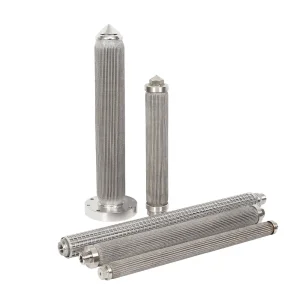
Polymer Candle Filter for High Viscosity Substances Filtration

High-Quality Polymer Candle Filter for High Viscosity Substances Filtration

Inquire Now →
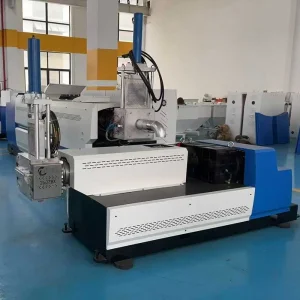
Famous China Plastic and Rubber Recycling Machine Leading Suppliers

Famous Plastic and Rubber Recycling Machine for Efficient Granulating

Inquire Now →
Custom Polymer Melt Filter Elements SUS 304 for Chemical Fiber

Custom Polymer Melt Filter Elements SUS 304 for Chemical Fiber Industry

Inquire Now →
Polymer Melt Filter Elements SUS 304 China Factory Supplier

Famous High-Quality Polymer Melt Filter Elements SUS 304 Efficient Filtration

Inquire Now →
OEM Candle Filter Cartridge and Elements for Polymer Processing

OEM Candle Filter Cartridge and Elements for Polymer Processing Factory

Inquire Now →
SUS 304/316 Plastic Extrusion Wire Mesh Filters Solutions

High-Quality SUS 304/316 Plastic Extrusion Wire Mesh Filters Suppliers

Inquire Now →
Polymer Extruder Screen Mesh Filters Micron Ratings 25-300um

Polymer Extruder Screen Mesh Filters with Micron Ratings from 25-300um

Inquire Now →
Plastic and Rubber Recycling Machine Suppliers Factory

Famous Plastic and Rubber Recycling Machine OEM Factory & Supplier

Inquire Now →