Precision-engineered filter elements and recycling solutions manufactured for global industrial standards.
Analyzing market shifts, processing pressures, and high-viscosity melt filtration dynamics in modern manufacturing.
The global market for polymer melt filtration media and continuous screen changers is projected to exceed USD 3.8 Billion by 2030. Rapid urban expansion and demand for technical textiles, BOPET packaging, and post-consumer recycled (PCR) resins drive the requirement for micro-micron filtration accuracy down to 3 microns without causing severe melt pressure drop (Delta-P).
Polymer processing extruders operate under demanding thermal and mechanical environments. Modern continuous polymer filtration (CPF) units routinely process virgin and recycled PET, PP, PE, PA66, and PBT at thermal limits reaching 350°C and fluid pressures upward of 250 bar (3,625 psi), demanding high structural resistance against compression and media displacement.
Evaluating an extruder filter manufacturer requires looking beyond standard dimensions. Enterprise buyers must assess metallurgical integrity, pore-size distribution curves, flow fatigue tolerance, thermal expansion coefficient alignment, and backwashing reusability yields to lower the Total Cost of Ownership (TCO).
In high-capacity polymer lines, filter failure rarely occurs from immediate structural collapse; it occurs when premature gel buildup or contaminant cake formation triggers rapid pressure spikes (Delta-P max). Premium Chinese extruder filter cartridges utilize graded density metal fiber felts that increase DHC by up to 180% compared to traditional single-layer woven wire mesh screens.
A granular look at metallurgical alloys, media geometry, and structural performance matrix.
| Filter Media Type | Material Alloys | Primary Filtration Mechanism | Porosity Range | Typical Applications |
|---|---|---|---|---|
| Sintered Metal Fiber Felt | AISI 316L, 316, Hastelloy C-276 | Deep 3D volumetric interception & gel retention | 75% – 85% | BOPET film, POY/FDY yarn spinning, CPF candle filters |
| Multi-Layer Sintered Wire Mesh | SUS 304, SUS 316L, Alloy 600 | Surface straining with rigid pore structure protection | 35% – 50% | High-pressure leaf discs, continuous screen changers |
| Square & Dutch Woven Mesh Packs | SUS 304, SUS 316 | 2D surface straining (disposable/semi-reusable) | 30% – 45% | PP pelletizing, blown film, masterbatch compounding |
| Porous Powder Sintered Metal | 316L SS, Titanium Grade 2 | Tortuous path micro-particle entrapment | 40% – 55% | High-viscosity polymer monomer filtration, gas sparging |
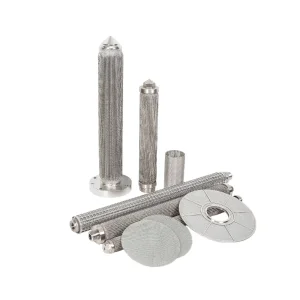
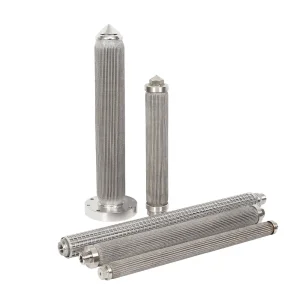
Produced by non-woven laying of micro-scale stainless steel fibers (down to 2 microns in diameter) followed by high-temperature vacuum sintering. This creates a highly porous matrix with exceptional permeability, allowing high throughput with minimal shear stress on sensitivity-prone polymer chains.
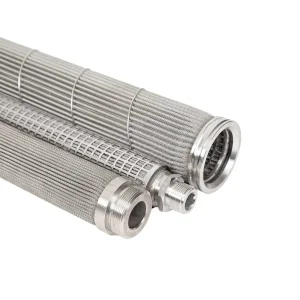
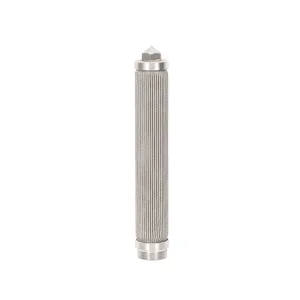
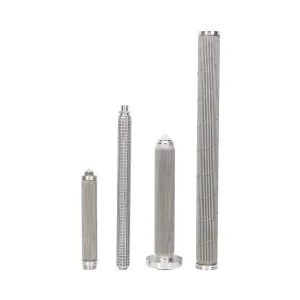
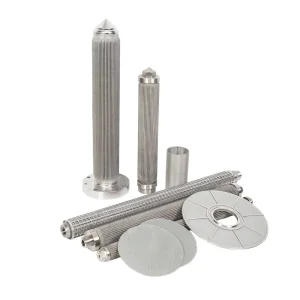
Pleated candle element geometry increases the effective filtration surface area by 250% to 400% within the same outer dimensional footprint compared to cylindrical smooth elements. This surface expansion dramatically extends production run-times before backwashing or filter changes are needed.
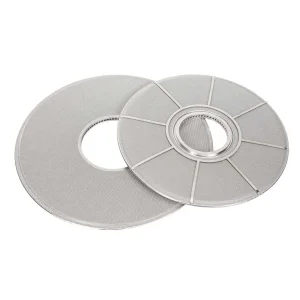
Leaf disc filters engineered for continuous operational equipment feature hub-and-spoke inner support plates lined with high-tensile wire mesh. Precision electron-beam welding along the inner and outer circumferences eliminates pass-by risk and prevents delamination under extreme hydraulic thrust.
Why leading global polymer processors source extruder filter elements and machinery from Zhejiang and Jiangsu industrial clusters.
Chinese filter manufacturers operate within dense industrial ecosystems where stainless steel wire drawing, micro-mesh weaving, non-woven fiber laydown, vacuum sintering, and precision CNC machining occur within a tight geographical radius (e.g., Zhejiang, Jiangsu). This integration drastically reduces raw material lead times and enables rapid custom prototyping.
Tier-1 Chinese factories employ multi-stage Quality Assurance (QA) compliance. Every batch of candle filters or leaf discs undergoes Bubble Point Testing (ISO 4003) to verify maximum pore size, Hydraulic Collapse Testing (ISO 2941), and X-Ray Fluorescence (XRF) spectrographic analysis to verify stainless steel alloy purity (SUS304/316L).
Leveraging high-degree automation, automated robotic longitudinal plasma welding, and specialized ultrasonic cleaning lines, Chinese manufacturers deliver OEM-quality replacement candle elements and leaf discs compatible with European and American machinery at 30% to 50% lower capital outlay.
Specific field configurations across key polymer extrusion and recycling segments.
In biaxially oriented polypropylene (BOPP) and polyethylene terephthalate (BOPET) stretch film production, microscopic gels or metal specs cause optical haze and film tears. Leaf disc systems rated at 10 to 25 microns maintain uniform pressure distribution across wide slit dies, preventing costly web breaks.
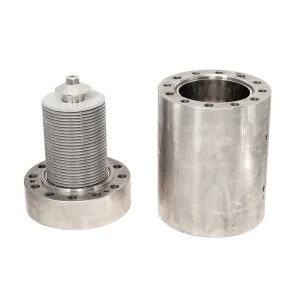
Melt spinning of polyester and polyamide yarns requires high-efficiency filter candle assemblies mounted inside continuous polymer filtration (CPF) housings. 5-micron sintered metal fiber felt removes degraded gels, ensuring uninterrupted spinneret throughput and avoiding yarn filament snapping.
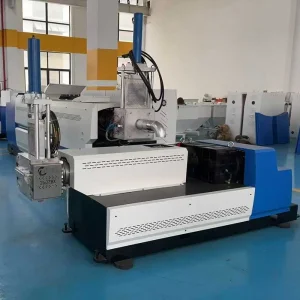
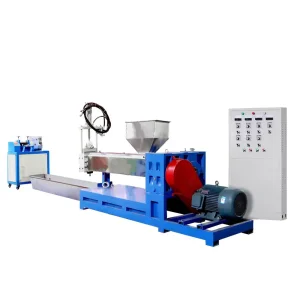
Post-consumer (PCR) and post-industrial (PIR) plastic recycling lines handle high contaminant loads (paper fibers, cross-linked polymers, aluminum flakes). Continuous hydraulic or piston screen changers utilizing robust multi-layer stainless steel mesh belt screens enable continuous filtration without stopping production.
Extruding glass-filled Nylon, PC/ABS blends, or flame-retardant resins subjects extruder filters to intense abrasive wear. Heavy-duty sintered wire mesh packs with reinforced outer rings withstand abrasive shear without screen deformation or bypass leaks.
A rigorous framework for global supply chain leads and plant managers evaluating filter replacement programs.
Evaluating extruder filter sourcing solely on initial purchase price leads to long-term operational losses. TCO must be evaluated using the following matrix:
Premium Chinese suppliers focus on maximizing Total Reusability Cycles. Through optimized vacuum calcination, tri-solvent chemical flushing, and ultrasonic bath cleaning protocols, high-grade SUS316L candle elements can be fully restored to 95%+ of initial differential pressure benchmark up to 15-20 times.
Next-generation filtration solutions addressing bio-plastics, smart monitoring, and advanced surface chemistry.
Bioplastics such as Polylactic Acid (PLA) and PBAT exhibit narrow thermal stability windows and high shear sensitivity. Next-gen filter media utilize smooth, electro-polished fiber strands to prevent localized thermal degradation and polymer charring during long filtration cycles.
Leading extruder line manufacturers are integrating digital twin sensors into filter housings. By continuously measuring fluid viscosity, temperature, and differential pressure rise rates, machine learning algorithms predict exact filter cake saturation and automatically trigger backwash cycles or operator replacement alerts.
Chemical vapor deposition (CVD) and hydrophobic ceramic nano-coatings applied to stainless steel filter meshes significantly reduce cross-linked gel adhesion. This innovation lowers cleaning cycle frequency and extends overall media service life by up to 40%.
Addressing the core technical, operational, and commercial queries of polymer filter buyers worldwide.
Explore our complete catalog of leaf disc filters, custom candle cartridges, and plastic recycling equipment.