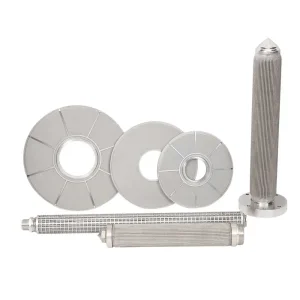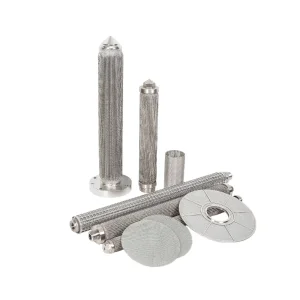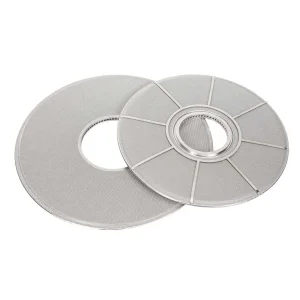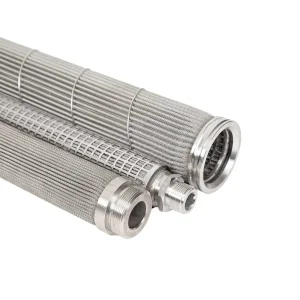
In modern continuous polymer extrusion, thermal film stretching (BOPP, BOPET, BOPA), spunbond nonwoven manufacturing, and high-purity plastic recycling lines, melt filtration efficiency dictates total product quality, operational downtime, and equipment lifespan. Among the spectrum of melt screen designs, Kidney-Shaped Mesh Filters (frequently referred to as kidney screens, arc-shaped screens, or kidney packs) have established themselves as the premier structural standard for continuous slide-plate screen changers, dual-piston continuous changers, and rotary screen filtration systems.
Unlike traditional circular screen packs which suffer from significant dead spaces around their mounting peripheries, kidney-shaped mesh filters are geometrically contoured to perfectly match the arcuate flow channels of specialized screen changer breaker plates. By maximizing the Effective Filtration Area (EFA) within a compact footprint, kidney mesh elements reduce initial pressure differential ($\Delta P$), lower polymer residence time, eliminate degradation-inducing stagnation zones, and allow continuous production runs lasting weeks longer than legacy circular media.
Core Industry Focus: This whitepaper delivers an exhaustive technical breakdown of Custom Kidney-Shaped Mesh Filter design, alloy metallurgy, multi-layer sintering techniques, global sourcing dynamics, and China’s Industry 4.0 automated manufacturing capabilities. Prepared by senior filtration engineers at Pujiang HG Plastic Machinery Co., Ltd. (over 20 years of technical leadership), this document serves as a strategic handbook for procurement directors, plant managers, and extrusion systems design engineers worldwide.
The evolution of polymer filtration has been driven by the continuous demand for higher throughput speeds, thinner film gauges (down to sub-micron dielectric films), and increased usage of post-consumer recycled (PCR) resin. Historical polymer filtration relied heavily on single or multi-layer loose mesh packs bound by simple spot welds. However, modern high-viscosity extrusion demands sophisticated composite media structures capable of resisting extreme shear stress and differential pressures exceeding 300 bar without deformation or media migration.
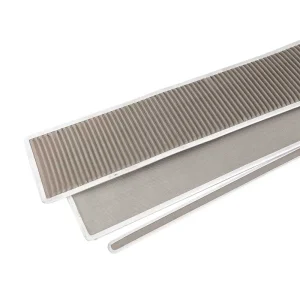
Diffusion bonding multiple layers of woven stainless steel wire mesh under heat and pressure creates a monolithic structural unit. Sintered kidney mesh filters prevent pore size shifting under heavy pressure surges, ensuring guaranteed absolute filtration ratings.
Integrating non-woven random stainless steel micro-fiber felt into kidney screen packs yields porosity levels up to 85%. This dramatically increases contaminant holding capacity (dirt holding capacity - DHC) while maintaining low initial pressure drops.
Advanced fiber laser welding and automated aluminum or stainless steel rim binding seal the cut edges of kidney filters. This prevents polymer bypass around the screen frame and stops individual wire strands from breaking off into the melt stream.
In continuous dual-piston or sliding plate screen changers, polymer melt flows through arcuate breaker plate cavities. When standard circular screens are used in non-circular breaker plate channels, dead pockets form at the corners. Polymer trapped in these dead zones experiences localized thermal degradation, yellowing, and carbonization. Over time, degraded black spots break free and contaminate the final product.
Kidney-shaped mesh filters are custom-contoured via high-precision CNC laser cutters to match the exact radius, arc angle, and port geometry of the breaker plate. The result is uniform velocity distribution across the entire filter face, eliminating dead pockets, reducing shear heat generation, and dramatically improving color-change transition speed during production runs.
Selecting the correct metallurgical composition and weave combination is essential to optimize continuous filtration performance based on the specific resin chemistry (e.g., PET, PE, PP, PC, PA, fluoropolymers) and operating temperature.
| Parameter | Standard Specification | High-Performance Option | Engineering Benefit |
|---|---|---|---|
| Base Alloy Grade | AISI 304 / 304L Stainless Steel | AISI 316L / 904L / Hastelloy C-276 / Inconel 600 | Superior corrosion resistance against acidic polymers (PVC, Fluoropolymers, recycled PET with organic residues). |
| Absolute Rating | 20 μm to 250 μm | 3 μm to 15 μm (Ultra-Fine) | Prevents spinneret hole clogging in nonwovens and film tears in ultra-thin optical BOPET films. |
| Weave Architecture | Plain Dutch Weave (PDW) / Reverse Plain Dutch (RPDW) | Twilled Dutch Weave (TDW) / 5-Layer Sintered Mesh Plate | Provides high mechanical strength to withstand $\Delta P$ pressure drops without pore enlargement. |
| Maximum Operating Pressure | 150 Bar (15 MPa) | 350 Bar (35 MPa) | Maintains structural integrity under heavy contaminant loading and high melt viscosity conditions. |
| Frame / Rim Seal | Spot-Welded Stainless Steel Wire Border | CNC Precision Aluminum / SS Crimped Edge / Laser Seated Rim | Zero polymer bypass; prevents wire strand shedding into downstream gear pumps and die cavities. |
| Temperature Rating | Up to 300°C (572°F) | Up to 450°C (842°F) | Prevents metal embrittlement and stress corrosion cracking in high-temperature engineering plastics (PEEK, PPS, PA66). |
A premium custom kidney-shaped mesh filter typically incorporates a 3-layer to 5-layer composite structure. The layer sequence is meticulously engineered to achieve depth filtration:
Demand for specialized kidney-shaped mesh filters is accelerating across key industrial hubs in North America, Western Europe, East Asia, Southeast Asia, and the Middle East. Each industrial sector imposes unique operational constraints on screen changer consumables:
High-speed biaxially oriented film production lines operate continuously for months. In these environments, any screen rupture causes immediate film snapping, resulting in thousands of dollars per hour in wasted resin and lost production. Custom 5-layer sintered kidney screens ensure zero gel breakthrough and minimal line downtime.
Recycling highly contaminated PCR waste (bottle flakes, agricultural film) requires screen changers with high contaminant capacity. Heavy-duty kidney mesh filters with aluminum rims provide robust sealing against abrasive solid particles like paper fiber, sand, and un-melted cross-linked polymers.
Hygiene and medical textile production requires clean polymer filtration to protect fine spinneret capillary orifices (often under 0.15mm diameter). Sintered fiber felt kidney packs capture sub-visible gels while maintaining smooth polymer throughput.
Global procurement teams must navigate strict international quality standards when evaluating custom kidney mesh suppliers. European processors mandate full REACH and RoHS compliance, alongside food-contact certifications such as FDA 21 CFR 177.1520 and EU Regulation No. 10/2011 for packaging applications. Sourcing directors look for ISO 9001:2015 certified manufacturers who guarantee full metallurgical batch traceability from raw wire drawing down to finished, cleanroom-packed filter elements.
China has evolved from a high-volume component producer into the global center for high-precision, Industry 4.0-driven polymer filtration manufacturing. Companies like Pujiang HG Plastic Machinery Co., Ltd. represent this technological transformation, combining decades of practical manufacturing expertise with automated production systems.
Strategic Sourcing Advantage: Partnering directly with Chinese OEM/ODM specialized factories enables global plastic converters to cut consumable screen costs by 35% to 55% while accessing custom prototyping, laser cutting tolerances down to ±0.05mm, and rapid delivery schedules.
Traditional mechanical stamping of kidney screens creates burrs, sharp wire edges, and localized mesh distortion. HG’s automated CNC fiber laser cutting systems ensure glass-smooth outer edges and exact arc dimensional consistency for easy loading into screen changer housings.
Automated robotic welding heads seal kidney screen rims with uniform bead consistency. Post-fabrication, elements undergo multi-stage ultrasonic degreasing and cleanroom vacuum packaging, eliminating drawing oil residue that could contaminate virgin resin melt.
With integrated wire drawing, multi-layer sintering, laser cutting, and quality control under one roof in Zhejiang, HG Plastic Machinery delivers unmatched supply security, eliminating middleman markups and mitigating international shipping disruptions.
To guarantee optimal filtration performance and avoid operational issues caused by inferior screen consumables, industrial procurement teams should establish rigorous quality verification protocols during supplier selection:
| Quality Check / Protocol | Standard Test Method | Acceptance Criteria & Engineering Target |
|---|---|---|
| Bubble Point Test | ISO 4003 Standard | Verifies maximum pore size consistency across the entire kidney mesh surface; ensures no enlarged openings or mesh tears exist. |
| Permeability & Pressure Drop ($\Delta P$) | ISO 4022 Standard | Measures air/fluid flow resistance to ensure uniform porosity and consistent throughput rates before installation. |
| Spectrometric Alloy Verification | Handheld XRF Metallurgy Analysis | Confirms chemical composition of wire material (e.g., Nickel/Chromium percentage in 316L/904L) to guarantee corrosion resistance. |
| Dimensional Arc Tolerance | Optical Coordinate Measurement (CMM) | Ensures perimeter dimensions fit within ±0.05mm of OEM breaker plate specifications (Maag, Nordson Kreyenborg, PSI, Hi-Tech). |
| Cleanliness & Residue Audit | Gravimetric Wash Analysis | Guarantees surface freedom from drawing lubricants, metallic dust, and organic oils prior to packaging. |
Expert answers to complex technical and procurement questions surrounding kidney-shaped mesh filters and continuous polymer screen changers.