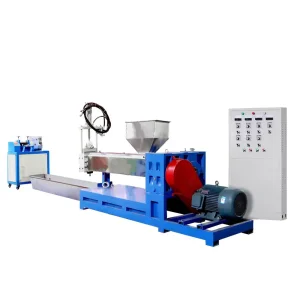
Direct factory export of ISO 9001 certified filtration elements engineered for optimal shear stability, low differential pressure, and micro-particle capture.
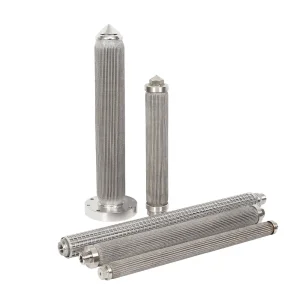
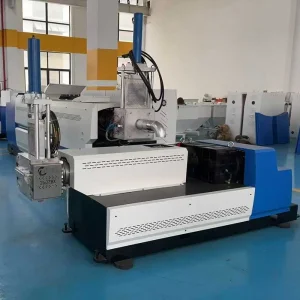
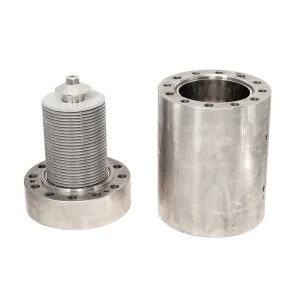
In high-viscosity polymer processing, continuous plastic extrusion, and chemical fiber spinning, screen mesh filtration media serve as the critical line of defense against particulate contamination, gel degradation, and mechanical shear failures. As a premiere global wire screen factory and exporter, our engineering focus centers on structural integrity under high differential pressure ($\Delta P$), precise pore size distribution, and thermal-chemical resilience across demanding industrial operating environments.
Industrial wire screens and metallic filter media are fundamentally evaluated by their physical weave topology, alloy composition, and fluid-dynamic performance. Polymer melts—such as Polyethylene Terephthalate (PET), Polyamide (PA6/PA66), Polypropylene (PP), and Polyethylene (PE)—exhibit non-Newtonian, viscoelastic fluid behavior. Under high processing temperatures (ranging from 220°C to 360°C) and extreme operational pressures exceeding 300 bar (4,350 psi), inferior filtration screens suffer from wire displacement, weave deformation, and pore collapse. This leads to catastrophic melt bypass, nozzle clogging, optical film gels, and costly unscheduled line shutdowns.
Core Engineering Insight: Polymer melt filtration is not merely a mechanical screening process; it is a thermal-fluid dynamic discipline. Optimizing the wire weave geometry reduces shear stress on polymer chains, preventing thermal degradation while capturing micro-scale gel contaminants down to 3 microns absolute.
Our metallurgy portfolio utilizes premium-grade austenitic stainless steel alloys (SUS 304, SUS 316L, SUS 904L) as well as nickel-chromium superalloys (Hastelloy C-276, Inconel 625) tailored for highly corrosive fluoropolymer processing (e.g., PTFE, PVDF) and acidic chemical environments. By combining advanced wire drawing tolerances ($\pm 0.001\text{ mm}$) with proprietary automated loom weaving technology, we guarantee uniform mesh count, controlled pore geometry, and superior mechanical tensile strength.
| Alloy Grade | Chemical Composition Key | Max Operating Temp | Corrosion & Acid Resistance | Primary Industry Applications |
|---|---|---|---|---|
| SUS 304 | 18% Cr / 8% Ni | 550°C (1,022°F) | Standard Industrial & Basic Solvents | Polyolefin Extrusion, Masterbatch Granulating |
| SUS 316L | 17% Cr / 12% Ni / 2.5% Mo (Low C) | 750°C (1,382°F) | Superior Pitting & Intergranular Resistance | PET/BOPP Optical Film, Chemical Fiber Spinning |
| SUS 904L | 20% Cr / 25% Ni / 4.5% Mo / 1.5% Cu | 850°C (1,562°F) | Extreme Sulfuric & Chloride Resistance | Corrosive Monomer Filtration, Specialty Resins |
| Hastelloy C-276 | 57% Ni / 16% Cr / 16% Mo / 4% W | 1,000°C (1,832°F) | Exceptional Oxidizing & Halogen Resistance | Fluoropolymer (PVDF/PFA) Extrusion, Petrochemical |
Navigating the global shift toward Post-Consumer Recycled (PCR) plastics, high-output BOPET film production, and continuous nonwoven manufacturing.
With global sustainability mandates enforcing 30%+ recycled content in consumer packaging, recycled resins (rPET, rHDPE, rPP) introduce high concentrations of paper fibers, aluminum foil fragments, and cross-linked gels. Our continuous belt wire screens and reinforced candle filters enable seamless filtration under extreme contaminant loads without line stoppage.
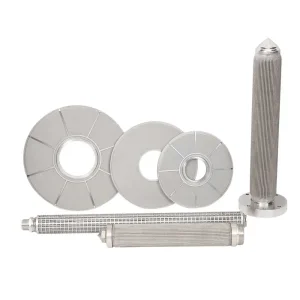
High-speed BOPP and BOPET film lines operating at speeds up to 600 m/min require absolute removal of particles larger than 5 microns. Pinholes or localized film thickness variations ruin entire master rolls. Our high-area leaf disc filters provide rigid structural support and minimal dead zones to eliminate polymer stagnation.
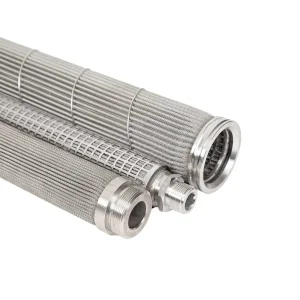
Spunbond and Meltblown nonwoven production for medical and hygiene products relies on ultra-fine spinnerets with capillary diameters below 0.15 mm. Even sub-micron metallic debris can cause spinneret hole blockage. Our pleated stainless steel candle cartridges deliver up to 500% more surface area, extending filter pack change intervals exponentially.
The mechanical efficiency of a wire mesh screen filter is governed by its weave structure. Different industrial processes require specific wire interweaving techniques to strike an optimal equilibrium between structural stiffness, flow permeability, and contaminant retention capability. As a primary exporter and specialized factory, we engineer five core weave patterns:
In Plain Weave, warp and weft wires cross alternately (over one, under one). It provides symmetrical square openings with low resistance to flow, ideal for coarse screening (20 mesh to 300 mesh) in extruder breaker plates. Twilled Weave allows heavier wire diameters for fine mesh counts by weaving over two and under two wires, boosting mechanical yield strength.
Dutch weaves utilize coarse warp wires combined with densely packed fine weft wires. Twilled Dutch Weave (DTW) creates a zero-open-area surface where fluid must pass through tortuous triangular micro-passages. This provides absolute micron ratings down to 5 µm and handles massive differential pressure loads without wire movement.
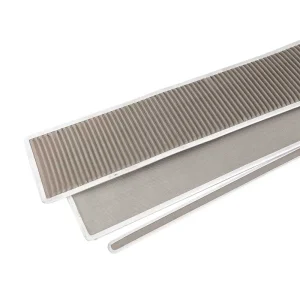
Designed specifically for continuous auto-belt screen changers in plastic recycling lines. RDW features a higher density of warp wires and thinner weft wires, offering maximum longitudinal tensile strength. This prevents belt stretching or tearing when auto-advancing across high-pressure breaker plates under continuous operation.
Produced by micro-sintering non-woven stainless steel fibers (1–25 micron diameter) into a 3D porous structure. Sintered fiber felt yields up to 85% porosity—far superior to woven wire mesh (30–40% porosity). This dramatic reduction in initial pressure drop ($\Delta P_0$) extends filter element life by 300% to 500% in high-viscosity PET melt systems.
Engineered wire screen assemblies designed for extreme physical, thermal, and chemical stress environments.
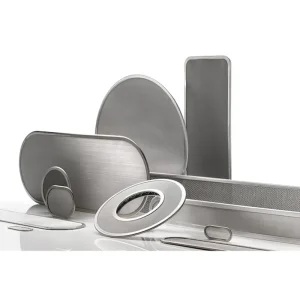
Circular mesh packs, spot-welded rim packs, and kidney-shaped screen elements for single-screw and twin-screw extruders. Efficiently capture degraded black gels, cross-linked polymer chunks, and mineral filler agglomerates in compounding lines.
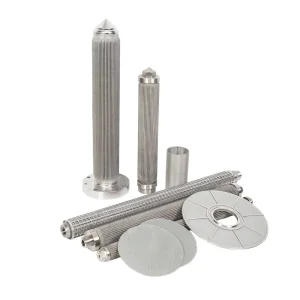
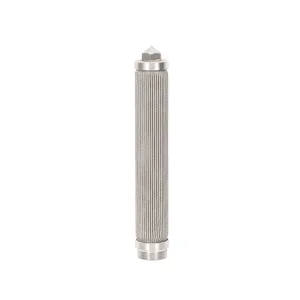
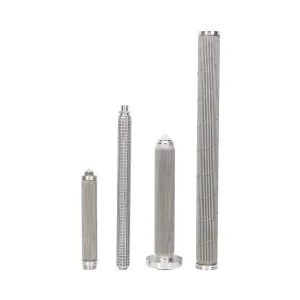
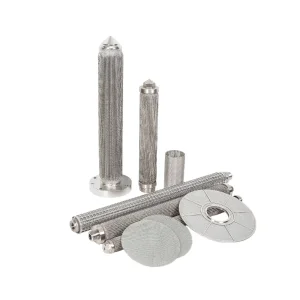
High-area cylindrical and pleated candle cartridges installed in Continuous Polymer Filtration (CPF) systems. Built to withstand collapse pressure up to 210 bar (3,045 psi), providing seamless protection for high-purity polyester resin synthesis.
Spin pack filter discs, metal powder sintered elements, and multi-layer mesh rim packs used in POY, FDY, and BCF yarn extrusion. Prevents filament breakage, maintains spinning tension, and prolongs spinneret lifetime.
To qualify as a tier-1 supplier to global fortune 500 chemical enterprises, raw material precision and manufacturing traceability must be flawless. Our factory operates under strict ISO 9001:2015 Quality Management Systems. Every batch of stainless steel wire rod is verified via Optical Emission Spectrometry (OES) to validate alloy chemical composition prior to weaving.
Our quality assurance framework integrates advanced non-destructive testing (NDT) standards:
Regulatory Compliance: All wire screen media manufactured for food packaging polymers comply strictly with FDA 21 CFR 177.2600, EU Regulation No 10/2011, REACH, and RoHS directives, guaranteeing zero toxic heavy metal migration.
Pioneering next-generation filtration media with enhanced surface engineering, smart sensor compatibility, and circular economy lifecycles.
Development of Diamond-Like Carbon (DLC) and fluoropolymer plasma surface modifications on stainless steel wire screens. Reduces polymer melt adhesion, preventing thermal carbonization and gel buildup during extended extrusion runs.
Collaborating with machinery OEMs to integrate embedded differential pressure ($\Delta P$) and temperature sensor arrays within breaker plate assemblies for real-time predictive analytics on filter clogging.
Implementing zero-waste manufacturing protocols where used stainless steel candle elements and screen packs are collected, calcined, and remelted into high-grade industrial wire alloys, minimizing Scope 3 carbon emissions.
Expert responses to critical filtration engineering queries encountered in polymer extrusion, synthetic fiber processing, and wire mesh procurement.
Explore our full line of direct-factory exported wire screens, candle filter elements, and plastic granulating recycling equipment.