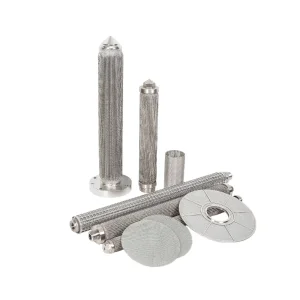
Direct manufacturer solutions engineered for continuous extrusion screen changers, melt pumps, and high-viscosity polymer purification systems.
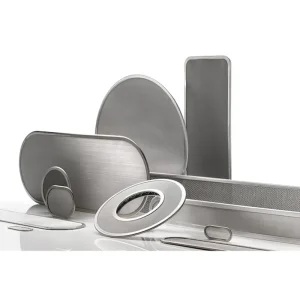
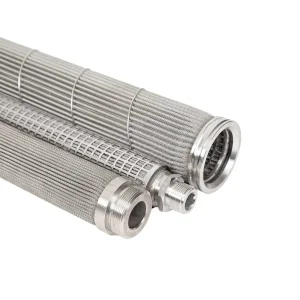
How shifting circular plastic imperatives, micro-fiber spinning purity, and continuous recycling extrusion demand engineered ODM filter packs with exact fluid dynamics.
Processing rPET, rHDPE, and rPP requires multi-stage filtration packs capable of capturing fine solid particulate while maintaining low shear stress to prevent polymer thermal degradation under elevated melt temperatures.
Top-tier ODM exporters must provide comprehensive traceability, international metallurgical certifications (EN 10204 3.1), and rapid custom tooling to support global OEM screen changer manufacturers across Europe, North America, and Asia.
In BOPP, BOPET, and synthetic fiber spinning lines, a single micron-level contaminant causes film pop-outs or filament breakage. ODM engineering guarantees precise bubble-point micron ratings down to 3 microns.
A deep dive into alloy performance parameters, thermal expansion behavior, shear stress dynamics, and structural geometry of filter weaves.
| Alloy Grade | Chemical Composition Key Elements | Max Operating Temp (°C) | Tensile Strength (MPa) | Corrosion & Acid Resistance | Primary Industrial Applications |
|---|---|---|---|---|---|
| SUS 304 | 18% Cr / 8% Ni | 550°C | 520 - 720 | Standard industrial organic melts | General plastic recycling, PP/PE extrusion |
| SUS 316L | 16% Cr / 10% Ni / 2.1% Mo (Low C) | 750°C | 485 - 680 | Superior pitting resistance (PREN ~25) | rPET, PET polycondensation, BOPP film |
| SUS 904L | 20% Cr / 25% Ni / 4.5% Mo / 1.5% Cu | 850°C | 530 - 710 | Exceptional resistance to sulfuric/halogen acids | Corrosive fluoropolymer & additive masterbatches |
| Hastelloy C-276 | 57% Ni / 16% Cr / 16% Mo / 4% W | 1040°C | 690 - 880 | Extreme halogen, wet chlorine & acidic salts | Specialty engineering plastics, fluoropolymers (PVDF) |
| Inconel 625 | 58% Ni / 21% Cr / 9% Mo / 3.6% Nb | 980°C | 830 - 1000 | High-temperature oxidation & creep strength | Ultra-high pressure polyolefin synthesis & chemical fibers |
Features larger warp wires and smaller shute wires driven tightly together. Provides high mechanical strength, stable pore size, and ideal characteristics for medium-to-high pressure surface filtration in standard extruders.
Combines twill weaving with Dutch packing, allowing a double layer of shute wires. Achieves ultra-fine micron ratings (down to 5μm nominal) with smooth surface profiles, suitable for high-viscosity melt filtration.
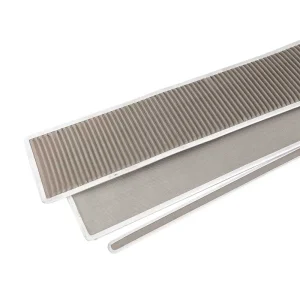
Reverses warp and shute diameter ratios, positioning dense wires in the longitudinal direction. Engineered specifically for automatic continuous belt screen changers, delivering superior tensile resistance against continuous drive force.
Understanding how non-Newtonian polymer behavior dictates screen mesh pore geometry, open area ratios, and structural pack layering.
Polymer melts exhibit shear-thinning viscoelastic properties. Standard hydraulic flow equations fail under high-pressure extrusion (150–300 bar). ODM engineering adapts modified Darcy-Forchheimer formulas to calculate effective pressure drop ($\Delta P$) across multi-layered screen packs:
Where μ is the dynamic melt viscosity (dependent on shear rate γ̇), k is the intrinsic mesh permeability, v is superficial velocity, L is total pack thickness, and β represents non-linear inertial factors during turbulent contaminant accumulation.
Deformable polymer gels require depth filtration principles rather than simple surface straining. Sintered multi-layer mesh packs create tortuous pore networks that trap viscoelastic gels under shear forces without premature surface blinding.
From metallurgical alloy raw wire inspection to final ultrasonic degreasing and ISO 4003 bubble-point verification.
Computational Fluid Dynamics (CFD) modeling of customer-specific melt rheology, pressure limits, and housing dimensions.
Computerized heavy-duty looms weave wire tolerances within ±0.002mm, maintaining constant tension and zero structural distortion.
Diffusion bonding under high vacuum and temperature fuses wire intersection points without altering micron pore geometries.
Automated laser cutting, ultrasonic solvent bath cleaning, edge welding, and ISO 4003 bubble-point pore validation.
Proven operational performance across demanding industrial production environments.
Contaminants: Wood fiber, residual aluminum, degraded gel agglomerates.
Solution: Heavy-duty RPDW continuous mesh belts & spot-welded multi-layer rim packs engineered for hydraulic screen changers.
Requirement: Zero defect tolerance, optical transparency.
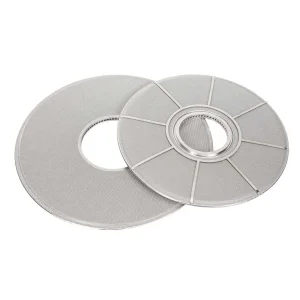
Solution: Sintered leaf disc filter elements with 316L fiber felt media, delivering high dirt-holding capacity and extended on-stream lifecycle.
Requirement: Spin-pack protection for Nylon 6/66 & Polyester.
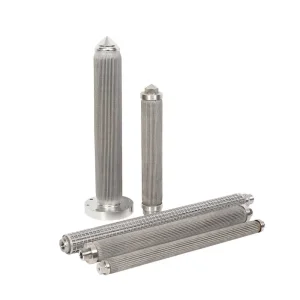
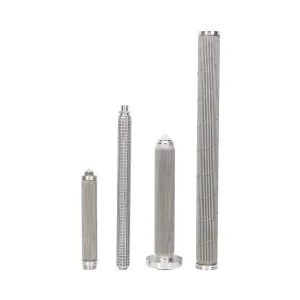
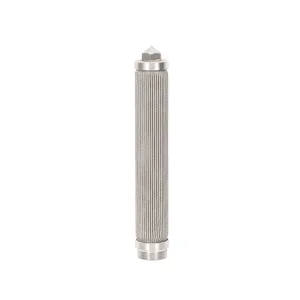
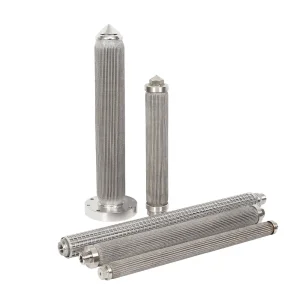
Solution: Pleated stainless steel candle filter elements maximizing filtration area within compact spinneret distribution housings.
Compliance: FDA 21 CFR 177.1550, EU 10/2011 cleanliness.
Solution: Ultrasonic degreased, zero-oil, fully welded stainless screen mesh assemblies certified for direct food contact.
Ensuring complete peace of mind for international OEMs, plant managers, and procurement professionals.
Rigorous quality control spanning raw wire spectrographic analysis, automated weave spacing laser inspection, and full batch heat numbers for complete material traceability.
All screen filter products undergo chemical extraction testing to ensure compliance with European REACH/RoHS toxic substance restrictions and U.S. FDA food contact regulations.
Global rapid-response ODM supply programs including custom inventory buffering, consignment stocking, and expedited air transport to minimize factory downtime.
Pioneering advancements in smart filtration media, surface functionalization, and hybrid additive manufacturing.
Application of Diamond-Like Carbon (DLC) and PVD hydrophobic nano-coatings onto woven wire surfaces to drastically reduce polymer melt adhesion, lower shear friction, and extend operational backwash cycles by up to 40%.
Embedding micro-thin piezo-resistive film sensors within multi-layer sintered screen structures to provide real-time, localized pressure drop ($\Delta P$) and temperature gradients directly to extrusion control units.
Combining selective laser melting (SLM) metal 3D printing for structural support cores with micro-woven wire mesh outer membranes to yield ultra-high pressure burst ratings (over 400 bar).
Expert solutions to complex technical challenges encountered by plant engineers, extrusion specialists, and global importers.
In continuous belt screen changers, the filter mesh is subjected to intense longitudinal mechanical tension while simultaneously supporting high transverse polymer melt pressure. Standard plain dutch weaves exhibit lower tensile strength along warp wires, leading to belt stretching or tearing. RPDW places a significantly higher density of strong warp wires longitudinally, delivering up to 3x greater tensile load capacity while maintaining precise micron pore openings under continuous hydraulic indexing.
Nominal micron rating refers to an arbitrary pore size value representing a specific percentage (usually 60-80%) of particle retention of a given size. Absolute micron rating represents the exact diameter of the largest spherical glass bead that will pass through the filter mesh under standardized ISO 4003 bubble-point testing conditions (100% retention guarantee). For zero-defect optical film or fiber spinning, specifying absolute micron ratings is critical.
Recycled PET bottle flakes often contain moisture and residual acidic contaminants (such as acetic acid or traces of PVC degradation releasing HCl). Under processing temperatures exceeding 280°C, standard SUS 304 undergoes intergranular corrosion and chloride pitting. SUS 316L contains 2.0-2.5% Molybdenum and extremely low carbon content (<0.03%), providing a Pitting Resistance Equivalent Number (PREN) >23 to resist chemical degradation.
Spot-welded screen packs bind individual mesh layers at precise outer perimeter points, maintaining maximal open flow area and lower cost. However, aluminum or stainless steel rimmed (framed) packs encapsulate raw mesh edges entirely, preventing wire fraying, avoiding bypass leakage along housing walls, and providing structural rigidity necessary for high differential pressure ($\Delta P > 200$ bar) operations.
To provide precise engineering quotes, ODM manufacturers require: 1) Target polymer type & melt flow index (MFI), 2) Operating temperature & maximum allowable pressure drop ($\Delta P$), 3) Desired micron rating (nominal/absolute), 4) Physical dimensions & shape (discs, belts, cylinders, custom rim profile), 5) Material alloy grade (304, 316L, Hastelloy), and 6) Current lifecycle or failure mode issues.
Sintered stainless steel filter elements can be cleaned multiple times to restore clean pressure drop. The standard industrial process includes: 1) Pyrolysis / TEG (triethylene glycol) boiling to burn off or dissolve residual polymer, 2) High-pressure forward/reverse liquid flushing, 3) Ultrasonic bath cleaning with specialized detergent solutions, and 4) Final deionized water rinse and ISO 4003 bubble-point integrity verification.
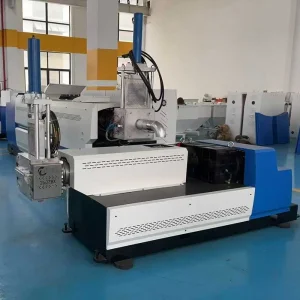
Explore our complete lineup of custom candle filters, pleated cartridges, leaf disc filters, and plastic recycling equipment.