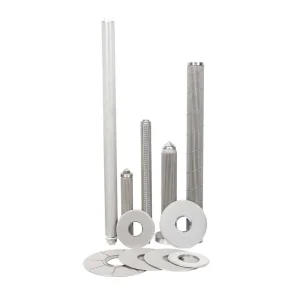
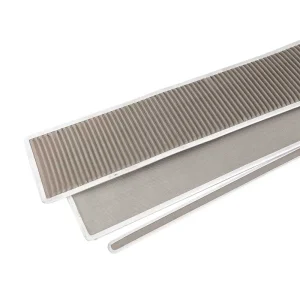
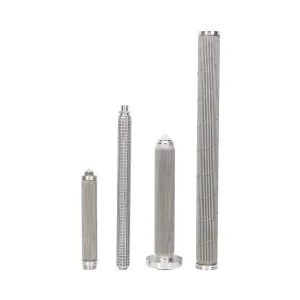
Industrial Micron Filtration Solutions

Wholesale Mesh Filter Material Manufacturer & Supplier

Global Engineering Leader in Sintered Wire Cloth, Multi-Layer Extruder Screen Mesh, Polymer Filter Elements, and Custom High-Viscosity Melt Filtration Systems

Featured Polymer Melt & Mesh Filter Elements

Precision-engineered stainless steel mesh filter cartridges, leaf discs, and screen packs designed for high-temperature and high-pressure polymer extrusion platforms.
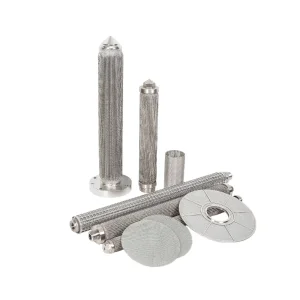
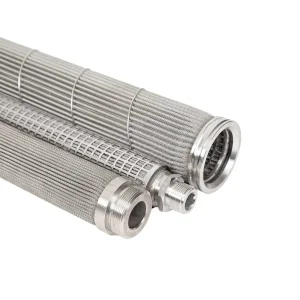
OEM Customized Melt Pleated Candle Filter Cartridge Supplier
OEM Customized Melt Pleated Candle Filter Cartridge Supplier - Stainless Steel Impurity Removal from China Factory Manufacturers, Exporter
View Product Details
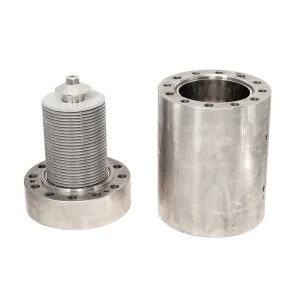
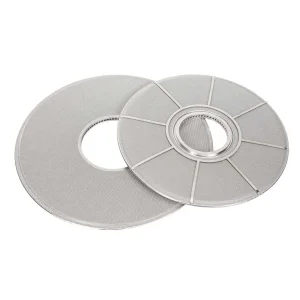
ODM Polymer Leaf Disc Filters for Plastic Film Industry
ODM China Suppliers Factory - High-Quality Polymer Leaf Disc Filters for Plastic Film Industry Filtration Manufacturer, Exporters
View Product Details
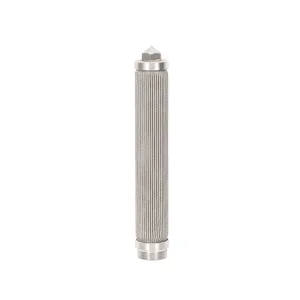
Custom Polymer Melt Filter Elements SUS 304
Custom China Suppliers Factory Polymer Melt Filter Elements SUS 304 for High-Viscosity Filtration in Chemical Fiber Industry Manufacturers, Supplier
View Product Details
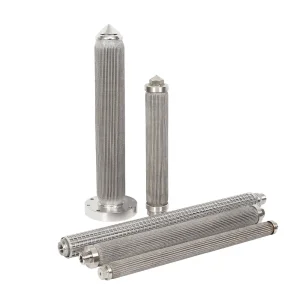
High-Quality High Viscosity Polymer Candle Filter
High-Quality High Viscosity Polymer Candle Filter for Melt Filtration - China Suppliers & Factory Supplier, Suppliers
View Product Details
OEM Candle Filter Cartridge and Filter Elements
OEM Candle Filter Cartridge and Filter Elements for Polymer Manufacturer, Companies
View Product Details
OEM Polymer Leaf Disc Filters from China Suppliers
OEM Polymer Leaf Disc Filters from China Suppliers | High-Quality Filtration for Plastic Film Factory Manufacturer, Factory
View Product Details
China Polymer Candle Filters for Film Production
China Polymer Candle Filters from China - Leading Suppliers & Factory for Film Production and Filtration Solutions Suppliers, Companies
View Product Details
Custom High-Quality Polymer Candle Filter for Viscous Filtration
Custom High-Quality Polymer Candle Filter for Viscous Filtration - Trusted China Suppliers & Factory Manufacturer, Factory
View Product Details

Global Commercial & Industrial State of Mesh Filter Materials

Analyzing rheological demands, polymer degradation challenges, and strategic sourcing mandates across international manufacturing hubs.

In modern continuous polymer extrusion, chemical fiber spinning, and petrochemical refining, the integrity of the end-product relies directly on the efficiency of the core micro-filtration substrate. As global manufacturing scales toward higher throughput rates, finer filament deniers, and increased utilization of Post-Consumer Recycled (PCR) polymers, the structural demand placed upon wholesale mesh filter materials has intensified exponentially.
99.8%
Imperfect Gel & Particle Retention
350°C
Max Thermal Resistance
300 Bar
Differential Pressure Tolerance
1-250 μm
Absolute Micron Rating Range
Rheological and Thermal Dynamics in Viscous Polymer Filtration
High-viscosity polymer melts such as Polyethylene Terephthalate (PET), Polyamide (PA6/PA66), Polypropylene (PP), and Polycarbonate (PC) exhibit complex non-Newtonian shear-thinning behavior under extreme extrusion pressures. When operating under mechanical pressures exceeding 250 to 300 bar and thermal thresholds reaching 350°C, inferior filter media suffer from structural deformation, pore enlargement, media migration, and premature differential pressure ($\Delta P$) spikes.

Critical Information Gain: Understanding Beta Ratio ($\beta_x$) in Polymer Filtration

The efficiency of mesh filter material is quantified using the Beta Ratio ($\beta_x$), defined as the ratio of upstream particles larger than a given size ($x$) to downstream particles. Advanced multi-layer sintered stainless steel mesh achieves $\beta_x \ge 1000$ (99.9% filtration efficiency), preventing gel bypass and micro-voids during high-speed spinning or biaxial film stretching.

  • Structural Rigidity under Dynamic Load: Preventing wire shift and pore aperture variation when subjected to cyclic backwashing and melt surges.
  • Thermal Stability: Eliminating metallurgical creep and oxidation degradation during continuous exposure to molten resins.
  • Chemical Resistance: Resisting attack from corrosive additives, catalysts, flame retardants, and harsh chemical cleaning solvents (e.g., TEG hydrolysis or vacuum pyrolysis).

Comprehensive Material Engineering & Metallurgical Matrix

Selecting the optimal alloy and structural weave configuration to maximize dirt-holding capacity and operational lifespan.

Choosing the correct mesh filter material requires matching metallurgical alloy chemistry with the physical architecture of the filter media. We engineer filter media utilizing premium grade stainless steels and superalloys, processed through precision weaving, diffusion bonding (sintering), and complex multi-layer lamination.
Material / Alloy Grade Primary Metallurgical Composition Max Operating Temp (°C) Corrosion Resistance Level Ideal Industrial Applications
SUS 304 / 304L 18% Cr / 8% Ni 300°C Standard Industrial General plastic recycling, PP/PE pelletizing, hydraulic oil filtration.
SUS 316 / 316L 16% Cr / 10% Ni / 2% Mo 400°C High Acid/Chloride Resistance PET melt spinning, BOPP/BOPET thin films, pharmaceutical & chemical process.
Inconel 625 58% Ni / 21% Cr / 9% Mo / 3.6% Nb 650°C Extreme Oxidation & Acid Corrosive fluoropolymer processing (PVDF/PTFE), extreme temperature chemical gas.
Hastelloy C-276 57% Ni / 16% Cr / 16% Mo / 4% W 700°C Ultra-High Chemical Inertness Aggressive acidic media, wet chlorine gas, high-severity petrochemical synthesis.

Plain & Twill Dutch Weave

Provides a dense, rigid structure with high mechanical strength and precise pore apertures suitable for screen changer discs and surface filtration.

Sintered Metal Fiber Felt

Non-woven 3D structure offering up to 85% porosity. Delivers up to 3x higher dirt-holding capacity and drastically lower initial pressure drop.

Multi-Layer Diffusion Bonded Laminates

Combines fine filtration mesh with coarse support layers, vacuum-sintered into a monolithic plate. Prevents wire shift under high reverse pressure.

China Factory Efficiency & Scaling Advantages

Why leading global enterprises partner with top-tier Chinese manufacturers for high-volume, precision-engineered wholesale mesh filter materials.

As the global demand for cost-effective yet uncompromised industrial filtration grows, China’s advanced manufacturing clusters—particularly in Zhejiang and Jiangsu provinces—have emerged as world leaders in mesh filter fabrication. By integrating full-chain production capabilities, Chinese facilities deliver unmatched scalability, competitive lead times, and rigorous ISO-certified quality assurance.

Vertical Supply Chain Integration

From raw stainless steel wire drawing and micro-weaving to automated vacuum sintering and CNC laser cutting, complete internal control reduces manufacturing lead times by 40%.

Stringent ISO & Bubble Point Quality Assurance

Every batch undergoes Bubble Point Testing (ISO 4003), Air Permeability Testing (ISO 4022), and Burst Pressure Verification (ISO 2941) to guarantee zero defective pore anomalies.

Economies of Scale & TCO Reduction

High-volume automated production lines dramatically lower per-unit costs, allowing global distributors and OEMs to reduce Total Cost of Ownership (TCO) by 25% to 45% without sacrificing tolerance specs.

Localized Application Scenarios & Engineering Case Implementations

Tailored filtration solutions across critical industrial sectors requiring high precision and continuous production stability.

1. Plastic Extrusion & Post-Consumer Recycling (PCR) Pelletizing
In heavily contaminated recycled plastic processing (HDPE, LDPE, PP), continuous auto-backwash screen changers utilize multi-layer rimmed mesh packs. The outer coarse layer traps macro-contaminants like paper fiber and wood particles, while the inner fine sintered mesh stops micro-gels, ensuring clean melt feed into pelletizing dies without frequent line shutdowns.
2. Optical-Grade Biaxially Oriented Film Production (BOPP / BOPET / BOPA)
Ultra-thin polymer film production demands zero defect tolerance. Sintered leaf disc filters engineered from 316L metal fiber felt capture sub-micron carbon specks and cross-linked gels. The extended active surface area allows continuous operations for up to 180 days at high flow velocities without pinhole defects.
3. Synthetic Chemical Fiber Spinning (POY, FDY, Spunbond Nonwovens)
In polyester and nylon filament extrusion, pleated candle filter elements mounted inside spin packs remove ultra-fine particulates prior to spinneret passage. By maintaining uniform pressure distribution across all capillaries, thread breakage is reduced by over 90%, improving yarn tenacity.

Industry Development Trends & Technology Roadmap

Next-generation filtration technologies driving sustainability, circular economy compliance, and smart automated processing.

Circular Economy & PCR Mesh Optimization

Optimization of asymmetrical multi-layer mesh structures tailored specifically for processing highly variable post-consumer resin streams without blinding.

Nano-Coated & Surface-Modified Wire Cloth

Application of low-friction hydrophobic/oleophobic chemical coatings to reduce polymer melt shear stress, lowering energy consumption across extruders.

Enhanced Cleanability & Ultrasonic Reusability

Development of high-durability alloy weaves designed to withstand over 20 pyrolysis and ultrasonic cleaning cycles, significantly reducing consumable waste.

Global Enterprise Procurement & Quality Audit Criteria

Essential engineering standards and vendor evaluation criteria for purchasing managers and procurement directors.

When negotiating wholesale contracts for industrial mesh filter materials, procurement professionals must balance initial unit pricing against long-term operational risks. Substandard filter media leads to frequent extrusion line stoppages, product degradation, and high labor costs associated with manual filter changes.

Key Procurement Checkpoints for Mesh Filter Sourcing

1. Material Traceability: Insist on Mill Test Certificates (MTC) according to EN 10204 3.1 to verify exact chemical alloy ratios.
2. Pore Size Distribution: Request glass bubble point test logs to confirm maximum pore opening ($d_{max}$) compliance.
3. Weld Seam Integrity: Ensure plasma or micro-TIG spot welds are smooth and flush to prevent melt stagnation and thermal degradation pockets.

Complete Range of Extruder Screens & Recycling Machinery

Explore our extensive catalog of customized polymer screen mesh packs, high-viscosity candle elements, and complete plastic granulating systems.
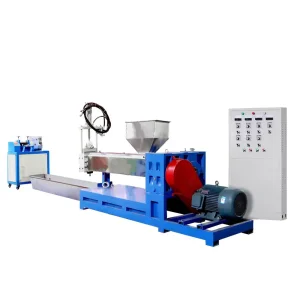
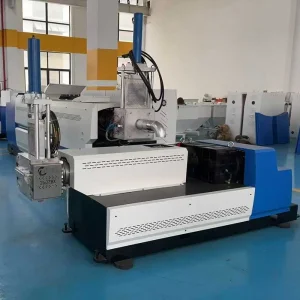
High-Quality China PP Plastic Pelletizing Machine Suppliers
High-Quality China PP Plastic Pelletizing Machine Suppliers | High-Quality Plastic Recycling Factory Solutions Factory, Companies
View Product Details
Custom Polymer Leaf Disc Filters for Plastic Film Industry
Custom Polymer Leaf Disc Filters for Plastic Film Industry - High-Quality Solutions from China Suppliers and Factory Factories, Exporter
View Product Details
Custom Plastic Recycling Machine China Suppliers
Custom Plastic Recycling Machine | China Suppliers & Factory for Granulating Plastic Waste into Uniform Granules Suppliers, Companies
View Product Details
Famous China Polymer Candle Filter for High Viscosity
Famous China Polymer Candle Filter for High Viscosity Substances - Leading Suppliers and Factory for Efficient Filtration Manufacturer, Exporter
View Product Details
Polymer Extruder Screen Mesh Filters from China Suppliers
High-Quality High-Quality Polymer Extruder Screen Mesh Filters from China Suppliers | Factory Direct Micron Filtration Solutions Supplier, Factory
View Product Details
OEM China Polymer Extruder Screen Mesh Filters
OEM China Polymer Extruder Screen Mesh Filters - High-Quality Suppliers and Factory for Effective Filtration Solutions Manufacturer, Manufacturers
View Product Details
Famous China Polymer Candle Filter Elements SUS 304
Famous China Polymer Candle Filter Elements SUS 304 - Top Suppliers and Factory for Efficient Melt Filtration Manufacturer, Exporter
View Product Details
China Polymer Candle Filter Elements SUS 304 Factory
China China Polymer Candle Filter Elements SUS 304 - Top Suppliers & Factory for High-Quality Filtration Solutions Suppliers, Factory
View Product Details

Technical & Procurement FAQ (Q&A Matrix)

Addressing essential technical, operational, and supply chain queries for industrial mesh filter materials.

What is the difference between woven wire mesh and sintered metal fiber felt for melt filtration?
Woven wire mesh consists of structured wire geometries with uniform square or rectangular pore openings, ideal for surface filtration and rigid screen packs. Sintered metal fiber felt is a non-woven 3D matrix of fine stainless steel fibers vacuum-sintered together, offering up to 85% open porosity. Metal felt provides deep bed filtration, resulting in significantly higher dirt-holding capacity, lower initial pressure drop, and extended on-stream operational lifetime.
How are stainless steel mesh filter cartridges cleaned and reused?
Filter cartridges fabricated from SUS 316L can be cleaned and reused multiple times. Common industrial cleaning procedures include TEG (Triethylene Glycol) hydrolysis baths to dissolve polyester residues, vacuum calcination furnaces to burn off organic polymers, followed by high-pressure fluid flushing and ultrasonic solvent baths to remove residual inorganic ash.
Can you manufacture custom dimensions and multi-layer mesh combinations for OEM orders?
Yes. We offer complete OEM and ODM customization. We manufacture custom outer diameters, total heights, adapter end-fittings (e.g., NPT, 222/226, flange connection), and specific multi-layer wire mesh layups to meet exact operating differential pressures ($\Delta P$) and micron filtration ratings from 1 µm up to 500 µm.
What quality testing standards are applied to ensure zero defect rates?
All wholesale mesh filter shipments are strictly verified under ISO quality management standards. Bubble point testing (ISO 4003) is performed to verify maximum pore size integrity. Permeability is measured via ISO 4022 standards, and structural collapse resistance is validated up to 210 bar differential pressure using ISO 2941 protocols.